Embryo transfer is one of the most important stages of in vitro fertilisation (IVF). After eggs are fertilised in a laboratory and suitable embryos are selected, an embryo is placed inside the uterus with the aim of achieving pregnancy. Although the procedure is usually brief and does not generally require anaesthesia, the days that follow can bring questions, anticipation and uncertainty. Understanding the transfer process, recovery guidance and pregnancy testing timeline can help patients approach this stage with clearer expectations.
What Is IVF Embryo Transfer?
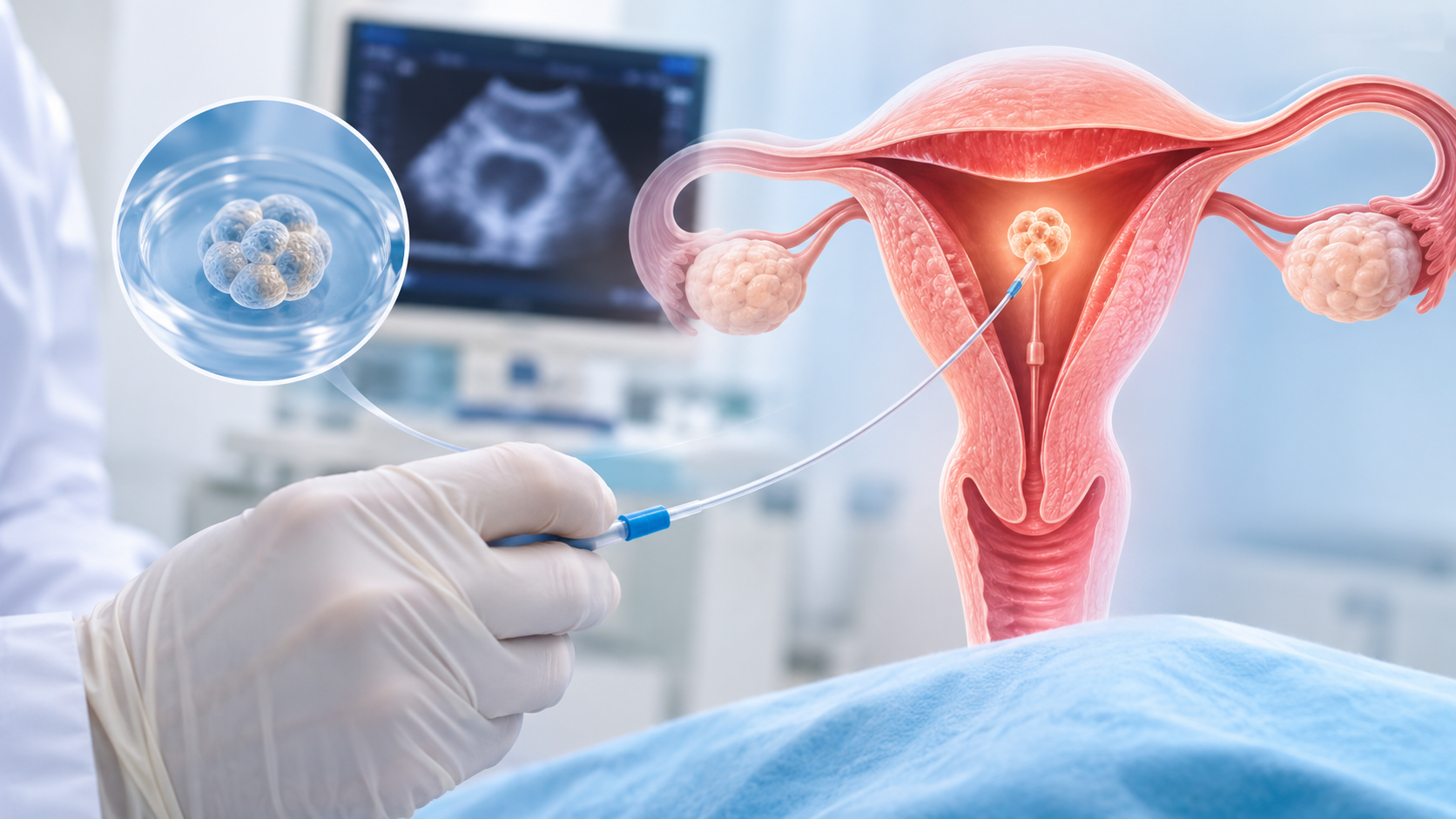
IVF embryo transfer is the procedure in which a selected embryo is placed into the uterine cavity using a thin, flexible catheter passed through the cervix. It takes place after eggs have been collected and fertilised in the laboratory.
The embryo may be transferred a few days after fertilisation or after being frozen and stored for a later treatment cycle. The timing depends on the patient's treatment plan, embryo development, uterine preparation and clinical considerations.
Embryo transfer does not guarantee pregnancy. Successful implantation and ongoing pregnancy depend on several factors, including embryo development, uterine conditions and individual reproductive circumstances.
Fresh and Frozen Embryo Transfer
A fresh embryo transfer takes place during the same IVF cycle in which eggs are collected and fertilised. The embryo is transferred without being frozen, provided the clinical team considers the timing and uterine environment appropriate.
A frozen embryo transfer (FET) involves using an embryo that was previously frozen and stored. The transfer occurs during a later cycle after the uterine lining has been prepared and the timing is coordinated with embryo development.
Frozen transfer may be planned for several reasons, including the need for additional time for recovery, treatment planning or specific medical considerations. The choice between fresh and frozen transfer is individualised and discussed with the fertility specialist.
How Is the Embryo Transfer Procedure Performed?
Before the procedure, the fertility team confirms the treatment plan, embryo details and timing. The patient may be asked to arrive with a comfortably filled bladder, depending on the clinic's ultrasound guidance protocol.
The patient lies in a position similar to a routine gynaecological examination. A speculum is placed in the vagina to visualise the cervix. The clinician then passes a thin transfer catheter through the cervical opening into the uterus, usually with ultrasound guidance.
The selected embryo is carefully released into the uterine cavity. The catheter is then checked by the embryology team to confirm that the embryo has been transferred appropriately. The procedure is generally brief and most patients do not require anaesthesia.
Some patients may experience mild discomfort or cramping during the procedure. The exact experience varies, and the fertility team can explain what to expect based on the individual treatment plan.
What Happens Immediately After Embryo Transfer?
After transfer, patients are usually able to leave the clinic following a short observation or recovery period, according to the centre's protocol. Prolonged bed rest is not required to help the embryo implant.
The embryo does not fall out when a patient stands, walks, coughs or uses the toilet. The uterine cavity is not an open space from which the embryo can simply slip out. Routine movement does not dislodge a transferred embryo.
Most patients can return to light daily activities, work and normal routines as advised by their fertility team. Individual instructions may differ depending on the procedure, symptoms or other medical circumstances.
The Two-Week Wait After IVF
The period between embryo transfer and pregnancy testing is commonly called the two-week wait. It can feel emotionally challenging because pregnancy cannot be reliably confirmed from symptoms alone.
During this period, the embryo may continue developing and implantation may occur. However, not everyone experiences noticeable symptoms, and their presence or absence does not reliably predict the outcome of treatment.
Mild cramping, bloating, breast tenderness, fatigue or light spotting may occur. These symptoms can also be related to hormonal medications or normal changes in the reproductive tract and should not be interpreted as proof of pregnancy.
Follow the pregnancy testing date provided by your fertility clinic. Testing too early may produce misleading results, including a false-positive result in some circumstances following fertility medication containing hCG.
What Should You Do After Embryo Transfer?
Follow the medication schedule prescribed by your fertility team. Progesterone and, in some treatment plans, other hormonal medicines may be used to support the uterine lining. Do not stop or change these medicines without instructions from your clinician, even if spotting or bleeding occurs.
You can generally continue ordinary daily activities and gentle movement. Avoid strenuous activity or anything specifically restricted by your clinic. There is no proven benefit to prolonged bed rest after an uncomplicated embryo transfer.
Eat a balanced diet, stay hydrated and get adequate sleep. Avoid alcohol, smoking and recreational drugs during the treatment period. Ask your fertility team before taking additional medicines, supplements or herbal products.
Most importantly, follow the specific instructions given by your clinic, because the recommended care may vary between fresh and frozen transfer cycles and according to your medical history.
Symptoms After Embryo Transfer: What Is Normal?
Some patients experience mild pelvic cramping, bloating, breast tenderness, tiredness or occasional light spotting after transfer. These symptoms may occur due to hormonal medication, the procedure itself or other normal changes.
Others experience no symptoms at all and may still have a positive pregnancy test. Similarly, having symptoms does not necessarily mean implantation has occurred or that pregnancy will be successful.
The absence of implantation symptoms is not a reason to assume that treatment has failed. The scheduled pregnancy test remains the most reliable next step for assessing the outcome of the cycle.
When Should You Contact Your Fertility Clinic?
Contact your fertility team if you experience heavy vaginal bleeding, severe or worsening abdominal pain, persistent fever, significant dizziness or symptoms that make you feel unwell. Do not wait until the pregnancy test date if you have concerning symptoms.
Severe abdominal pain, fainting, difficulty breathing or significant bleeding requires urgent medical assessment. A positive pregnancy test accompanied by pain or bleeding also needs prompt evaluation because an ectopic pregnancy or another complication must be considered.
Your clinic can advise whether symptoms require an examination, ultrasound or other assessment. Reporting concerns early helps ensure that complications are recognised promptly.
When Should You Take a Pregnancy Test After Embryo Transfer?
The fertility clinic will provide a specific date for pregnancy testing based on the treatment protocol and embryo transfer timing. The test may be a blood beta-hCG test or a home urine pregnancy test, depending on the clinic's instructions.
Testing too early can lead to confusion. Residual hCG from a trigger injection may cause a positive result even when pregnancy has not occurred, while an early negative result may not accurately reflect the final outcome.
Continue prescribed medicines until the clinic advises otherwise. Even if bleeding occurs before the scheduled test, follow the testing instructions and contact your fertility team rather than assuming the cycle has failed.
If the result is positive, the clinic will arrange follow-up and an early pregnancy ultrasound at the appropriate time to confirm the pregnancy's location and development. If the result is negative, a review appointment can help discuss recovery and possible next steps.
What Happens if Embryo Transfer Does Not Result in Pregnancy?
An unsuccessful embryo transfer can be emotionally difficult, particularly after the time, effort and expectations involved in IVF. A negative result does not mean that pregnancy will never be possible.
The fertility specialist may review embryo development, the treatment cycle, uterine assessment, hormonal preparation and any relevant medical history. Depending on the findings, further evaluation or a different treatment approach may be considered.
Not every unsuccessful transfer has a single identifiable cause, and additional tests are not automatically necessary for every patient. Decisions about further treatment should be individualised rather than based on assumptions about implantation failure.
Support from the fertility team, counselling services and trusted family members may help patients navigate the emotional aspects of treatment and make informed decisions about future options.
Conclusion
Embryo transfer is usually a brief procedure, but the period afterward can involve considerable anticipation and uncertainty. Understanding the process, following medication instructions and avoiding unnecessary restrictions can help patients navigate recovery more comfortably.
Symptoms after transfer cannot reliably confirm pregnancy, and prolonged bed rest does not improve implantation. The most important steps are following your clinic's guidance, taking the pregnancy test on the scheduled date and seeking medical assessment for concerning symptoms.
Every IVF journey is different. Personalised guidance from a fertility specialist helps patients understand their treatment, the results and the next steps.
Resources
Common questions
Is embryo transfer painful?
Embryo transfer is generally a brief procedure and most patients do not require anaesthesia. Some may experience mild discomfort or cramping when the catheter passes through the cervix. The experience varies from person to person.
How long should I rest after embryo transfer?
Prolonged bed rest is not necessary after an uncomplicated embryo transfer. Most patients can return to light daily activities and normal routines according to their clinic's advice. Avoid strenuous activities if your fertility team recommends restrictions.
Can the embryo fall out after embryo transfer?
No. The embryo does not fall out when you stand, walk, cough or use the toilet. Routine movement does not dislodge the transferred embryo, and prolonged bed rest is not required to support implantation.
What symptoms indicate successful implantation?
There are no symptoms that reliably confirm implantation. Mild cramping, spotting, fatigue or breast tenderness may occur, but they can also be caused by hormonal medications. Some patients have no symptoms and still achieve pregnancy.
When should I take a pregnancy test after embryo transfer?
Take the pregnancy test on the date provided by your fertility clinic. Testing too early may produce misleading results because residual hCG medication can affect some tests and pregnancy hormone levels may not yet be detectable.
Can I work after embryo transfer?
Many patients can return to work and ordinary daily activities after an uncomplicated embryo transfer. Your individual instructions may differ depending on your symptoms, treatment cycle and medical circumstances.
Should I continue progesterone after embryo transfer?
Continue progesterone and any other prescribed fertility medicines exactly as instructed. Do not stop or change medication independently, even if spotting or bleeding occurs before the scheduled pregnancy test.
What should I do if my pregnancy test is negative?
Inform your fertility clinic and follow its instructions regarding medication and follow-up. A review appointment can help discuss the treatment outcome, recovery and possible next steps. A negative result from one cycle does not mean pregnancy will never be possible.