
A low AMH result has a way of sounding much more final than it actually is. Women often arrive in clinic with a report in their hand and the same question: "Does this mean I cannot get pregnant?" In most cases, the answer is no. Low AMH does not mean zero eggs, it does not directly measure egg quality, and it does not tell us whether you can conceive naturally this month. What it does tell us is that the number of follicles available in your ovaries is lower than expected for your age. That information matters, particularly when planning IVF or deciding how much time you have to work with, but an AMH value should never be interpreted on its own. Your age, menstrual cycle, antral follicle count, whether you are ovulating, your fallopian tubes and your partner's sperm all matter just as much, and in some situations much more.
What AMH actually measures
AMH stands for anti-Mullerian hormone. It is produced by the small developing follicles inside the ovaries, so the amount detected in your blood gives doctors an indirect estimate of your remaining ovarian reserve.
The important word here is quantity. AMH gives information about how many recruitable follicles are present. It does not directly measure whether the eggs inside those follicles are genetically normal or capable of producing a healthy pregnancy.
Egg quality is influenced much more strongly by age. A younger woman with low AMH may have fewer eggs available but still have relatively good egg quality, while an older woman with a high AMH does not get protection from the age-related decline in egg quality.
- AMH mainly reflects egg quantity, not egg quality
- AMH can help predict how the ovaries may respond to fertility medication
- AMH does not tell you whether your fallopian tubes are open
- AMH does not tell you whether you are definitely fertile or infertile
- AMH should be interpreted alongside age, ultrasound findings and the rest of the fertility evaluation
Does low AMH mean you cannot get pregnant naturally?
No. This is probably the most important thing to understand about a low AMH report.
Women with low AMH can and do conceive naturally. Ovarian reserve markers such as AMH are much better at predicting the number of eggs obtained during fertility treatment than at predicting who will or will not conceive naturally.
Natural conception does not require a large number of eggs in a particular month. It requires ovulation of an egg, functioning fallopian tubes, sperm capable of fertilising that egg and successful implantation. AMH does not measure most of those things.
That does not mean low AMH should be ignored. It means the result should change the urgency of the conversation rather than being treated as a verdict that pregnancy is impossible.
Can you have low AMH but regular periods?
Yes, and this surprises a lot of women. Diminished ovarian reserve can exist while periods remain completely regular.
A regular monthly cycle tells us that ovulation is probably still happening. It does not tell us how large the remaining follicle pool is. AMH can begin declining well before menstrual cycles become irregular.
That is why someone can be having predictable periods every 28 to 30 days and still receive a low AMH result. Irregular periods generally appear much later in the process of reproductive ageing, and low AMH by itself does not mean menopause is about to begin.
Are there symptoms of low AMH?
Usually, no. Low AMH itself does not produce a reliable set of symptoms, which is why searches for "symptoms of low AMH" can be misleading.
Many women with diminished ovarian reserve feel completely normal, have regular periods and only discover the issue during a fertility assessment or before fertility treatment.
If ovarian function declines much further, periods may eventually become shorter, irregular or absent, but that is a later change and should not be used as the way to identify low ovarian reserve.
- Regular periods do not rule out low AMH
- Low AMH does not normally cause pain or unusual discharge
- Low AMH itself does not usually cause weight gain
- Irregular or absent periods need a broader hormonal evaluation rather than being blamed on AMH alone
What counts as a low AMH level?
There is no single AMH number that should be interpreted the same way for every woman. Laboratories use different assays and reference ranges, and the meaning of a result changes significantly with age.
An AMH value that is lower than expected at 28 deserves a different conversation from the same value at 41. This is why reading the word "low" beside a laboratory result without considering age can create unnecessary panic.
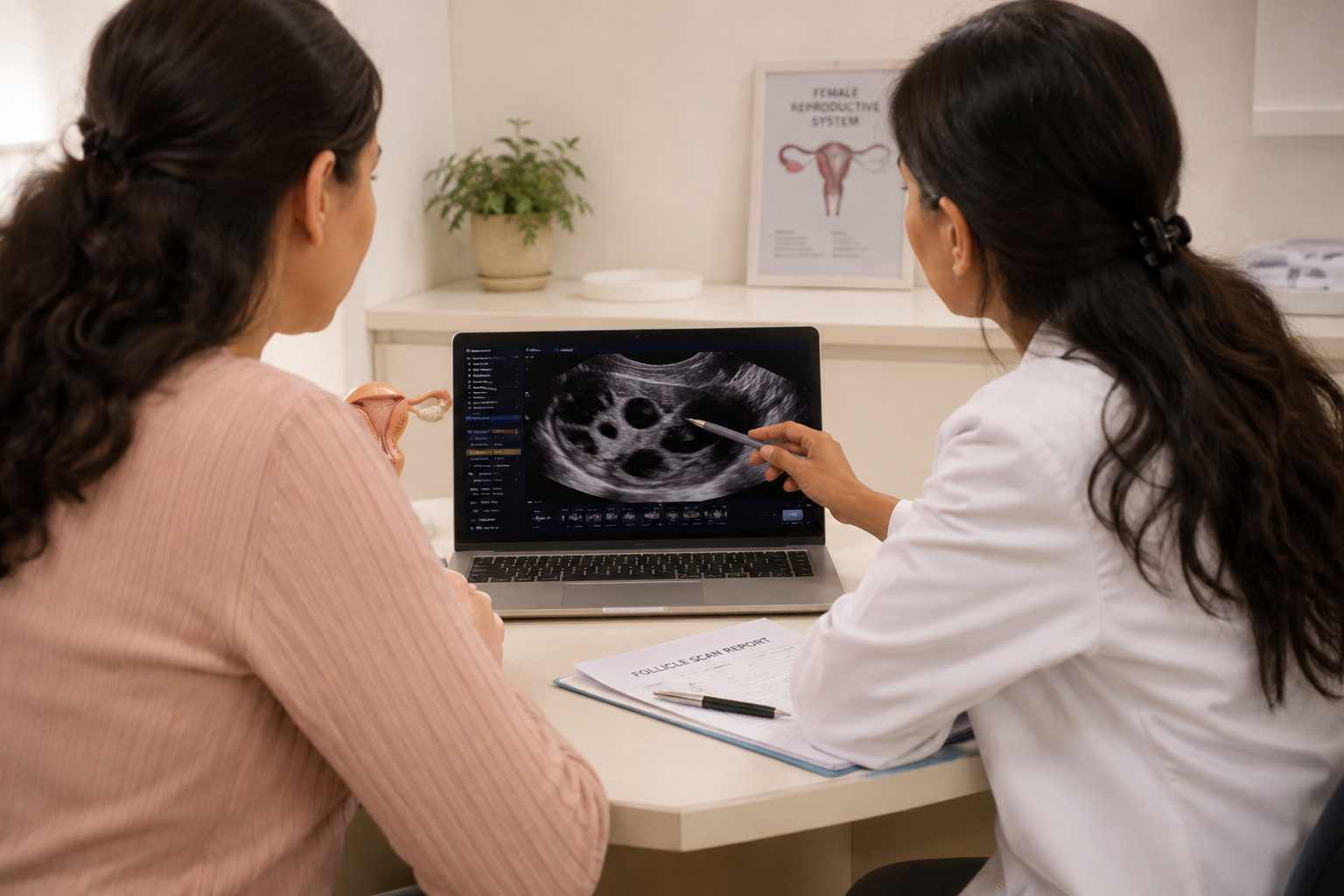
Doctors usually interpret AMH alongside an antral follicle count, or AFC, measured on ultrasound. If AMH and AFC both suggest diminished ovarian reserve, that gives a more useful picture than either test alone.
Why AMH can sometimes look lower than expected
One AMH result should not always be treated as a permanent label. Although AMH is relatively stable across the menstrual cycle, several factors can influence how the result is interpreted.
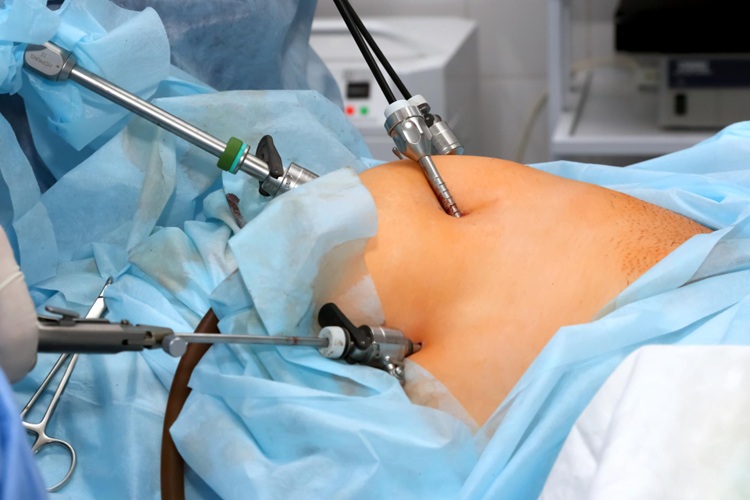
Hormonal contraception can temporarily reduce measured AMH in some women. Previous ovarian surgery, particularly surgery involving ovarian cysts or endometriomas, can also reduce ovarian reserve. Endometriosis itself may be associated with lower ovarian reserve, particularly when the ovaries are involved.
Age remains the biggest background factor. Ovarian reserve naturally falls over time, although the speed of that decline varies considerably between women.
- Increasing age
- Previous ovarian surgery
- Endometriosis involving the ovaries
- Chemotherapy or pelvic radiation
- Some genetic or medical conditions affecting ovarian function
- Current hormonal contraception, which can affect interpretation in some women
Low AMH and egg quality are not the same thing
This distinction changes almost every fertility conversation.
Imagine two women who both have the same low AMH result. One is 29 and the other is 40. Their ovarian reserve test may look similar, but their expected egg quality is not the same because age has a much stronger relationship with chromosomal quality.
The younger woman may produce fewer eggs during IVF stimulation, but a greater proportion of those eggs may still be capable of creating healthy embryos. The older woman may produce the same number of eggs but have a lower proportion that are chromosomally normal.
That is why an AMH report without the woman's age beside it is incomplete information.
Low AMH and IVF: what actually changes
AMH becomes much more useful when IVF is being planned because it helps estimate how strongly the ovaries are likely to respond to stimulation medication.
A woman with lower ovarian reserve may recruit fewer follicles and therefore produce fewer eggs in one IVF cycle. This can mean needing a different stimulation protocol or, in some cases, more than one retrieval to obtain a useful number of eggs or embryos.
Low AMH does not mean IVF cannot work. Even very low ovarian reserve should be used to set realistic expectations about egg yield rather than automatically excluding someone from treatment.
The number of eggs matters in IVF because having more eggs gives more opportunities to create embryos. But once again, age and egg quality strongly influence what happens after those eggs are retrieved.
Can you increase AMH naturally?
This is another question that generates a lot of misleading promises online. There is currently no proven diet, supplement, yoga routine or medication that reliably restores the ovarian follicle pool once it has declined.
A laboratory AMH value can fluctuate, and correcting deficiencies or improving general health may be useful before pregnancy, but that is different from creating new eggs or reversing diminished ovarian reserve.
Be particularly cautious with anyone promising to "increase AMH permanently" or "regrow ovarian reserve." The practical goal is not chasing the blood-test number. It is making the best fertility plan with the eggs and time currently available.
What to do if your AMH is low and you want a pregnancy
The first step is not automatically IVF. The first step is understanding the rest of the fertility picture.
If you are ovulating regularly, your tubes are open and the semen analysis is normal, natural conception may still be reasonable depending on your age and how long you have already been trying. If age is higher, AMH is very low or there are additional fertility factors, spending many months simply waiting may be less sensible.
A proper fertility assessment turns one frightening blood-test result into a practical decision about how much time is reasonable for natural attempts and when treatment should be considered.
- Interpret AMH alongside your age rather than in isolation
- Check antral follicle count on ultrasound
- Confirm whether ovulation is occurring regularly
- Assess the fallopian tubes when clinically appropriate
- Do a semen analysis rather than focusing only on the female partner
- Review any history of endometriosis, ovarian surgery or family history of early menopause
- Decide how long natural attempts are reasonable before moving to fertility treatment
When low AMH should make you act sooner
Low AMH does not mean panic, but there are situations where it should shorten the amount of time spent waiting.
If you are over 35 and have already been trying for six months, a fertility evaluation is appropriate. After 40, evaluation should generally happen without spending additional months waiting. Younger women with very low ovarian reserve, previous ovarian surgery, endometriosis or a strong family history of early menopause may also benefit from an earlier discussion.
The point is not that every woman with low AMH needs IVF. It is that diminished ovarian reserve reduces the margin for losing time if another fertility problem is present.
When to see a fertility specialist
See a fertility specialist if a low AMH result has been found and you are actively trying to conceive, particularly if you are over 35, have been trying for several months already, have had ovarian surgery or endometriosis, or your ultrasound also shows a low antral follicle count.
If you are not trying for pregnancy yet, the conversation can still be useful. Your age, AMH, antral follicle count and future timeline can help determine whether simply waiting, trying sooner or discussing fertility preservation makes sense.
If you are searching for one of the best gynecologists in Delhi for low AMH or fertility planning, look for someone who interprets AMH as one part of a full fertility assessment rather than treating one number as a diagnosis of infertility.
At Raheja Clinic, Dr Tripti Raheja evaluates low AMH alongside age, menstrual history, ultrasound findings, antral follicle count and the other factors that determine fertility. If you have previous AMH reports or pelvic ultrasound scans, bring them with you because the pattern over time is often more informative than one isolated result.
Resources
Common questions
Can I get pregnant naturally with low AMH?
Yes. Low AMH does not mean natural pregnancy is impossible. AMH mainly estimates ovarian reserve and is much better at predicting response to ovarian stimulation than predicting whether an individual woman will conceive naturally. Age, ovulation, fallopian tube health and sperm quality all need to be considered alongside AMH.
What are the symptoms of low AMH?
Low AMH usually has no specific symptoms. Many women have regular periods and feel completely normal despite diminished ovarian reserve. Changes such as irregular or absent periods can occur when ovarian function declines further, but they require a broader hormonal evaluation and cannot be diagnosed from AMH alone.
Can I have low AMH but regular periods?
Yes. Regular periods suggest that ovulation is probably still taking place, but they do not tell us how many follicles remain in the ovaries. AMH can become low years before periods become irregular.
Does low AMH mean poor egg quality?
No. AMH mainly reflects egg quantity rather than egg quality. Age is much more strongly associated with egg quality, so two women with the same AMH but different ages can have very different fertility prospects.
Does low AMH mean early menopause?
Not necessarily. A low AMH result indicates reduced ovarian reserve, but it cannot tell you exactly when menopause will happen. Menstrual history, age and other hormonal findings are needed if premature ovarian insufficiency or early menopause is suspected.
Can low AMH be increased naturally?
There is no proven diet, supplement or lifestyle treatment that reliably restores the ovarian follicle pool once it has declined. General health, nutrition and correcting deficiencies are still important before pregnancy, but treatment should focus on fertility planning rather than simply trying to raise the AMH number.
Is IVF successful with low AMH?
IVF can still be successful with low AMH. The main difference is that women with diminished ovarian reserve may produce fewer eggs during one stimulation cycle. Age and egg quality remain major determinants of whether retrieved eggs create healthy embryos, so AMH should not be used on its own to decide that IVF will or will not work.
Should I repeat my AMH test if it is low?
Sometimes, but repeating the number alone is usually less useful than interpreting it with an antral follicle count, age and clinical history. Your doctor may recommend repeat testing if the result is unexpected, if you are taking hormonal contraception or if the value does not fit the ultrasound findings.
What is more important for fertility, AMH or age?
Age is the stronger predictor of reproductive potential and egg quality. AMH adds useful information about the expected number of available follicles and likely response to fertility treatment. The two should therefore be interpreted together rather than choosing one as the only important fertility test.
When should I see a fertility specialist for low AMH?
Seek an evaluation if you have low AMH and are already trying to conceive, particularly if you are over 35, have been trying for six months or more, or have additional factors such as endometriosis or previous ovarian surgery. Women who are not yet trying but expect to delay pregnancy can also discuss what their age, AMH and antral follicle count mean for future planning.