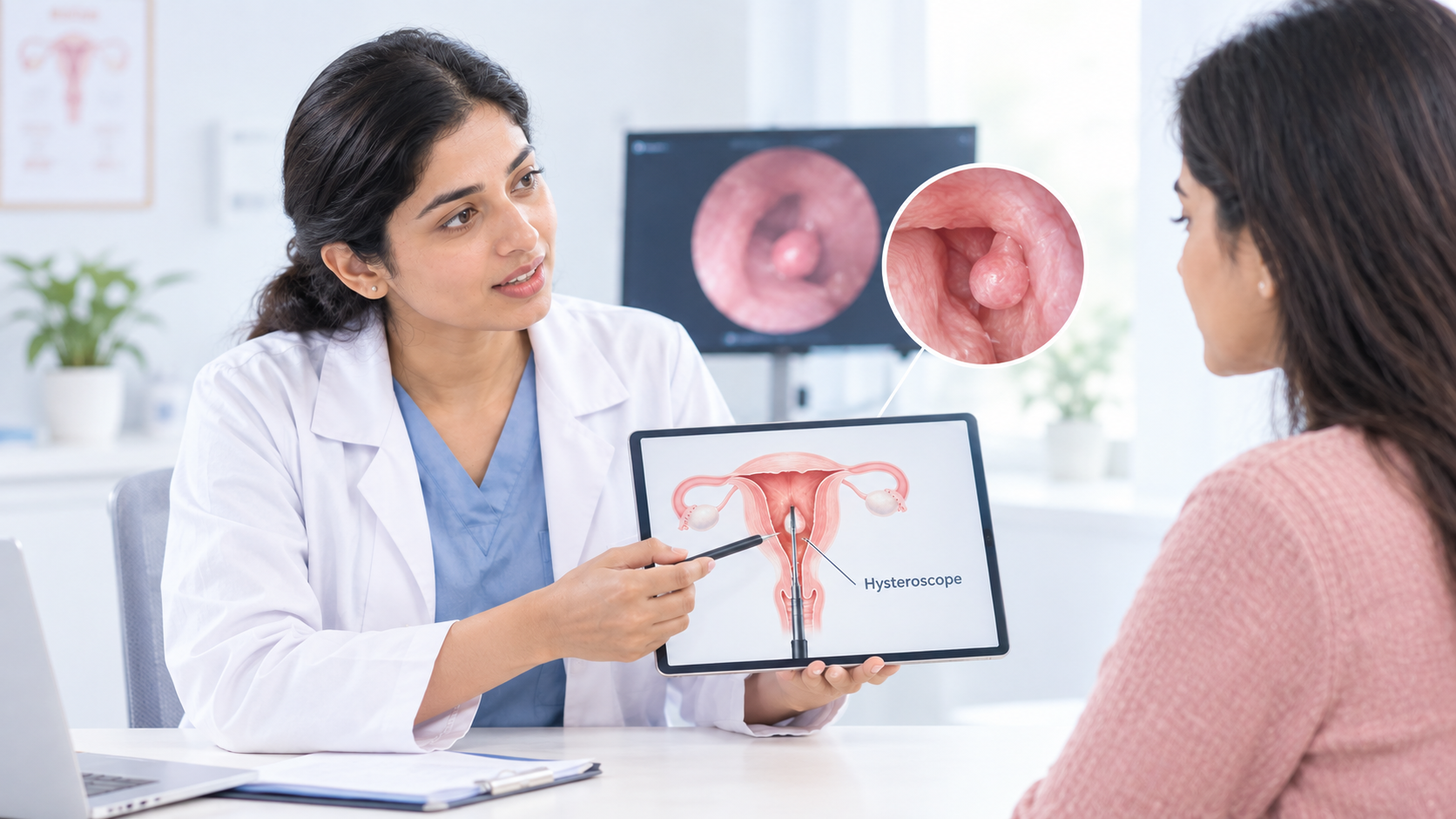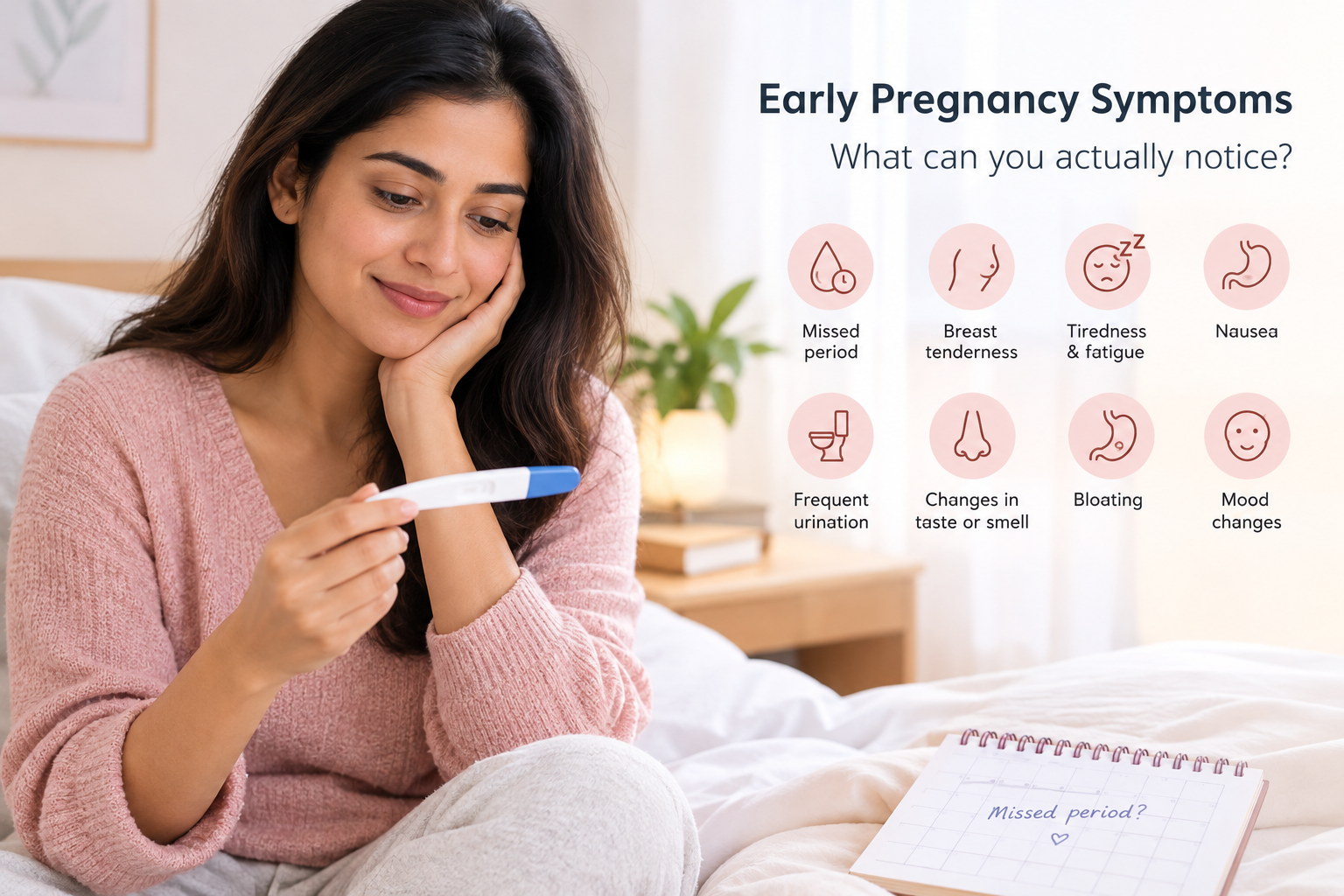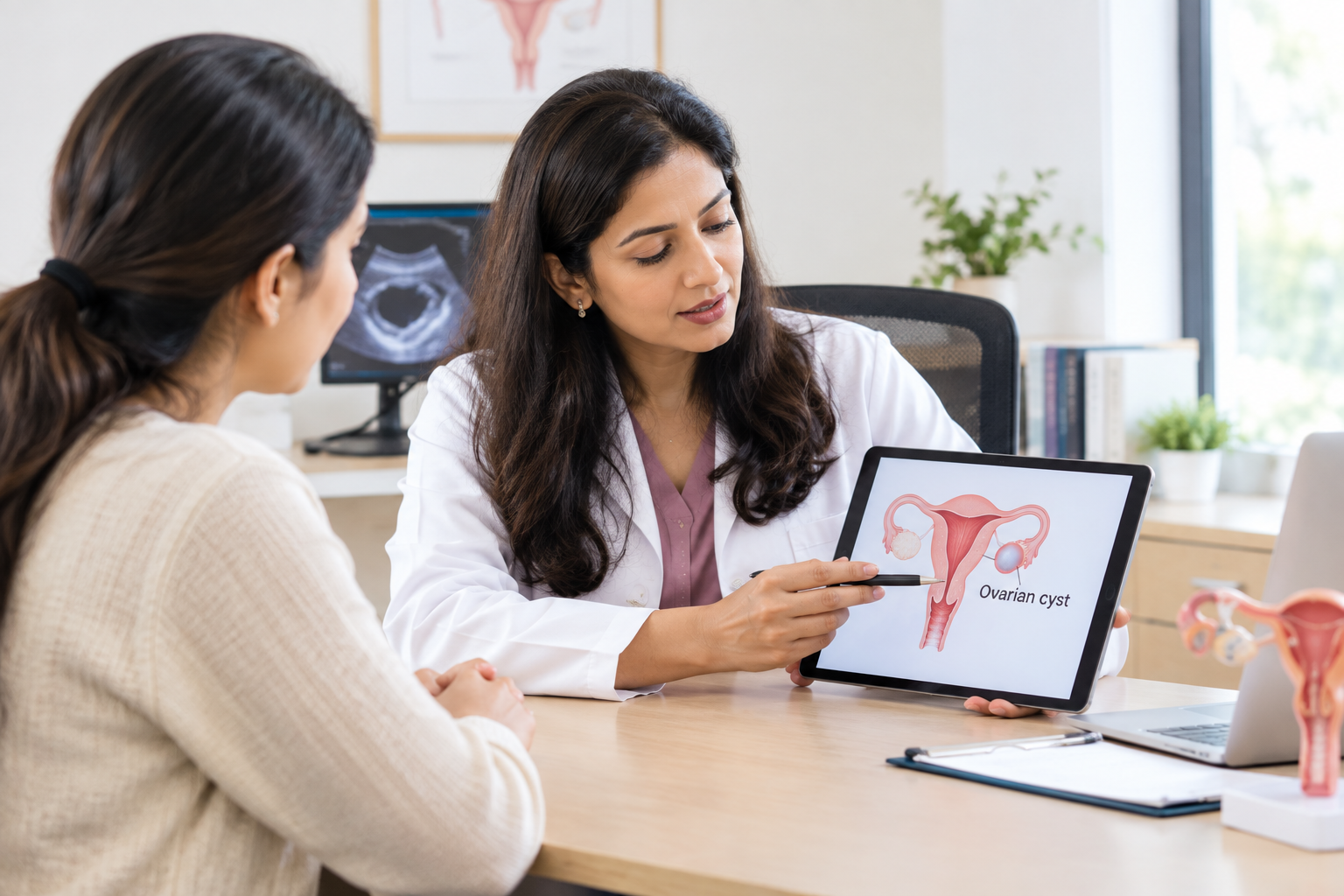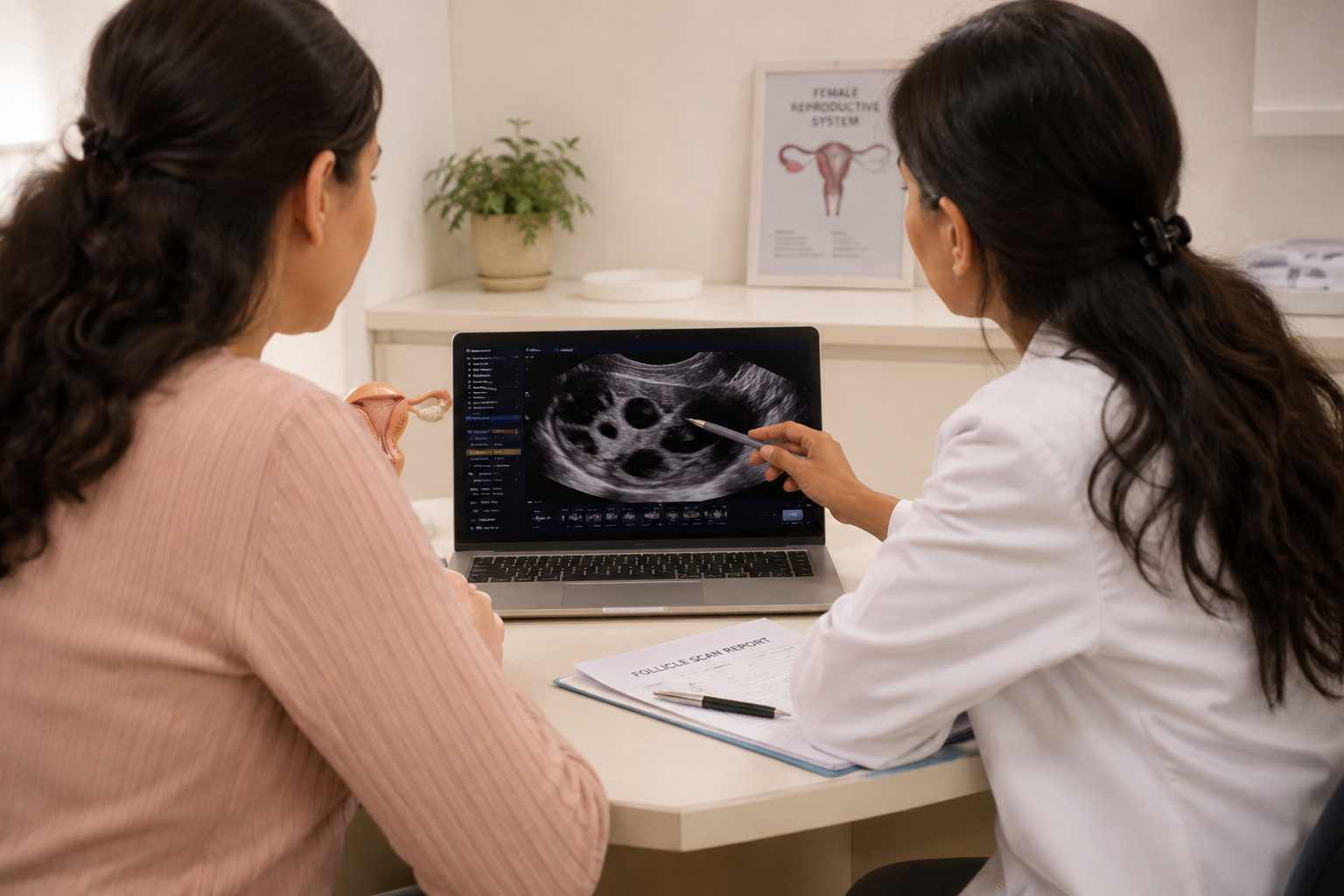
If your periods come late, skip months at a time, or arrive without any pattern you can predict, the most likely reason is that you are not ovulating regularly. In Indian women the most common cause of that is PCOS, or PCOD as it is more often called here. It is manageable, it is not cancer, and it does not mean you cannot have children. But it does need to be diagnosed properly, and this is the part most women are never told: "polycystic ovaries" written on an ultrasound report is not the same thing as having PCOS.
Why PCOS makes your periods irregular
A period is what follows ovulation. When the ovary releases an egg, the lining of the uterus is built up and then shed on schedule. In PCOS, higher-than-usual androgen levels and insulin resistance interrupt that release follicles begin to grow but never mature enough to be released. No ovulation means no properly timed shedding, so the cycle stretches, skips, or becomes unpredictable.
This is why the bleeding pattern in PCOS varies so widely between women. Some bleed every 45 to 60 days. Some go three or four months with nothing at all. Others bleed very heavily and for a long stretch when a period finally arrives, simply because the lining has had months to thicken. All three patterns come from the same underlying problem, and all three respond to the same principles of treatment.
Your cycle is considered irregular if any of the following apply:
- Cycles consistently longer than 35 days
- Fewer than eight periods in a year
- No period at all for three months or more
- A gap of more than eight to nine days between your shortest and longest cycle
Polycystic ovaries are not PCOS the ultrasound confusion
This is the single most common misunderstanding I see in clinic, and it causes a great deal of unnecessary panic.
An ultrasound report describing "polycystic ovaries" or "multiple peripheral follicles" is describing the appearance of the ovary. It is one finding not a diagnosis. Being told you have PCOD on the strength of that one line is common, and often wrong. A substantial number of women with completely normal, regular cycles have ovaries that look this way on a scan. Those follicles are not cysts, they are not dangerous, and they do not need to be removed.
PCOS is diagnosed only when at least two of the following three are present:
- Irregular or absent ovulation
- Signs of raised androgens either on blood tests, or clinically as persistent acne, unwanted facial or body hair, or thinning scalp hair
- Polycystic ovarian appearance on ultrasound
So a woman with regular periods, clear skin and polycystic-looking ovaries does not have PCOS. And a woman with irregular periods and worsening acne can be correctly diagnosed with PCOS even if her ultrasound looks entirely normal.
There is one important caveat for younger girls. Ultrasound should not be used to diagnose PCOS within roughly eight years of the first period, because multi-follicular ovaries are a normal finding at that stage of development. Diagnosing a fifteen-year-old with PCOS on the basis of a scan alone is a common and avoidable error, and it can label a girl for life with a condition she does not have.
Which tests are worth doing and when in your cycle
Blood tests for PCOS are timing-dependent. Taken on the wrong day, they are misleading. Wherever possible these are done on day two to day five of a period, counting day one as the first day of proper bleeding. If you have not bled for months, your gynaecologist may prescribe a short course of medication to bring on a bleed first, or take a random sample and interpret it in that light.
A reasonable first panel includes:
- TSH and prolactin to rule out thyroid disease and raised prolactin, both of which produce identical symptoms and are treated completely differently
- Total testosterone and DHEAS to assess androgen levels
- LH and FSH the ratio is supportive, never diagnostic on its own
- Fasting glucose and fasting insulin, or HbA1c to look for insulin resistance
- Lipid profile and vitamin D both commonly deranged in PCOS and both correctable
- 17-hydroxyprogesterone occasionally, to exclude a rarer adrenal condition that closely mimics PCOS
If you take one thing from this section, take this: irregular periods are not automatically PCOS. Thyroid disorder, raised prolactin, significant weight loss or gain, chronic stress, and the early perimenopausal years all produce exactly the same pattern of missed and unpredictable cycles. Treating a thyroid problem as though it were PCOS can waste years of a woman's life.
Why going months without a period matters more than you think
Most advice frames irregular periods as either an inconvenience or a fertility problem. There is a third reason to act, and it is the one that concerns gynaecologists most.
When you do not ovulate, your body still produces oestrogen, but not the progesterone that normally follows ovulation. Oestrogen thickens the uterine lining; progesterone matures it and triggers the shed. Without that second signal, the lining keeps building month after month with nothing to switch it off. Over a period of years, this unopposed thickening raises the risk of endometrial hyperplasia an abnormal overgrowth of the lining, which in a small proportion of cases can progress further.
This is entirely preventable. It is precisely why a gynaecologist will usually want you to have a bleed at least once every three to four months, even if you are not trying to conceive, and even if the irregularity does not particularly bother you. Going a full year without a period is not something to simply wait out.
What actually helps with PCOS
Lifestyle change is not a consolation prize here for irregular cycles it is genuinely first-line, and it works. The interventions with real evidence behind them are these:
- Losing 5 to 10 per cent of body weight, if you are overweight the single most effective intervention there is. Not twenty kilos. For a 70 kg woman, four to seven kilos is often enough to restore ovulation
- Resistance training alongside walking building muscle improves insulin sensitivity more reliably than cardio alone. Roughly 150 minutes a week is the target
- Lowering the glycaemic load rather than cutting out food groups in a North Indian diet this usually means reducing refined flour, portioning rice and roti sensibly, and pairing every carbohydrate with a protein. You do not need to give up Indian food to manage PCOS
- Correcting vitamin D deficiency very common in this population, easily tested and easily treated
- Protecting sleep and managing stress poor sleep measurably worsens insulin resistance, which in turn worsens cycle irregularity
Medical treatment depends on what you want next
There is no single PCOS prescription. The right treatment follows your intention, not the diagnosis alone which is why the first question in clinic is usually whether you are trying to conceive.
- If you are not trying to conceive combined oral contraceptive pills regulate the cycle, protect the uterine lining and improve acne and unwanted hair growth. Cyclical progesterone is a good alternative where the pill is unsuitable
- If you have insulin resistance metformin. Be prepared for nausea, bloating and loose stools in the first fortnight. Starting on a low dose, taking it with food, and using the extended-release form resolves this for most women. Many stop in the first week believing it does not suit them, when it simply needed titrating slowly
- If you are trying to conceive ovulation induction, most often with letrozole. The contraceptive pill is obviously not appropriate here, which is the clearest illustration of why your goal has to shape the plan
Equally worth saying plainly: some things are oversold. Surgery to "remove ovarian cysts" is not a treatment for PCOS. Detox teas do nothing. And any plan promising a permanent cure is not being honest with you. PCOS is managed rather than cured but managed well, the large majority of women have regular cycles, good long-term health and healthy pregnancies.
What to ask at your appointment
Bring these five questions with you. They change the quality of the consultation, and they tell you quickly whether your diagnosis was made carefully:
- Which two of the three criteria did I actually meet for this diagnosis?
- Have my thyroid and prolactin levels been checked and ruled out?
- Am I genuinely insulin resistant, or am I only being treated as though I am?
- How often do I need to have a bleed in order to protect my uterine lining?
- Does this treatment plan change if I want to conceive within the next year?
When to see a gynaecologist
Book an appointment if you have gone three months without a period, if your cycles have changed pattern noticeably, if acne or unwanted hair growth is worsening, or if you have been trying to conceive for a year without success six months if you are over 35.
Bring any previous ultrasound reports with you. Comparing scans and cycle records over time tells a gynaecologist far more than any single report ever can. If you are in North or West Delhi, consultations are available at Raheja Clinic in Vijay Nagar and at C K Birla Hospital, Punjabi Bagh.
Resources
Common questions
Can PCOS be cured permanently?
No, and any treatment promising a permanent cure is overstating what it can do. PCOS is a hormonal and metabolic condition that is managed rather than cured. That said, management works well. With weight control, exercise and the right medication, most women achieve regular cycles, normal androgen levels and healthy pregnancies. Symptoms can return if treatment and lifestyle changes stop, which is why the plan is designed to be sustainable rather than extreme.
Can I get pregnant if I have PCOS?
Yes. PCOS is one of the most common causes of difficulty conceiving, but it is also one of the most treatable. The problem is irregular ovulation, not an inability to carry a pregnancy. Losing 5 to 10 per cent of body weight restores ovulation for many women on its own. Where it does not, ovulation induction with letrozole is highly effective. Only a minority of women with PCOS need IVF.
Is PCOD different from PCOS?
The two terms are used interchangeably in everyday conversation in India, and most doctors will not correct you. Strictly speaking, PCOD describes ovaries that release immature eggs and take on a polycystic appearance, while PCOS refers to the wider syndrome that includes hormonal and metabolic effects across the body. In practice, what matters is not the label but which diagnostic criteria you meet and whether your androgens, insulin and cycle have actually been assessed.
Does PCOS go away after marriage or after having a baby?
No. This is a persistent myth, and an unhelpful one. Marriage has no effect on PCOS whatsoever. Pregnancy and breastfeeding do temporarily alter your hormonal pattern, and some women notice their cycles are more regular for a while afterwards. This is a temporary change, not a cure PCOS typically reasserts itself, and long-term metabolic health still needs attention.
Do ovarian cysts in PCOS need surgery?
In almost all cases, no. The follicles seen on a PCOS ultrasound are not true cysts and removing them is not a treatment for the condition. Surgery in this situation risks reducing your ovarian reserve without addressing the underlying hormonal problem. Surgery becomes relevant only for a genuinely separate ovarian cyst one that is large, persistent, growing, or has concerning features on a scan. That is a different diagnosis that happens to coexist with PCOS.
Is it safe to take the contraceptive pill for years to control PCOS?
For most healthy women, yes, and long-term use is common in PCOS management. The pill regulates cycles, protects the uterine lining from unopposed thickening, and improves acne and unwanted hair. It is not suitable for everyone. Smokers over 35, and women with a history of blood clots, uncontrolled high blood pressure or migraine with aura, need alternatives such as cyclical progesterone. Your fitness for the pill should be reviewed periodically, not assumed indefinitely.
Does PCOS cause weight gain, or does weight gain cause PCOS?
Both, which is what makes it feel like a trap. Insulin resistance in PCOS promotes weight gain and makes losing weight harder than it is for other women. Excess weight then raises insulin and androgen levels further, worsening the cycle irregularity. The practical consequence is that progress is often slower than expected, and that is not a personal failing. It is also why breaking in at any point through diet, exercise or metformin improves the whole loop rather than just one part of it.
Can irregular periods be something other than PCOS?
Yes, and this is worth taking seriously. Thyroid disease, raised prolactin, significant weight change, chronic stress, certain medications, and early perimenopause all produce irregular or absent cycles that look exactly like PCOS from the outside. This is why TSH and prolactin belong in the very first set of blood tests. A PCOS diagnosis made without excluding these is not a complete diagnosis.