
Hysteroscopy Procedure
A precise uterine-cavity procedure used to diagnose and treat selected causes of abnormal bleeding, polyps, fibroids, infertility and miscarriage concerns.

Hysteroscopy is a procedure used to look directly inside the uterus with a thin camera passed through the vagina and cervix. It can help find the cause of abnormal bleeding, repeated miscarriage, suspected polyps, submucosal fibroids, adhesions, fertility concerns or a misplaced IUD. In selected cases, the problem can be treated during the same procedure.
What is hysteroscopy?
A hysteroscopy allows the doctor to see the inside lining of the uterus, also called the uterine cavity. Unlike laparoscopy, it does not involve cuts on the abdomen because the hysteroscope enters through the natural vaginal route.
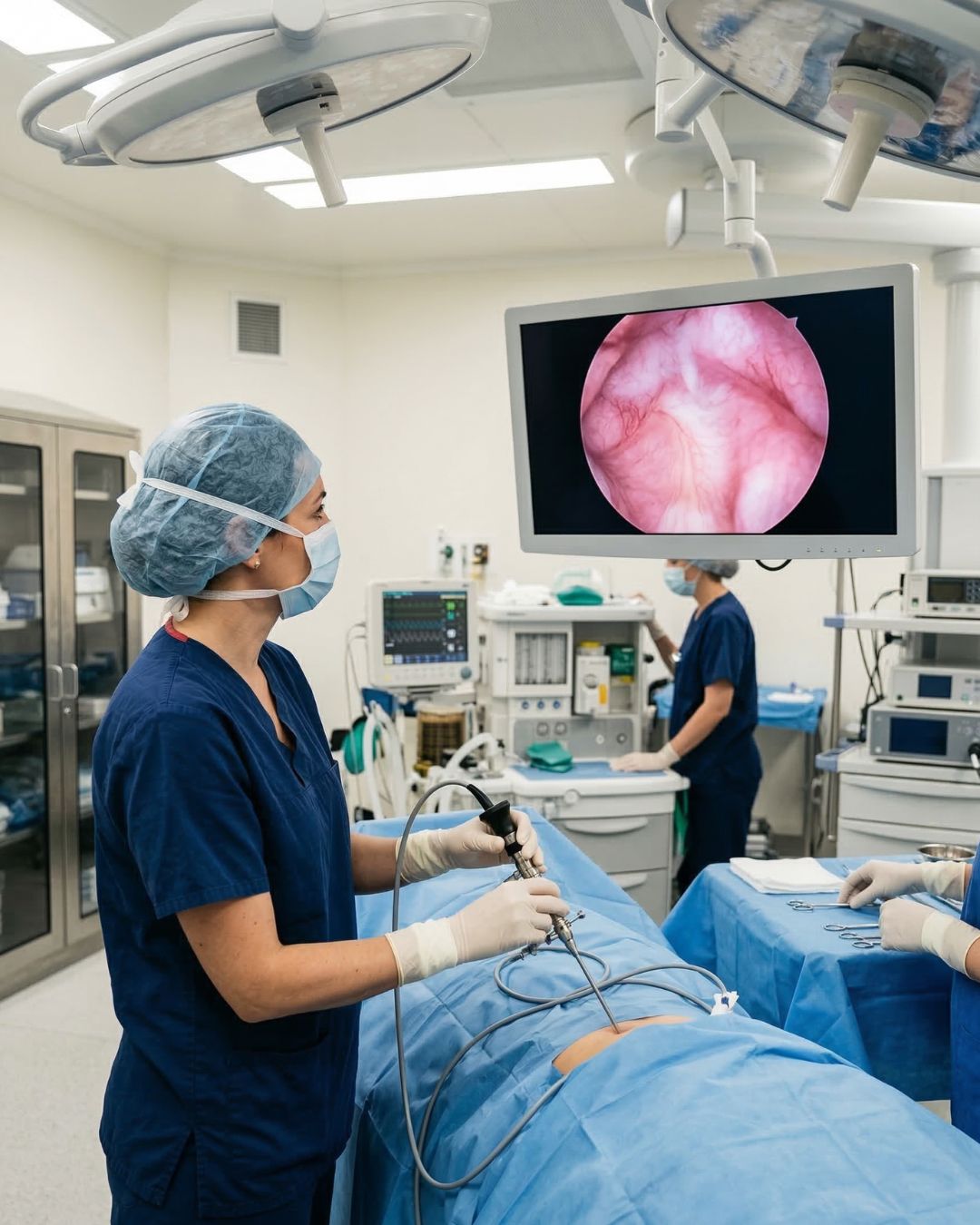
The camera sends images to a screen, so the uterine lining, openings of the fallopian tubes, polyps, fibroids, adhesions or abnormal areas can be seen clearly. If needed, small instruments can be passed through the hysteroscope to remove tissue, take a biopsy or correct a problem.
When may hysteroscopy be advised?
Hysteroscopy is usually advised when symptoms, ultrasound findings or fertility history suggest that the inside of the uterus needs direct evaluation. It is useful because scans can suggest a problem, but hysteroscopy can confirm what is actually present inside the uterine cavity.
- Heavy, prolonged or irregular periods that need further evaluation.
- Bleeding between periods or bleeding after menopause.
- Suspected uterine polyp seen on ultrasound or saline sonography.
- Submucosal fibroid projecting into the uterine cavity.
- Repeated miscarriage or failed embryo transfer where cavity assessment is needed.
- Infertility evaluation when a uterine cavity problem is suspected.
- Scar tissue or adhesions inside the uterus.
- Missing, stuck or displaced IUD when strings are not visible.
- Need for directed biopsy from a suspicious area of the uterine lining.
Diagnostic and operative hysteroscopy
Diagnostic hysteroscopy is done mainly to inspect the uterus and understand the cause of symptoms. Operative hysteroscopy means treatment is done at the same sitting, when suitable.
For example, a small polyp may be removed, a biopsy may be taken, adhesions may be released, or a suitable submucosal fibroid may be treated. The decision depends on the size, location and depth of the finding, as well as pain-control needs and overall safety.
- Diagnostic hysteroscopy helps confirm what is inside the uterus.
- Operative hysteroscopy treats selected findings under direct vision.
- Some larger or deeper fibroids may need staged treatment or another surgical plan.
- A biopsy may be sent for testing when bleeding pattern, age or ultrasound findings make it necessary.
What happens during the procedure?
Before hysteroscopy, pregnancy is usually ruled out and the timing may be planned after periods for better visibility in women who are still menstruating. Your doctor will review your symptoms, scan reports, medicines, allergies and previous procedures.
During the procedure, a slim hysteroscope is passed through the cervix into the uterus. Saline fluid is used to gently open the uterine cavity so the lining can be seen. The procedure may take only a few minutes for diagnosis, but it can take longer if a biopsy, polyp removal, fibroid treatment or adhesion release is done.
- The cervix and uterus are assessed with a thin camera.
- The uterine cavity is expanded with fluid for clear vision.
- Findings are reviewed on a screen.
- Biopsy or treatment is done in the same sitting when appropriate.
- Recovery instructions are explained before you leave.
Will hysteroscopy be painful?
Pain experience varies. Some women feel only mild cramping, while others may find it uncomfortable, especially if the cervix is tight, periods are usually painful, anxiety is high, or an operative step is needed.
Pain-control options depend on the procedure type and patient comfort. Some cases can be done without general anesthesia, while others are better planned with anesthesia or sedation. The right option should be discussed before the procedure, not after discomfort starts.
Recovery after hysteroscopy
Most women go home the same day. Mild cramps and light spotting are common for a few days. If only diagnostic hysteroscopy is done, many women return to routine activity quickly. If treatment is done, recovery advice may be more specific.
Use pads instead of tampons until bleeding settles. Avoid intercourse until your doctor says it is safe, especially if a biopsy, polyp removal or operative hysteroscopy was done.
- Mild period-like cramps can happen for one or two days.
- Spotting or light bleeding may continue for a few days.
- Most patients can resume light routine activity soon.
- Driving advice depends on whether anesthesia or sedation was used.
- Biopsy results, if taken, should be reviewed during follow-up.
When should you call the doctor?
Hysteroscopy is generally safe, but you should not ignore symptoms that may suggest infection, heavy bleeding or another complication.
- Heavy bleeding or bleeding that keeps getting worse.
- Severe abdominal pain not improving with advised medicines.
- Fever, chills or feeling very unwell.
- Foul-smelling vaginal discharge.
- Fainting, dizziness or severe weakness.
Hysteroscopy care with Dr Tripti Raheja
At Raheja Clinic, Dr Tripti Raheja reviews your bleeding pattern, ultrasound findings, fertility history and previous treatment before advising hysteroscopy. The goal is to avoid unnecessary procedures, choose the right timing and plan pain control properly.
As a gynecologist and obstetrician with experience in minimally invasive gynecologic care, Dr Tripti Raheja helps patients understand whether hysteroscopy is needed, whether treatment can be done in the same sitting and what recovery should look like. If your concern overlaps with infertility, pregnancy loss, fibroids or abnormal bleeding, the consultation can also help connect hysteroscopy with the next step in your care.
What to bring for your consultation
Bring any reports that can help explain the bleeding pattern, fertility history or scan finding. Even older reports can be useful if symptoms have been recurring.
- Recent pelvic ultrasound, saline sonography, MRI or hysterosalpingography report.
- Period dates, bleeding pattern and pain history.
- Previous biopsy, Pap smear or endometrial sampling reports.
- Fertility treatment records, miscarriage history or embryo transfer records if relevant.
- Current medicines, blood thinners, hormonal pills or IUD details.
- Previous surgery records, especially cesarean, D&C, fibroid surgery or hysteroscopy notes.
Frequently asked questions
What is hysteroscopy used for?
Hysteroscopy is used to look inside the uterus and evaluate abnormal bleeding, uterine polyps, submucosal fibroids, adhesions, repeated miscarriage, infertility concerns, postmenopausal bleeding or a missing IUD.
Is hysteroscopy a surgery or a test?
It can be either. Diagnostic hysteroscopy is mainly a test to inspect the uterus. Operative hysteroscopy is a treatment procedure where a polyp, small fibroid, adhesion, biopsy area or stuck IUD may be managed during the same sitting.
Is hysteroscopy painful?
Some women feel mild cramps, while others may feel more discomfort. Pain depends on cervical tightness, anxiety, pain tolerance, whether treatment is being done and the anesthesia plan. Discuss pain-control options before the procedure.
How long does a hysteroscopy procedure take?
A diagnostic hysteroscopy may take only a few minutes. It can take longer if a biopsy, polyp removal, fibroid treatment, adhesion release or IUD removal is done.
How long is hysteroscopy recovery time?
Many women return to light routine activity the same day or next day after diagnostic hysteroscopy. Recovery may take longer if operative treatment or anesthesia was used. Mild cramps and spotting for a few days are common.
Can hysteroscopy help with infertility?
Hysteroscopy can help when infertility is linked to a uterine cavity problem such as a polyp, adhesion, septum, submucosal fibroid or suspected abnormal lining. It is not needed for every infertility case, so the decision should be based on reports and history.
Can polyps be removed during hysteroscopy?
Yes, many uterine polyps can be removed during operative hysteroscopy under direct vision. The removed tissue may be sent for testing, especially when bleeding is abnormal or the patient is near menopause or postmenopausal.
Can fibroids be treated with hysteroscopy?
Only selected fibroids can be treated hysteroscopically. These are usually submucosal fibroids that project into the uterine cavity. Larger, deeper or multiple fibroids may need a different plan or staged treatment.
When is a suitable time for hysteroscopy?
For women who have periods, hysteroscopy is often planned after bleeding stops and before ovulation because the lining is thinner and visibility is better. Timing may differ for urgent bleeding, menopause-related bleeding or fertility treatment planning.
What symptoms after hysteroscopy need urgent review?
Call your doctor if you have heavy bleeding, worsening abdominal pain, fever, chills, foul-smelling discharge, fainting or severe weakness. These symptoms should not wait for a routine follow-up.
Why has hysteroscopy been suggested?
Pick the closest reason. Your exact plan depends on symptoms and reports.
Book an Appointment
Get the care you deserve. With our expertise and dedication, you can expect nothing but the finest care for all your women's health concerns.
- 29+ years of clinical experience
- Compassionate, patient-first care
- Advanced laparoscopic & robotic surgery