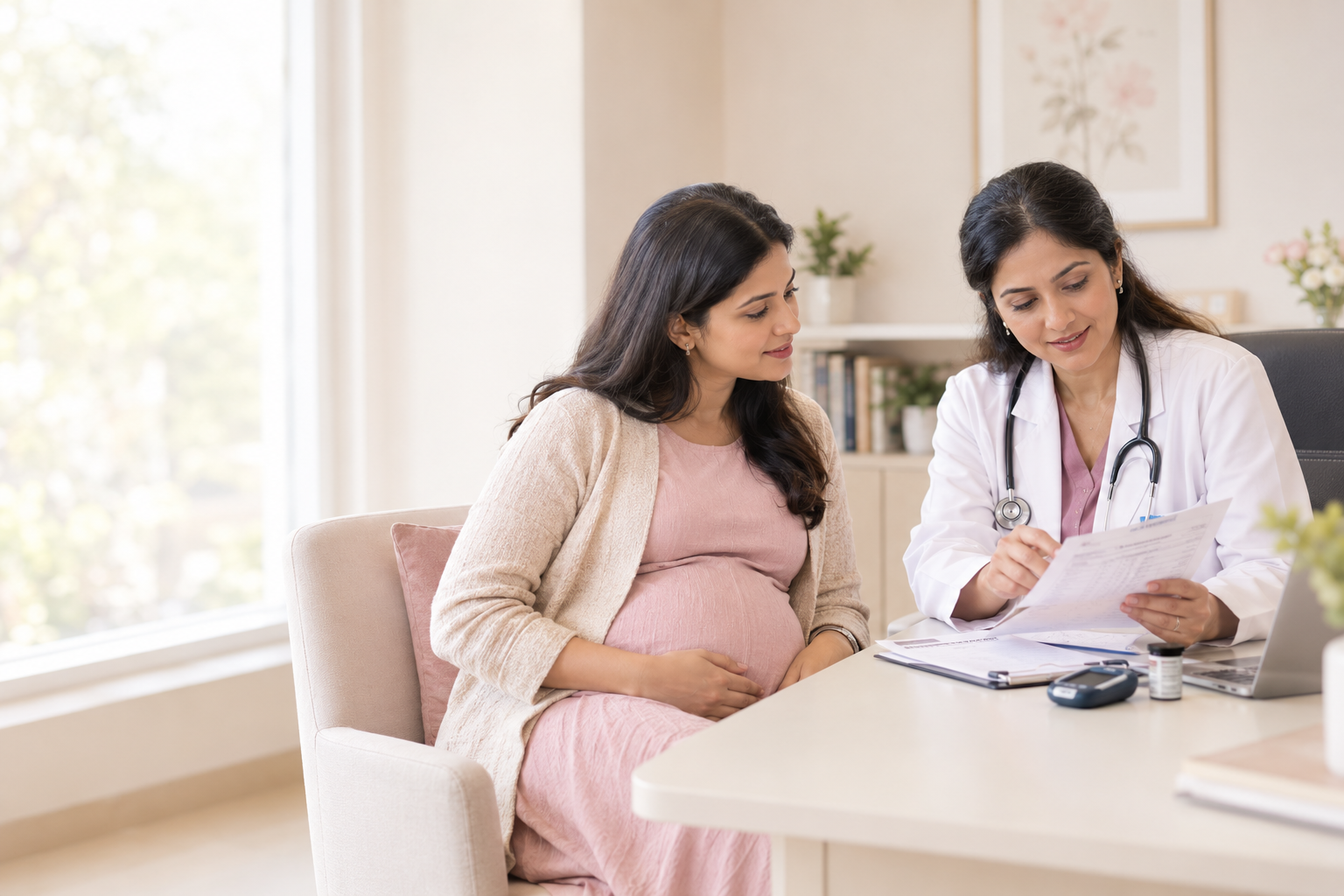
Being told that you have diabetes during pregnancy can be frightening, especially if you have never had a blood sugar problem before. The good news is that gestational diabetes can usually be managed effectively when it is identified and monitored properly. Gestational diabetes means that blood sugar levels become higher than normal during pregnancy. It usually develops because pregnancy hormones make the body more resistant to insulin. The pancreas may not be able to produce enough additional insulin to keep blood sugar within the normal range. One important point is that gestational diabetes often does not cause noticeable symptoms. This is why routine screening during pregnancy is so important. Finding it early allows your doctor to manage blood sugar and reduce pregnancy-related risks.
What is gestational diabetes?
Gestational diabetes is diabetes that is first diagnosed during pregnancy. It is different from diabetes that was already present before pregnancy, although both conditions require careful blood sugar management.
During pregnancy, hormones produced by the placenta can make the body less sensitive to insulin. This is called insulin resistance. It is a normal part of pregnancy to some degree, but in some women the pancreas cannot produce enough insulin to compensate. Blood glucose then rises.
Gestational diabetes usually develops later in pregnancy, which is why screening is commonly performed during the second trimester.
What are the symptoms of gestational diabetes?
Many women with gestational diabetes have no symptoms at all. This is one of the main reasons that relying on how you feel is not enough to rule it out.
Some women may notice increased thirst, increased urination, tiredness or blurred vision, but these symptoms can also occur during a normal pregnancy. A blood sugar test is therefore much more reliable than symptoms alone.
- Increased thirst
- Passing urine more frequently than usual
- Unusual tiredness
- Blurred vision
- Occasionally, no noticeable symptoms at all
When is the gestational diabetes test done?
Gestational diabetes screening is generally performed between 24 and 28 weeks of pregnancy. Women who have a higher risk of diabetes may be tested earlier.
The exact testing method and diagnostic thresholds can vary depending on the guideline and healthcare setting. Your doctor may recommend an oral glucose tolerance test or another standard glucose screening approach.
What happens during a gestational diabetes test?
An oral glucose tolerance test involves measuring your blood glucose and then giving you a measured glucose drink. Blood samples are taken according to the testing protocol to see how your body handles the glucose.
You may be given specific instructions about fasting before the test. It is important to follow the instructions provided by the laboratory or your doctor because the preparation can affect the result.
A single abnormal reading does not always mean the same thing across every testing protocol. Your doctor will interpret the result using the diagnostic criteria being followed.
Who is more likely to develop gestational diabetes?
Gestational diabetes can occur in women without any obvious risk factors. However, some factors increase the likelihood of developing it.
Having one or more risk factors does not mean you will definitely develop gestational diabetes. Conversely, women without these risk factors can still develop it.
- Previous gestational diabetes
- Being overweight or having obesity before pregnancy
- A previous baby with a high birth weight
- A family history of type 2 diabetes
- Polycystic ovary syndrome in some women
- Previous pregnancy complications associated with diabetes
- Higher maternal age
- Certain ethnic backgrounds associated with a higher diabetes risk
Can gestational diabetes affect the baby?
When blood glucose remains high during pregnancy, glucose crosses the placenta and the baby's pancreas produces more insulin. This can contribute to excessive fetal growth.
Gestational diabetes is associated with an increased risk of having a larger baby, which can make vaginal delivery more difficult in some cases. Depending on the severity and control of the condition, there can also be increased risks of newborn low blood sugar and other complications.
These risks do not mean that a woman with gestational diabetes will necessarily have a complicated pregnancy. Good blood sugar control and appropriate antenatal monitoring can significantly improve pregnancy management.
Can gestational diabetes cause a big baby?
Yes. Persistently high maternal blood sugar can increase the amount of glucose reaching the fetus. The baby's body responds by producing more insulin, which can promote growth and increase birth weight.
This is one reason your doctor may monitor fetal growth during pregnancy when gestational diabetes is diagnosed.
Ultrasound estimates of fetal weight are useful but are not perfectly accurate. Decisions about delivery should therefore consider the complete clinical picture rather than one estimated weight measurement.
What should you eat if you have gestational diabetes?
A gestational diabetes diet is not about completely avoiding carbohydrates or eating as little as possible. Pregnancy still requires adequate nutrition for both mother and baby.
The goal is to choose balanced meals that provide appropriate carbohydrates, protein, fibre and healthy fats while avoiding large blood sugar spikes.
Your doctor or dietitian may recommend spreading carbohydrates across meals and snacks, choosing higher-fibre foods, limiting sugary drinks and monitoring how specific foods affect your glucose readings.
- Choose whole grains and other high-fibre carbohydrate sources where appropriate
- Include protein with meals
- Eat vegetables regularly
- Limit sugary drinks, sweets and highly refined carbohydrates
- Avoid skipping meals unless your doctor has specifically advised a different plan
- Follow the individual meal plan recommended for your blood sugar pattern
Is walking or exercise safe with gestational diabetes?
For many women with uncomplicated pregnancies, regular moderate physical activity can help improve blood sugar control. Walking after meals may also help reduce post-meal glucose levels.
However, exercise recommendations are not identical for every pregnancy. Women with bleeding, placenta-related problems, certain cervical conditions, preterm labour risk or other pregnancy complications may need different advice.
If you have been diagnosed with gestational diabetes, discuss the appropriate level of activity with your obstetrician before starting a new exercise routine.
When is insulin needed for gestational diabetes?
Some women can control gestational diabetes with dietary changes and appropriate physical activity. Others continue to have high blood sugar despite these measures and need medication.
Insulin is commonly used when medication is required during pregnancy because it does not cross the placenta in the same way that some oral medicines do.
The decision to start insulin is based on your glucose readings, pregnancy stage, overall health and the treatment targets recommended by your doctor. Needing insulin is not a sign that you have failed to manage your diabetes. It simply means that your body needs additional help maintaining the desired blood sugar range.
Does gestational diabetes mean I will need a C-section?
No. Gestational diabetes by itself does not automatically mean that you need a caesarean delivery.
The mode and timing of delivery depend on several factors, including blood sugar control, estimated fetal growth, previous obstetric history, fetal wellbeing and other pregnancy-related considerations.
Your obstetrician will discuss the delivery plan as the pregnancy progresses rather than making the decision based on the diagnosis alone.
What happens after delivery?
For many women, blood sugar returns to normal after delivery because the pregnancy-related insulin resistance decreases. However, having gestational diabetes increases the future risk of developing type 2 diabetes.
This makes postpartum follow-up important even when you feel completely well.
Your doctor may recommend a diabetes test after delivery and continued periodic screening. Maintaining a healthy weight, eating a balanced diet and staying physically active can also reduce future diabetes risk.
Does gestational diabetes increase the risk in a future pregnancy?
Yes. Women who have had gestational diabetes are more likely to develop it again in a future pregnancy.
A previous diagnosis also increases the long-term risk of type 2 diabetes. If you are planning another pregnancy, it is useful to discuss your previous blood sugar history with your gynecologist before conception.
When should you see a high-risk pregnancy specialist?
Gestational diabetes does not automatically mean that you need highly specialised care throughout pregnancy. However, closer obstetric monitoring may be appropriate when blood sugar is difficult to control, medication is required, fetal growth is abnormal or other pregnancy complications are present.
If you have diabetes before pregnancy, previous gestational diabetes, obesity, PCOS or another medical condition that could affect pregnancy, discussing your risk early can help create an appropriate antenatal plan.
Dr Tripti Raheja provides pregnancy care for women who need closer monitoring because of diabetes, previous pregnancy complications or other high-risk factors. The aim is to identify problems early and coordinate treatment throughout pregnancy rather than waiting for complications to develop.
Resources
Common questions
What are the symptoms of gestational diabetes?
Most women with gestational diabetes do not have obvious symptoms. Some women may experience increased thirst, frequent urination, tiredness or blurred vision, but these symptoms can also occur during normal pregnancy. Screening is therefore important.
When is the gestational diabetes test done?
Screening is commonly performed between 24 and 28 weeks of pregnancy. Women with certain risk factors may be tested earlier.
Can gestational diabetes affect the baby?
Poorly controlled gestational diabetes can increase the risk of excessive fetal growth, newborn low blood sugar and other pregnancy and delivery complications. Good blood sugar control and appropriate antenatal monitoring help reduce these risks.
What should I eat if I have gestational diabetes?
A balanced diet with appropriate portions of carbohydrates, protein, vegetables and healthy fats can help control blood sugar. Sugary drinks and highly refined carbohydrates are generally limited, but your exact meal plan should be personalised during pregnancy.
Does gestational diabetes mean I need insulin?
Not necessarily. Some women control their blood sugar with dietary changes and physical activity. Insulin may be recommended when glucose levels remain above the desired range despite lifestyle measures.
Does gestational diabetes mean I need a C-section?
No. Gestational diabetes alone does not automatically require a caesarean delivery. The delivery plan depends on blood sugar control, fetal growth, pregnancy history and other clinical factors.
Does gestational diabetes go away after pregnancy?
Blood sugar often returns to normal after delivery because pregnancy-related insulin resistance decreases. However, women who have had gestational diabetes have a higher future risk of type 2 diabetes and should have appropriate postpartum screening.
Can gestational diabetes happen in a future pregnancy?
Yes. Having gestational diabetes in one pregnancy increases the chance of developing it again. Early discussion and appropriate screening in a future pregnancy can help with timely management.