
Many women are told they have an "ovarian cyst" during a routine scan and immediately worry about cancer or surgery. In reality, most cysts found on ultrasound are functional a normal part of the monthly cycle and settle without any treatment. The details that matter are the type of cyst, its size, whether it is growing, and whether it is causing symptoms.
What is an ovarian cyst?
An ovarian cyst is a fluid-filled sac that forms in or on an ovary. Every woman who ovulates develops small, temporary cysts as part of a normal cycle. Most go unnoticed and disappear on their own.
A cyst becomes a concern only when it is large, persistent across cycles, unusual in appearance on ultrasound, or associated with pain, pressure or irregular bleeding.
When is an ovarian cyst an emergency?
Two situations turn a cyst into an emergency. Ovarian torsion happens when a cyst causes the ovary to twist on itself, cutting off its blood supply this causes sudden, severe pain and needs urgent surgery to save the ovary.
Cyst rupture can cause sharp pain and, if there is significant internal bleeding, dizziness or fainting. Either of these needs same-day evaluation, not a routine appointment.
How ovarian cysts are diagnosed
A transvaginal or pelvic ultrasound is the first and most useful test it shows the size, structure and appearance of the cyst, which helps separate a simple functional cyst from one that needs closer attention.
Depending on the findings, a gynecologist may also advise a repeat scan after a few weeks to see if the cyst has resolved, blood tests such as CA-125 (used carefully, since it can be raised for reasons other than cancer), or an MRI for cysts with a complex or unclear appearance.
When cysts need treatment or surgery
Most functional cysts are managed with monitoring alone a repeat ultrasound after one or two cycles is often enough to confirm they have resolved.
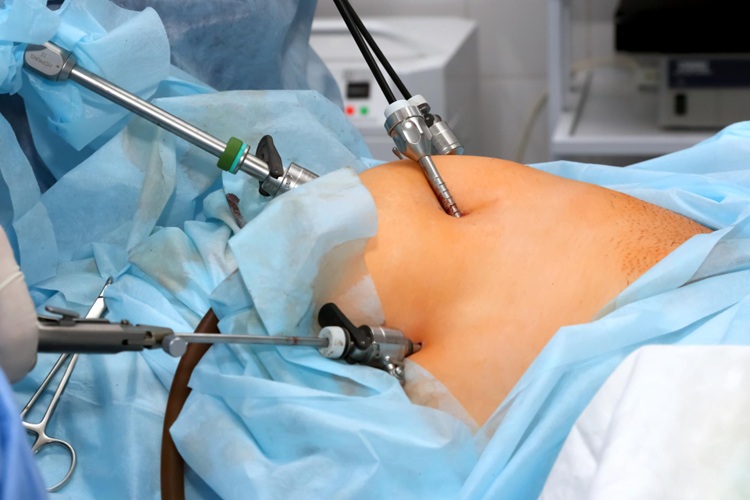
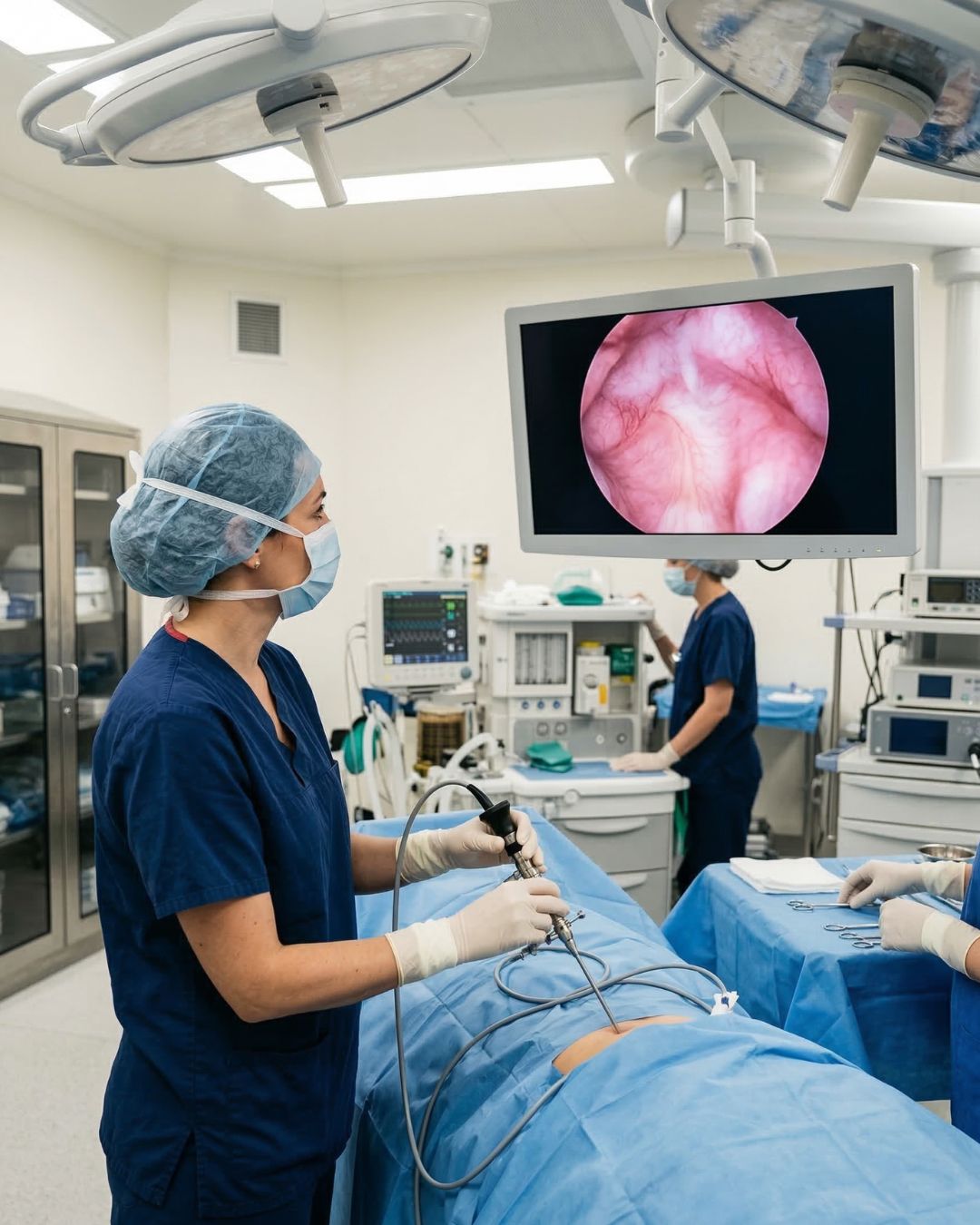
Surgery is usually considered when a cyst is large, growing, persistent beyond a few cycles, complex or unusual on imaging, or causing significant pain. Laparoscopic cystectomy removing the cyst while preserving the healthy ovarian tissue around it is the preferred approach for most cysts needing surgery, because it is minimally invasive with a faster recovery than open surgery. The exact approach depends on the type of cyst, its size, and whether fertility needs to be protected.
When should you see a gynecologist?
Book a visit if you have persistent one-sided pelvic pain, a cyst that has been seen on more than one scan, bloating that does not settle, irregular periods along with pelvic discomfort, or pain during intercourse. Seek urgent care for sudden, severe abdominal pain, especially with nausea, vomiting or fainting.
At Raheja Clinic, Dr Tripti Raheja evaluates ovarian cysts with ultrasound, relevant blood work and a treatment plan matched to the type of cyst with a clear explanation of what can simply be watched and what actually needs surgery. If you are looking for a gynecologist in Delhi for an ovarian cyst, bring your previous ultrasound reports so the pattern over time can be compared.
Common questions
Are ovarian cysts normal?
Yes, small functional cysts are a normal part of the monthly cycle for most women and usually disappear without treatment.
Can an ovarian cyst be cancerous?
Most ovarian cysts, especially in younger women, are benign. The risk of cancer rises with certain ultrasound features, larger size and age, which is why imaging findings are assessed carefully rather than assumed.
Does an ovarian cyst affect fertility?
Functional cysts generally do not affect fertility. Endometriomas and large cysts can affect ovarian reserve, particularly if surgery is needed, so treatment is planned with fertility in mind when relevant.
Can an ovarian cyst go away on its own?
Yes. Most functional cysts resolve within one to three cycles without any treatment, which is why a repeat scan is often advised before deciding on further steps.
What does ovarian cyst pain feel like?
It is usually a dull ache or heaviness on one side of the lower abdomen. Sudden, sharp, severe pain is different and needs urgent evaluation.
Is surgery always needed for an ovarian cyst?
No. Surgery is considered for cysts that are large, persistent, complex in appearance or symptomatic. Many cysts are simply monitored.
Can birth control pills treat an ovarian cyst?
Hormonal contraception can help prevent new functional cysts from forming but does not shrink an existing cyst. It is not a treatment for all cyst types.
How is an ovarian cyst different from PCOS?
PCOS involves many small follicles and an ovulation problem, not a single growing cyst. The two are diagnosed and managed differently.