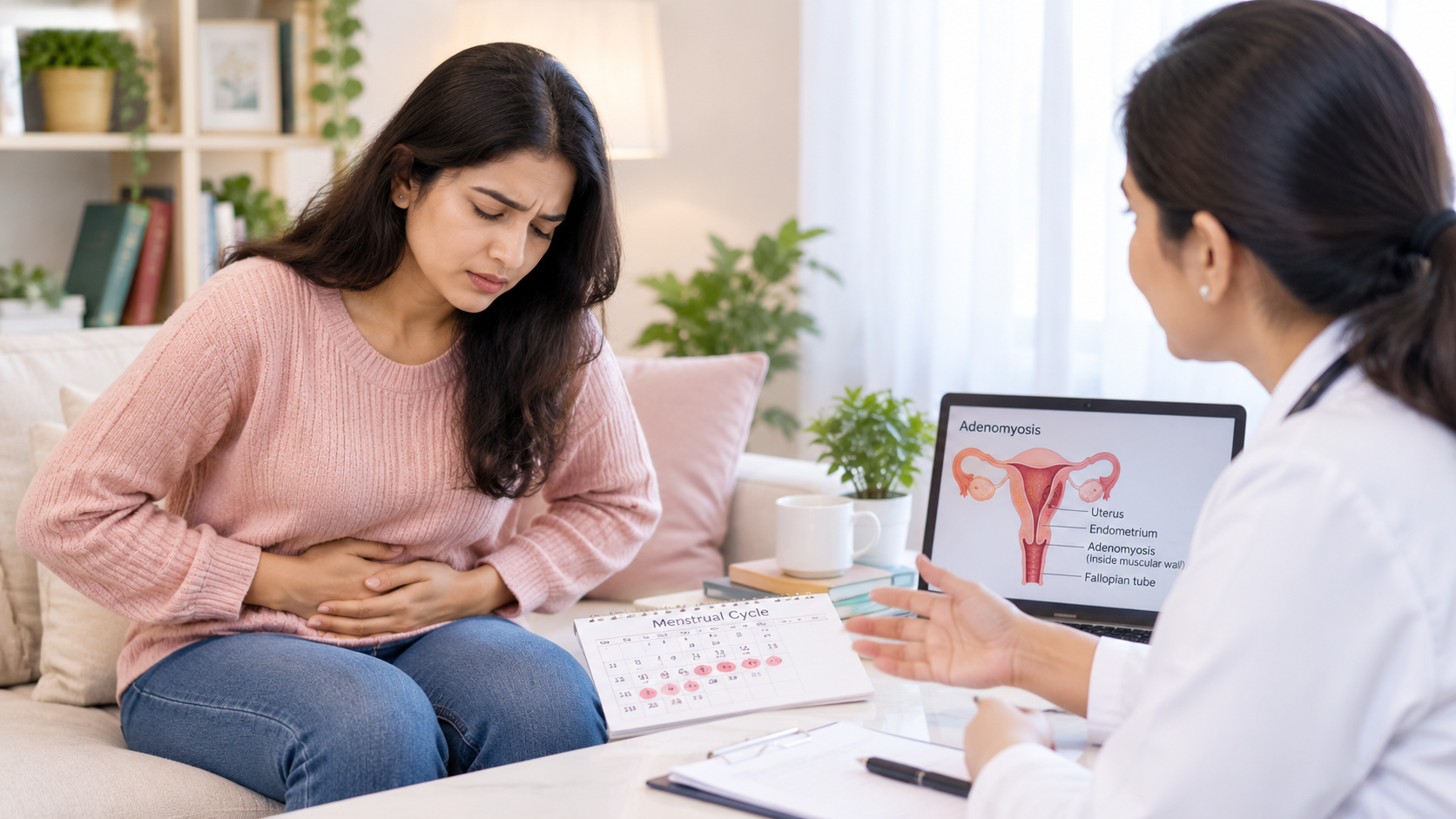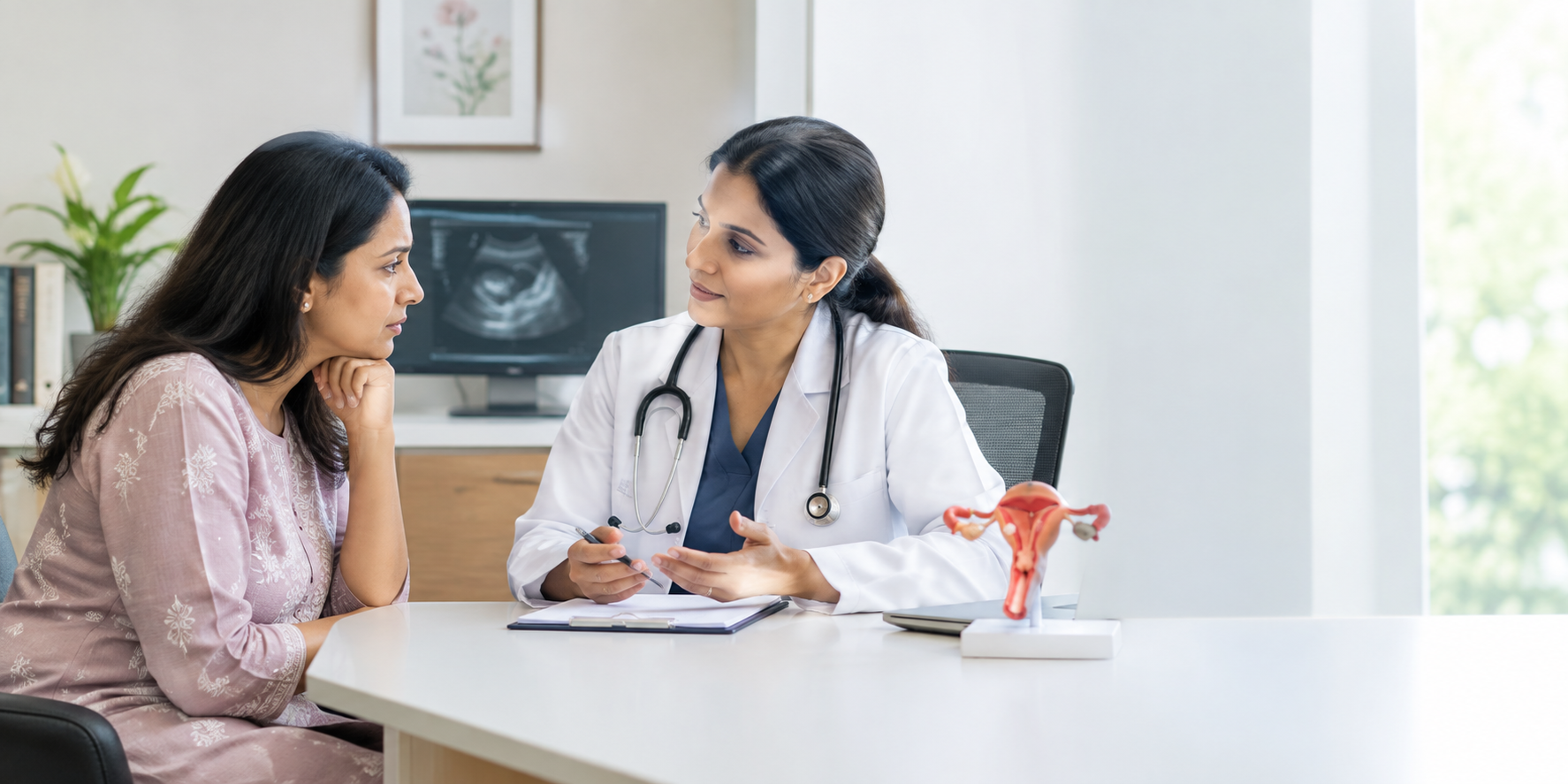

Period pain is common. Not all period pain is the same, though. Cramping that responds to a painkiller and lets you carry on with your day is a different thing entirely from pain that stops you going to work, gets worse every cycle, or shows up alongside pain during intercourse or bowel movements. That second pattern is one of the clearest signals of endometriosis, a condition that, on average, takes several years and multiple doctor visits before it's actually diagnosed.
What is endometriosis?
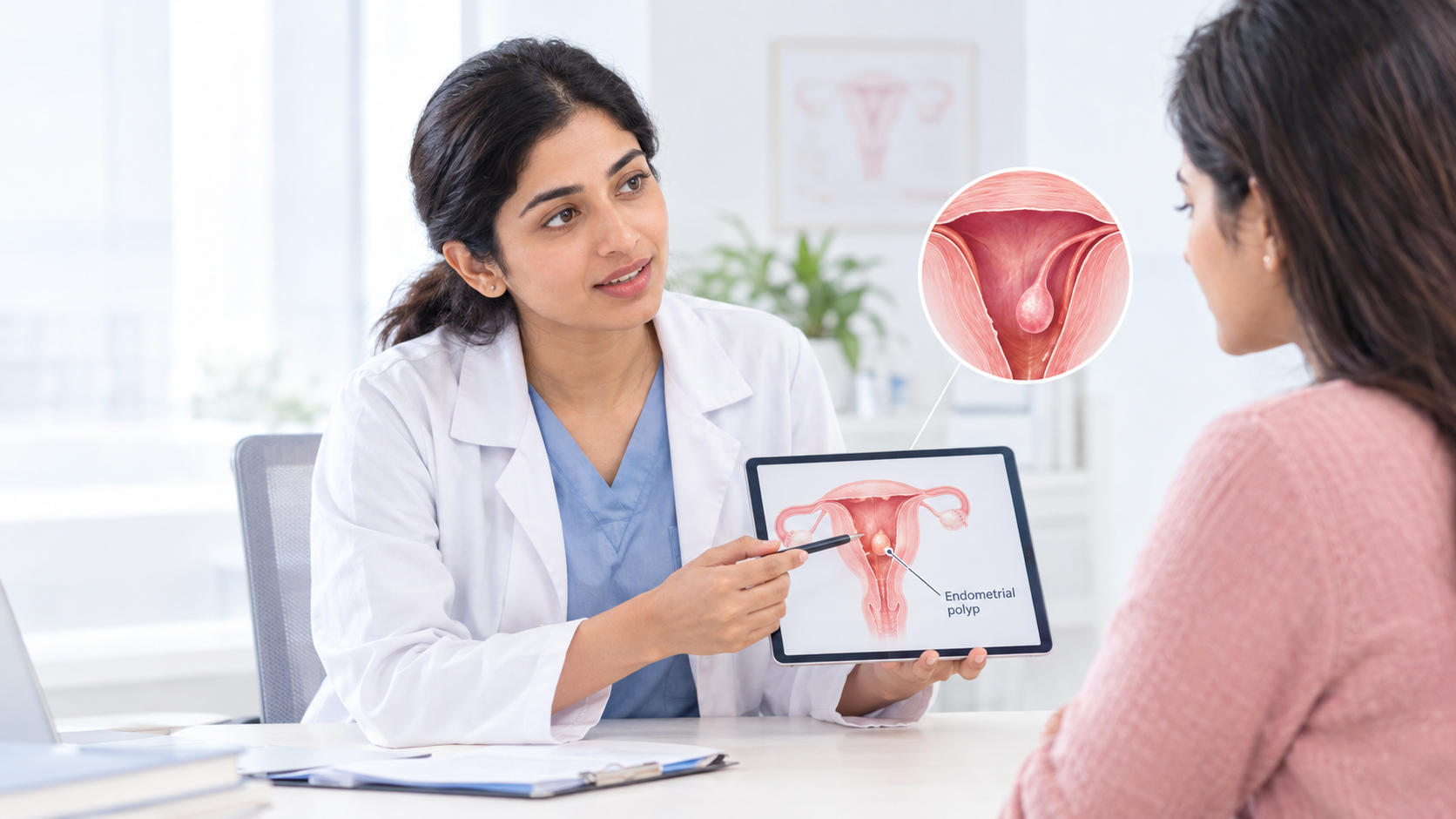
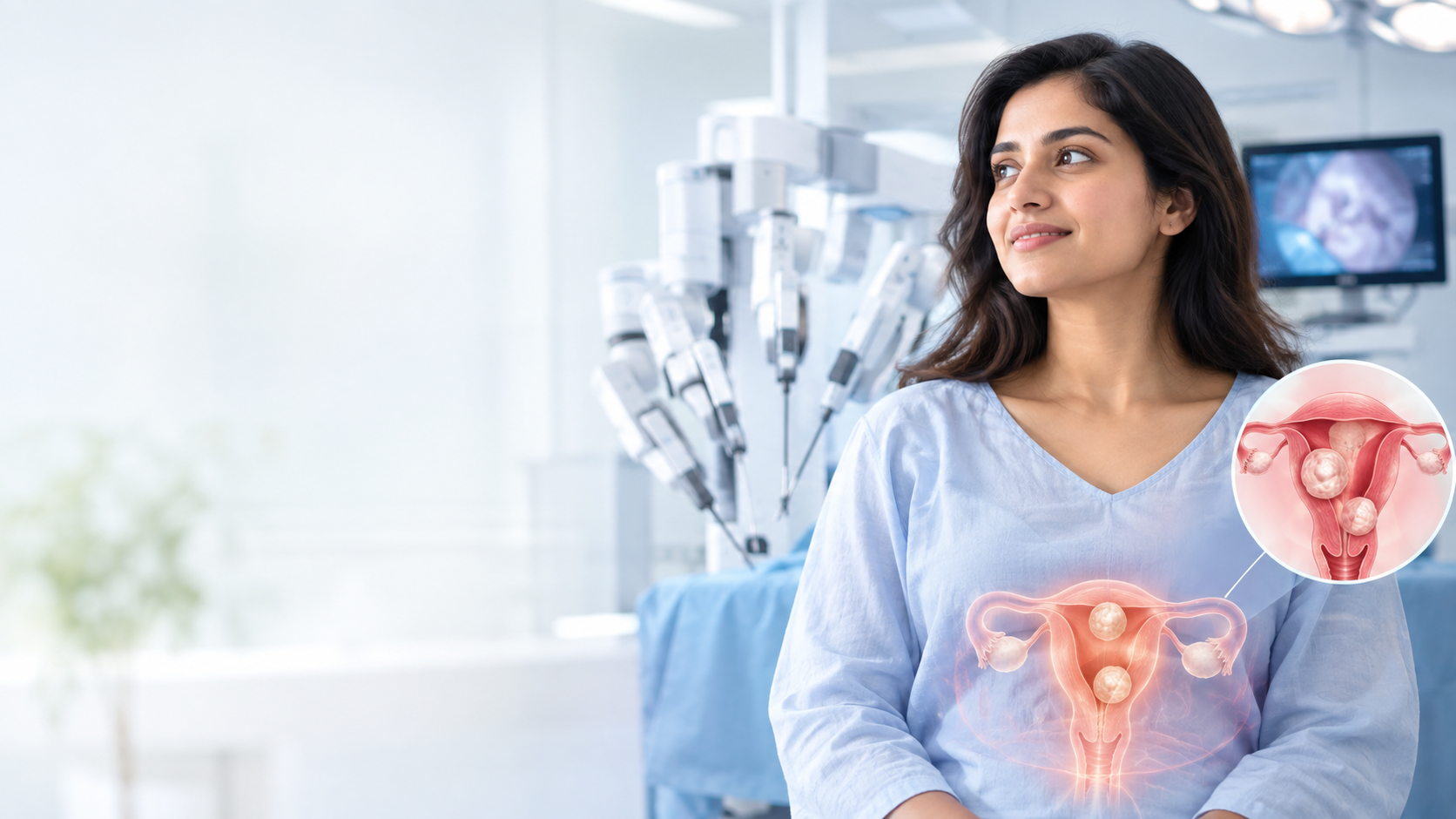
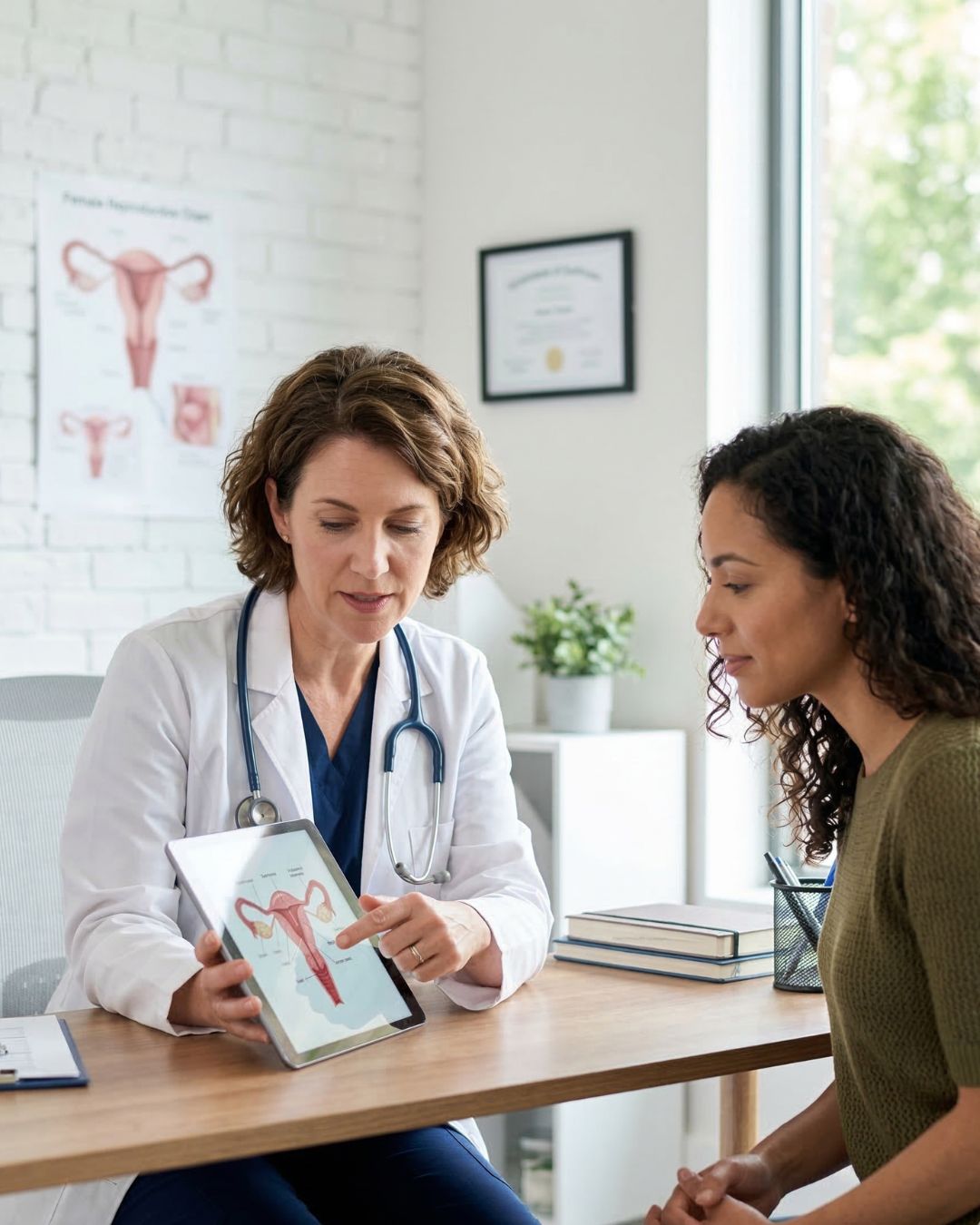
Endometriosis happens when tissue similar to the lining of the uterus starts growing outside it, commonly on the ovaries, the fallopian tubes, the outer surface of the uterus, or the pelvic lining.
This tissue responds to your menstrual cycle just like the uterine lining does. It thickens and bleeds every month. But unlike the uterine lining, it has no way out of the body, and that's what leads to inflammation, scarring, and adhesions that bind pelvic organs together.
How endometriosis pain differs from normal period pain
Ordinary period cramps are usually mild to moderate. They last a day or two, and they get better with a standard painkiller and some rest.
Endometriosis pain tends to be progressive. It often gets a little worse each cycle, starts earlier, lasts longer, and comes with other symptoms like pain during intercourse or bowel movements. If period pain is regularly getting in the way of school, work, or daily life, it's worth getting it evaluated instead of just managing it indefinitely with painkillers.
Why endometriosis is often missed or delayed
Because period pain is so common, severe pain often gets normalised, by patients and sometimes by doctors too. That's how years go by before anyone actually looks into it properly.
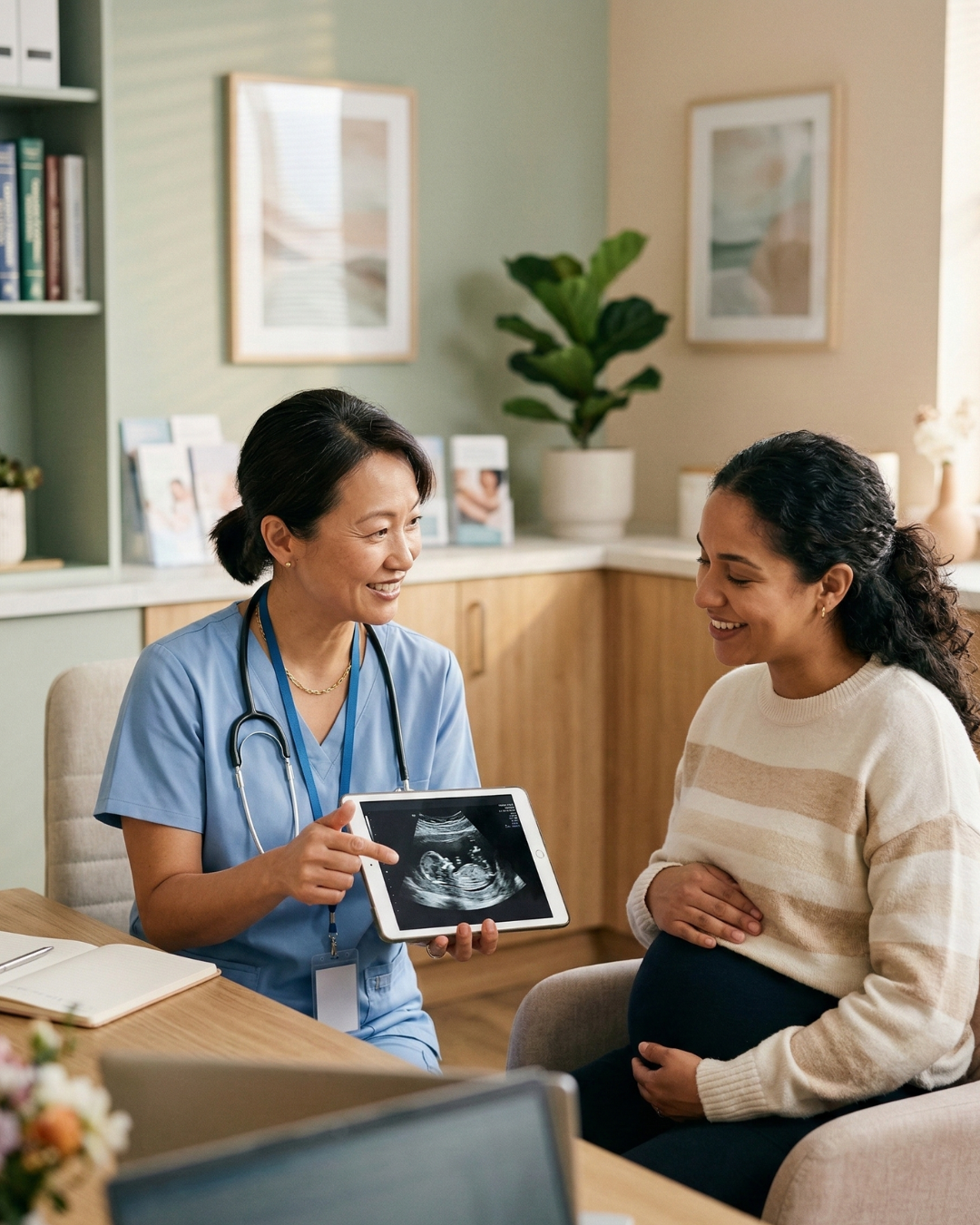
It also doesn't always show up clearly on a standard ultrasound, especially in its earlier stages. So a normal scan doesn't rule it out if the symptom pattern still fits.
How endometriosis is diagnosed
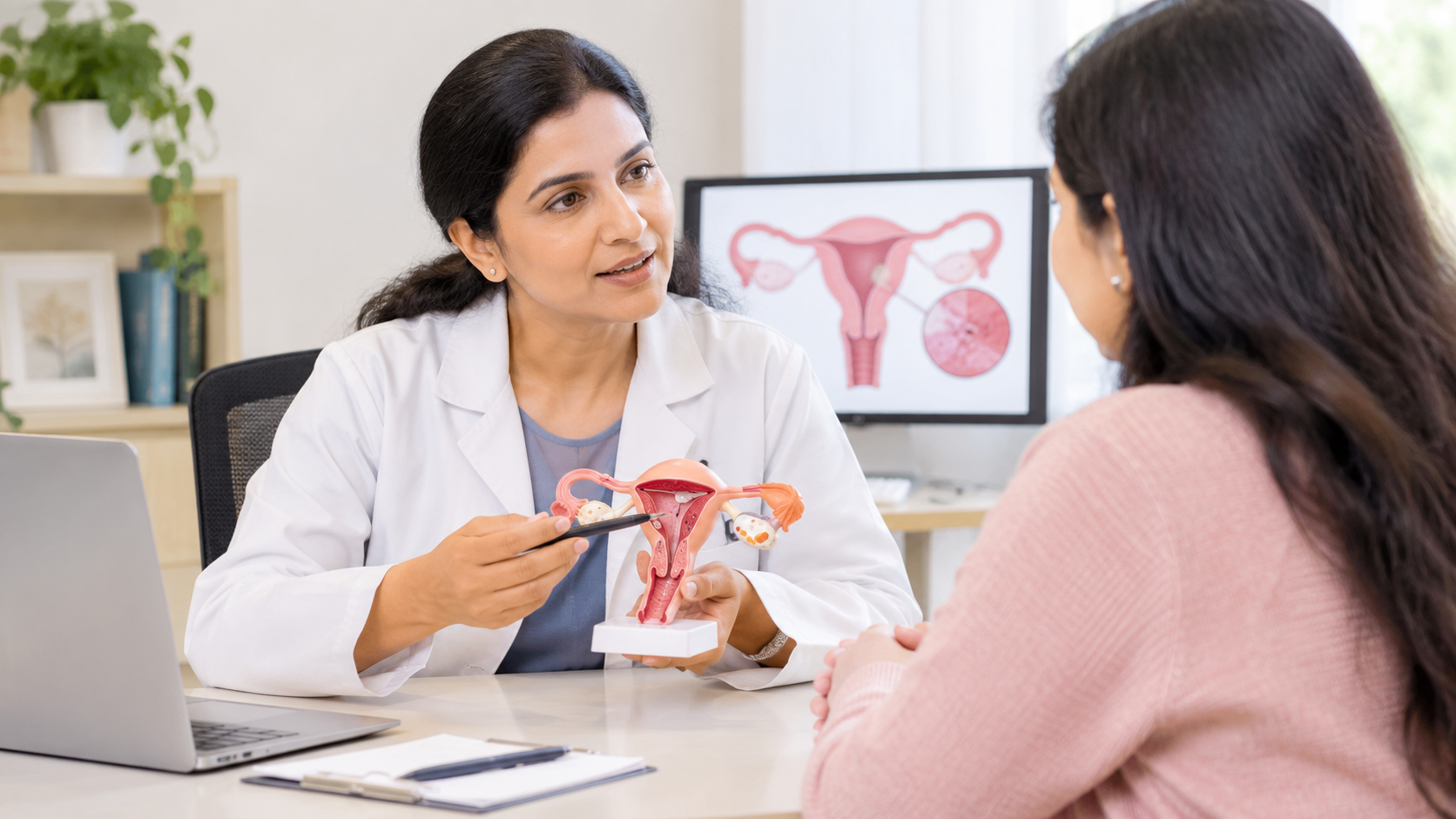
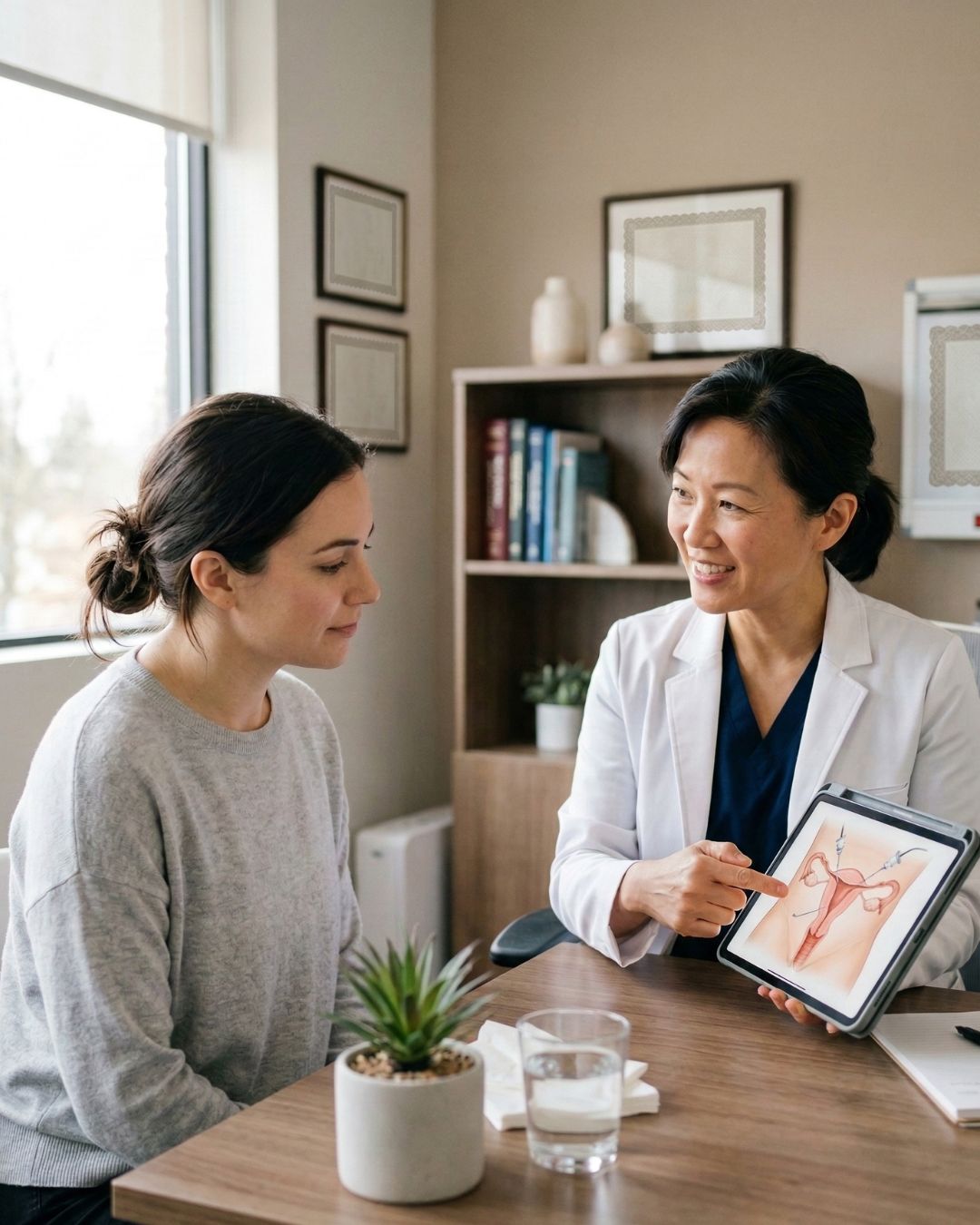
Diagnosis starts with a detailed history of the pain: when it happens, how it's changed over time, and what other symptoms come with it, along with a pelvic examination.
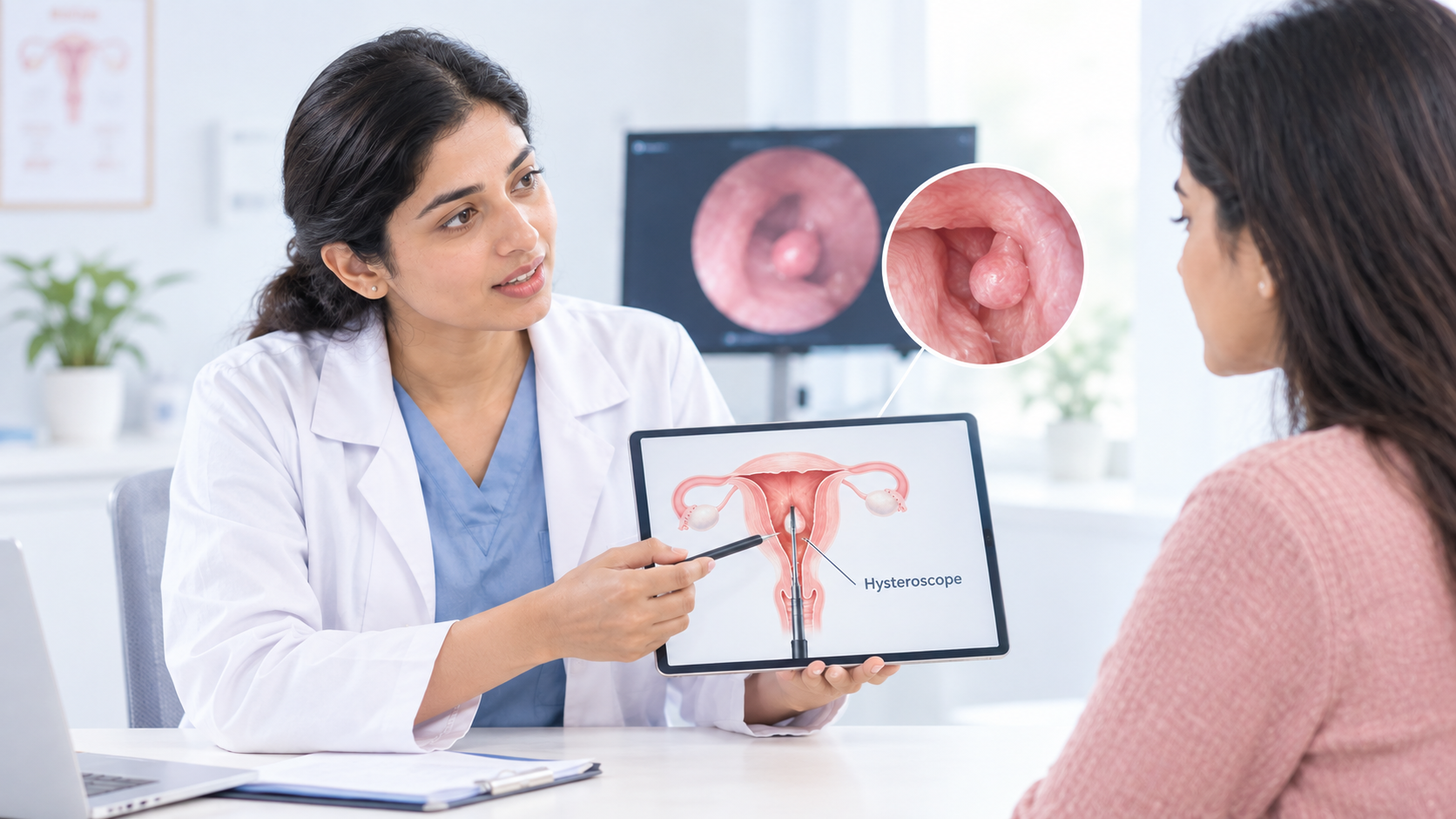
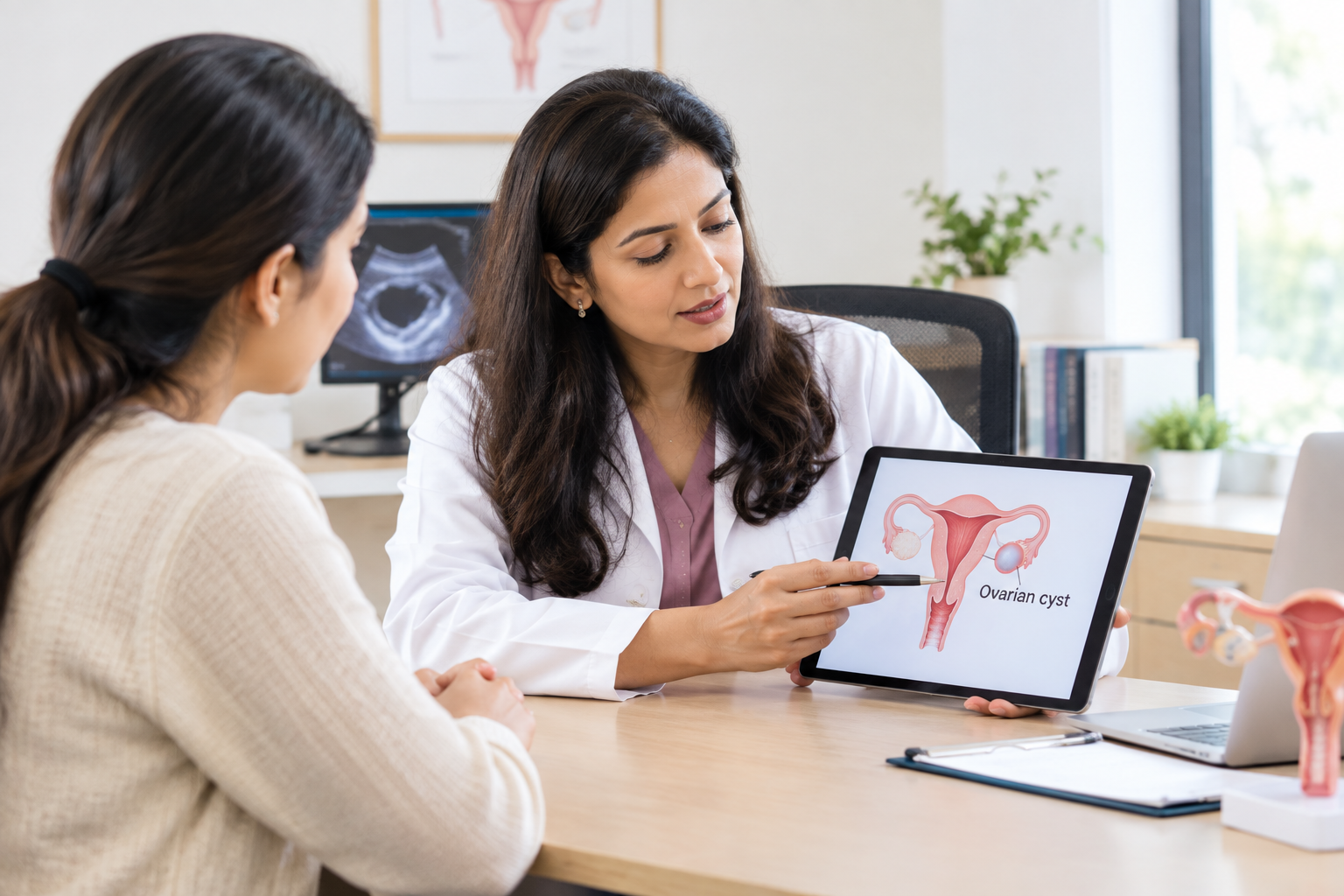
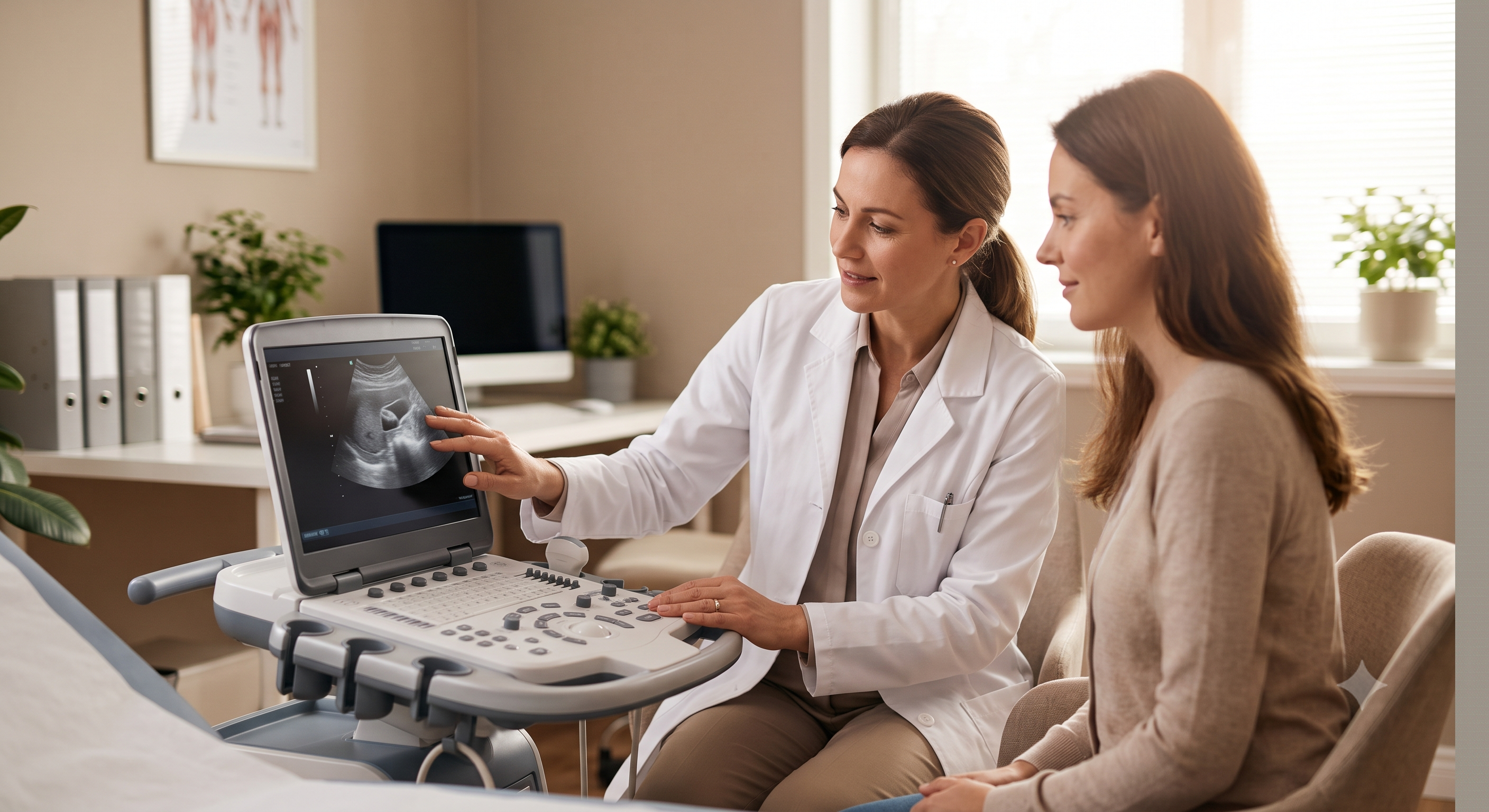
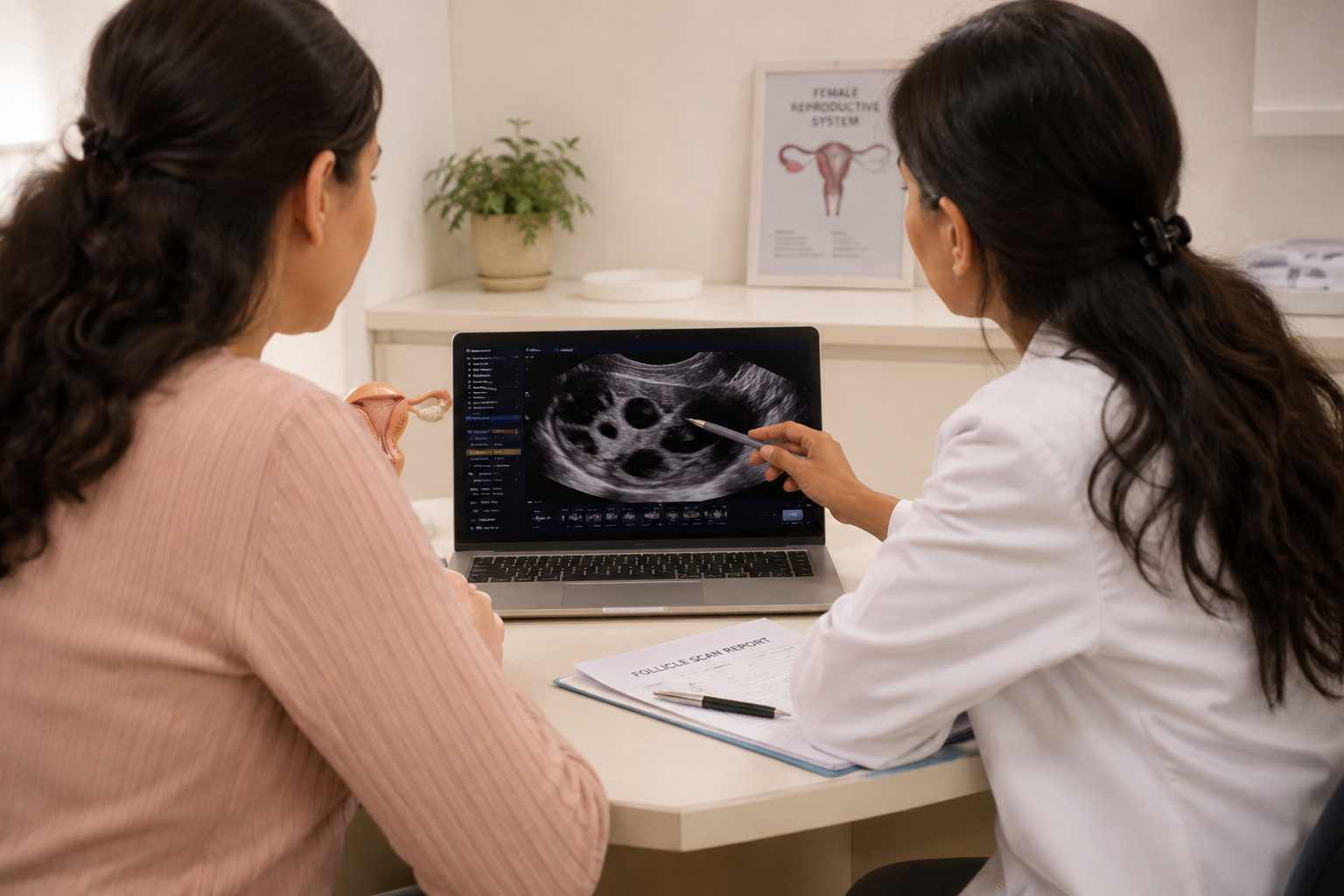
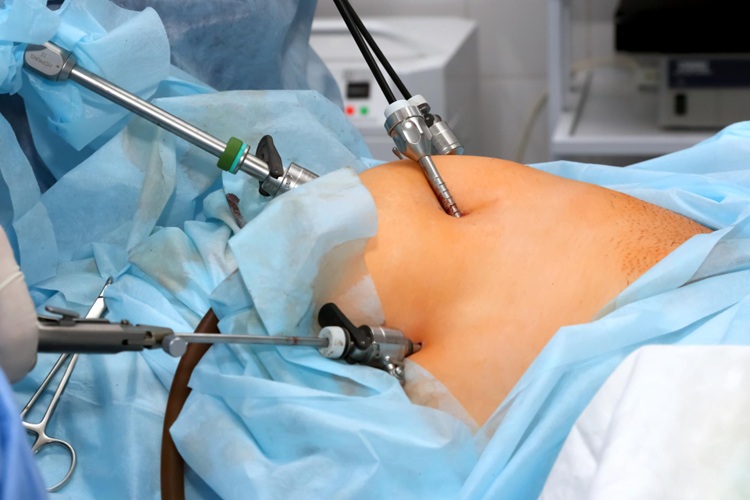
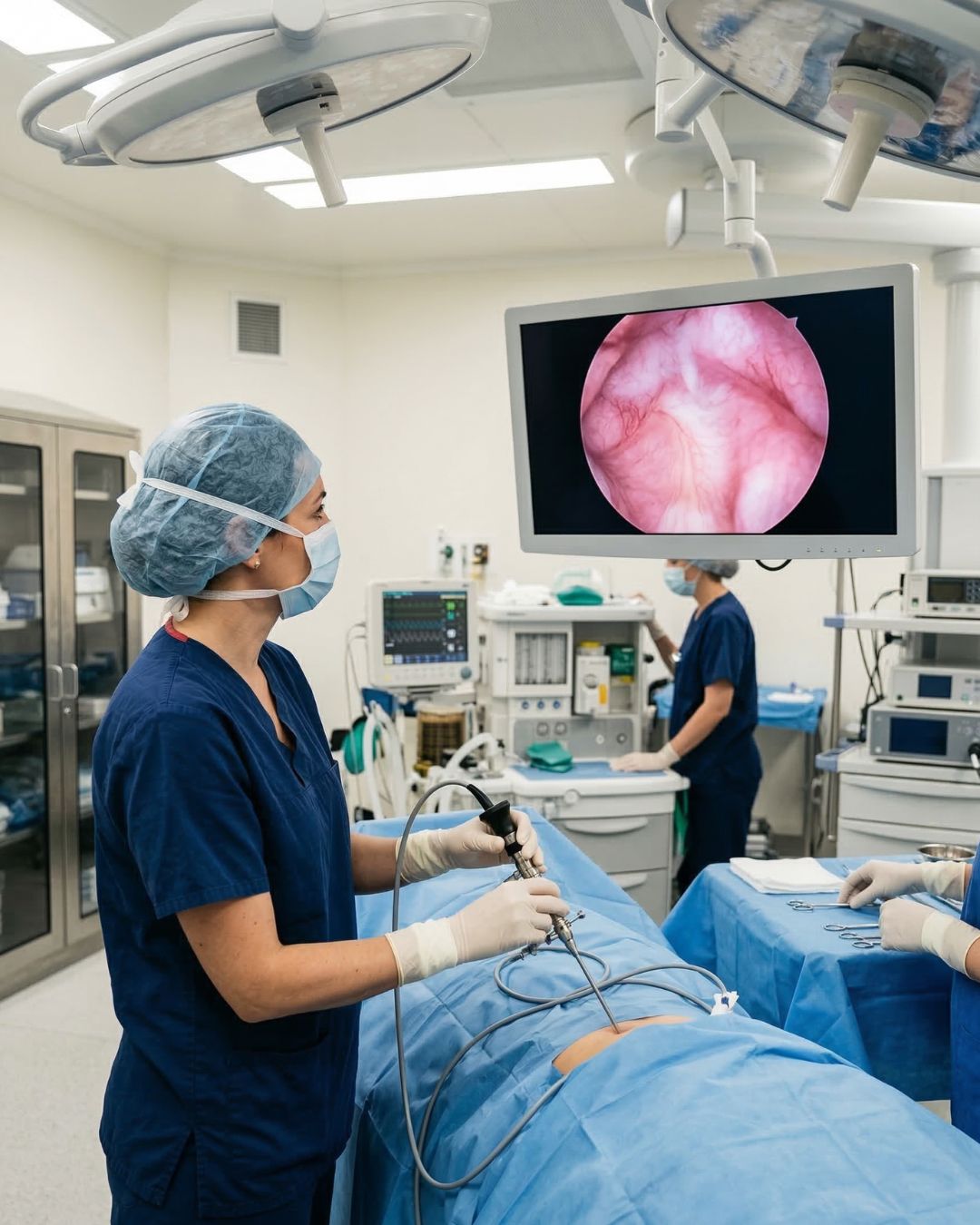
A transvaginal ultrasound can pick up endometriomas (cysts that endometriosis forms on the ovary) and some deeper disease, though it won't catch every form of it. An MRI can help map disease that's deeper or more widespread, especially if surgery is being planned. Laparoscopy is still the definitive way to diagnose it, and in the same procedure, it can be treated too, by directly viewing and removing the affected tissue.
Endometriosis and fertility
Endometriosis is a recognised cause of difficulty conceiving. It works through a few different mechanisms: distorted pelvic anatomy, blocked or scarred fallopian tubes, inflammation that affects egg quality, and reduced ovarian reserve when endometriomas are present.
Not every woman with endometriosis struggles to conceive. It really depends on where the disease is and how severe it is. Fertility planning, whether that's surgery, timed conception, or assisted reproduction, needs to take your age, ovarian reserve, and how extensive the disease is into account.
Treatment options
Treatment depends on how severe your symptoms are, whether fertility is a priority right now, and how extensive the disease is.
Options include pain management with anti-inflammatory medication, hormonal treatment such as combined pills, progestins, or GnRH agonists to suppress the tissue's activity and cut down pain, and laparoscopic surgery to remove endometriosis tissue, adhesions, and endometriomas, which can improve both pain and, in many cases, fertility. There's no single treatment that works for everyone. The plan gets built around what you're actually trying to achieve, whether that's pain relief now or conceiving in the near future.
When should you see a gynecologist?
See a gynecologist if your period pain is severe, getting worse cycle after cycle, or not controlled by standard painkillers. Also if you have pain during intercourse or bowel movements around your period, if you have chronic pelvic pain, or if you've been trying to conceive for six months to a year without success (sooner if you're over 35).
At Raheja Clinic, Dr Tripti Raheja evaluates endometriosis with a detailed pain history, ultrasound, and laparoscopic surgery where it's indicated, with fertility goals built into the plan from the start. If you're looking for a gynecologist in Delhi for endometriosis or unexplained pelvic pain, bring a note of when your pain shows up across the cycle and how it's changed over time.
Common questions
What is the main symptom of endometriosis?
Severe, progressively worsening period pain is the most common one, often along with pain during intercourse or bowel movements around your period.
Can endometriosis be seen on an ultrasound?
A standard ultrasound can pick up endometriomas and some deeper disease, but it won't detect every form of endometriosis. A normal scan doesn't rule it out if your symptoms fit the pattern.
Does endometriosis always cause infertility?
No. Not every woman with endometriosis has trouble conceiving. The effect on fertility depends on where the disease is and how extensive it is.
Is laparoscopy necessary to diagnose endometriosis?
Laparoscopy is the definitive way to diagnose it, and it can treat the disease in the same procedure. But many women are evaluated and managed first based on symptoms and imaging, before surgery even comes into the picture.
Can endometriosis come back after surgery?
Yes, it can come back, which is why long-term management, including hormonal treatment after surgery in some cases, is often part of the plan.
At what age does endometriosis start?
It most commonly shows up during the reproductive years, often starting as worsening period pain in the teens or twenties, though diagnosis is frequently delayed by several years.
Is period pain always a sign of endometriosis?
No. Mild to moderate period pain that responds to routine painkillers is common, and it's usually not a sign of endometriosis. It's the severe, progressive, or disruptive pain that's worth getting evaluated.
Can endometriosis be managed without surgery?
Yes. For a lot of women, hormonal treatment and pain management control symptoms well on their own. Surgery comes into play when pain isn't controlled, endometriomas are present, or fertility is affected.