
Finding an endometrial polyp can raise an important question, particularly if you are trying to conceive: could the polyp be affecting fertility? Endometrial polyps are growths that develop from the lining of the uterus and are often benign. Some cause no symptoms at all, while others can lead to irregular bleeding, spotting or heavier periods. The presence of a polyp does not automatically mean that you will have difficulty becoming pregnant. However, polyps can sometimes interfere with the normal uterine environment, particularly when they are larger, multiple or located in an area that may affect implantation. The decision to monitor or remove a polyp depends on its size, location, symptoms, age, fertility plans and other clinical factors.
The bottom line
Endometrial polyps are usually benign growths that arise from the lining of the uterus. They may cause abnormal bleeding, but some women have no symptoms at all.
A polyp does not automatically cause infertility. However, when a woman is trying to conceive, the size, number and location of a polyp may be considered as part of the fertility assessment.
If a polyp is causing symptoms or is thought to be relevant to fertility, a gynecologist may recommend further evaluation and, in selected cases, removal.
What is an endometrial polyp?
An endometrial polyp is a growth that develops from the inner lining of the uterus, called the endometrium. Polyps can vary in size and may occur as a single growth or as multiple polyps.
Most endometrial polyps are benign. However, their appearance, symptoms and individual risk factors determine whether further assessment is appropriate.
What symptoms can endometrial polyps cause?
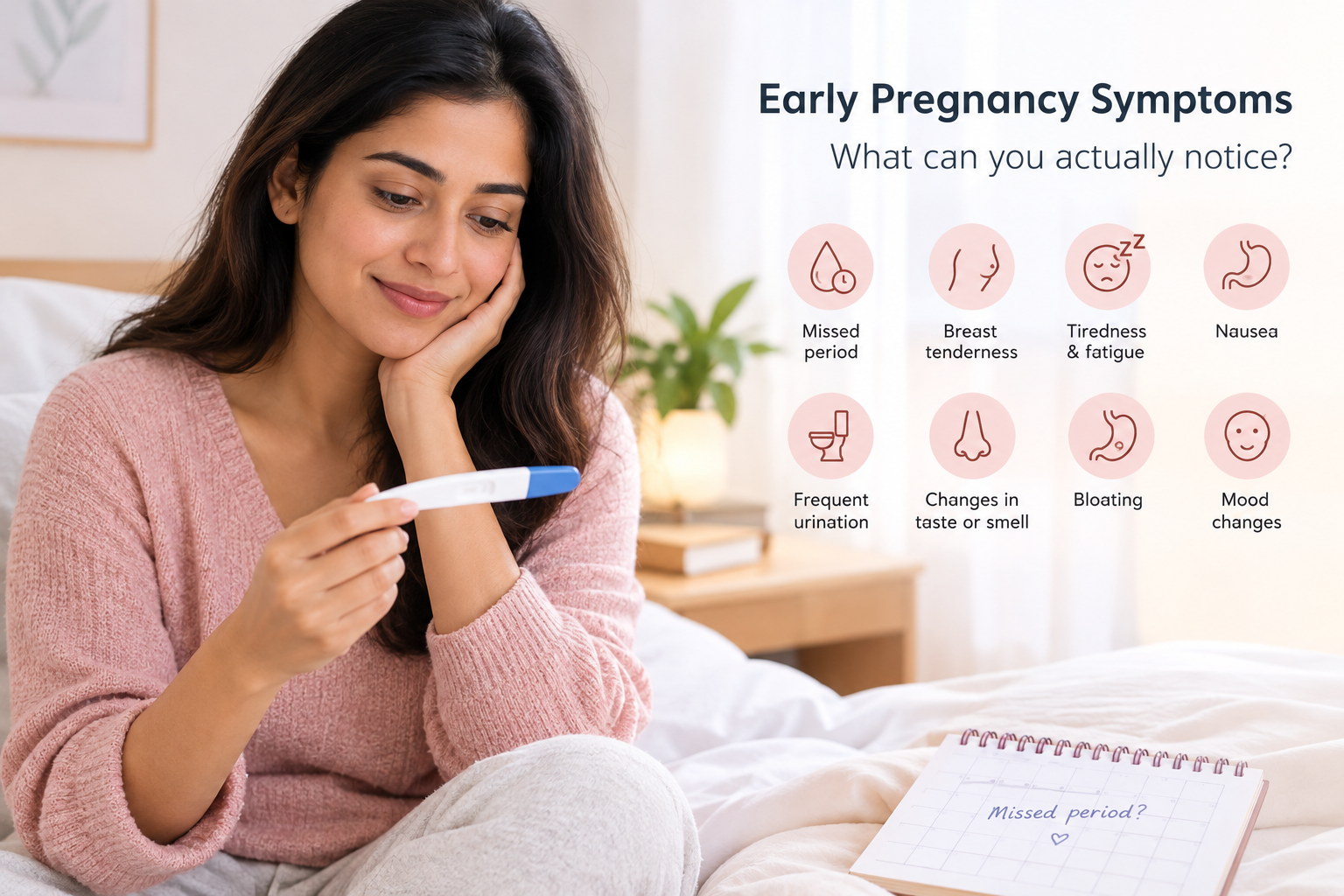
Some women with endometrial polyps have no noticeable symptoms. When symptoms occur, abnormal uterine bleeding is one of the most common reasons for evaluation.
- Bleeding between periods
- Periods that become heavier than usual
- Irregular menstrual bleeding
- Spotting after sexual intercourse
- Bleeding after menopause
- Difficulty conceiving in some women
- Unexpected bleeding despite previously regular cycles
Can endometrial polyps affect fertility?
Endometrial polyps may sometimes be associated with reduced fertility, but finding a polyp does not automatically mean that it is the reason someone is having difficulty conceiving.
A polyp can alter the shape or environment of the uterine cavity. Depending on its size and location, this may potentially interfere with implantation or normal function of the endometrium.
Fertility is influenced by many factors, including age, ovulation, ovarian reserve, fallopian tube function, sperm factors and other uterine conditions. A polyp should therefore be considered as one part of the overall fertility assessment.
Can you get pregnant with an endometrial polyp?
Yes. Some women with endometrial polyps become pregnant without treatment, particularly when the polyp is small and not causing significant symptoms.
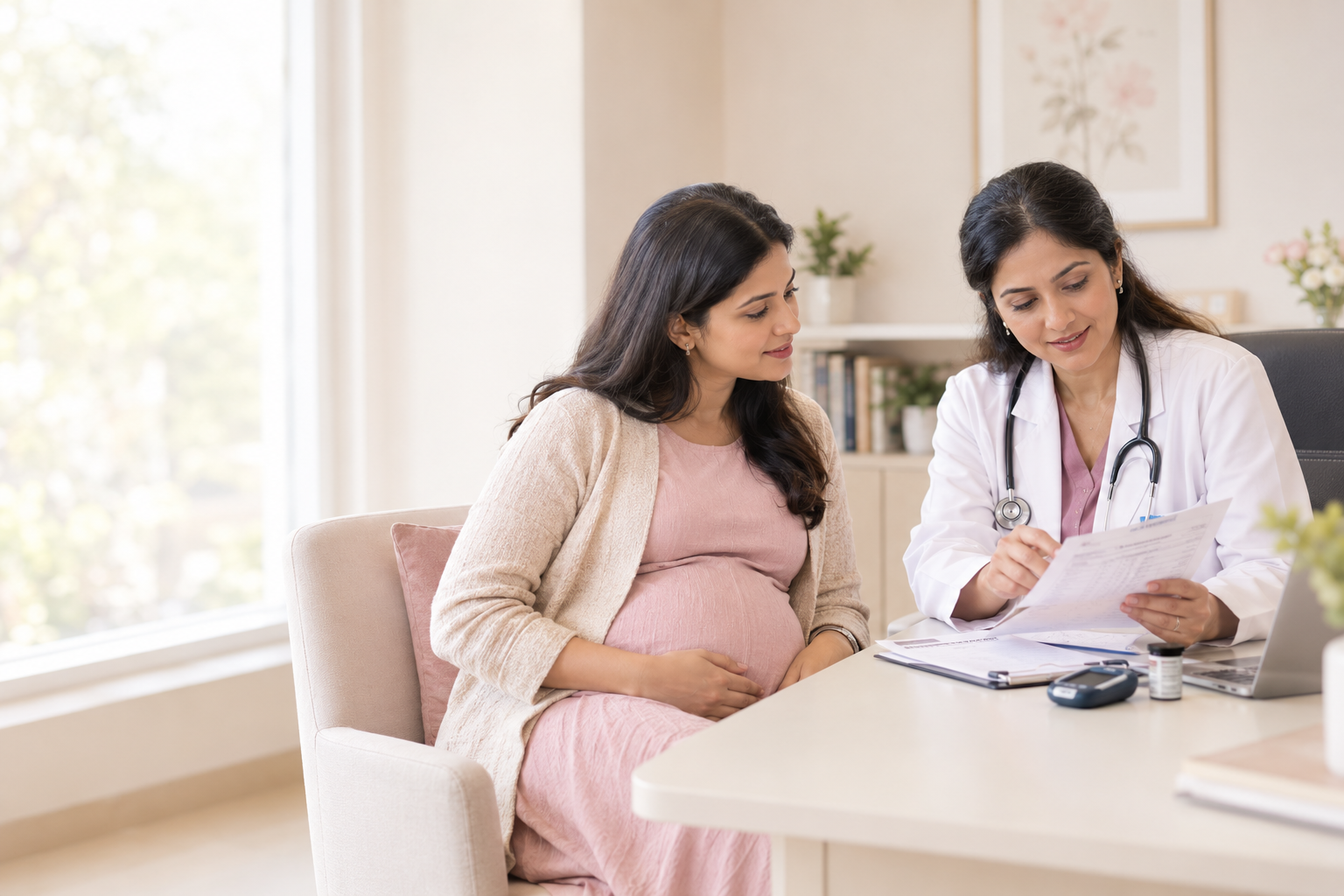
If pregnancy has not occurred or a polyp is found during a fertility evaluation, your gynecologist may assess whether the polyp could be contributing to the problem.
The decision to remove a polyp should be individualised rather than based only on the fact that a polyp is present.
How are endometrial polyps diagnosed?
Evaluation usually begins with a discussion of menstrual symptoms, bleeding patterns, pregnancy plans and medical history.
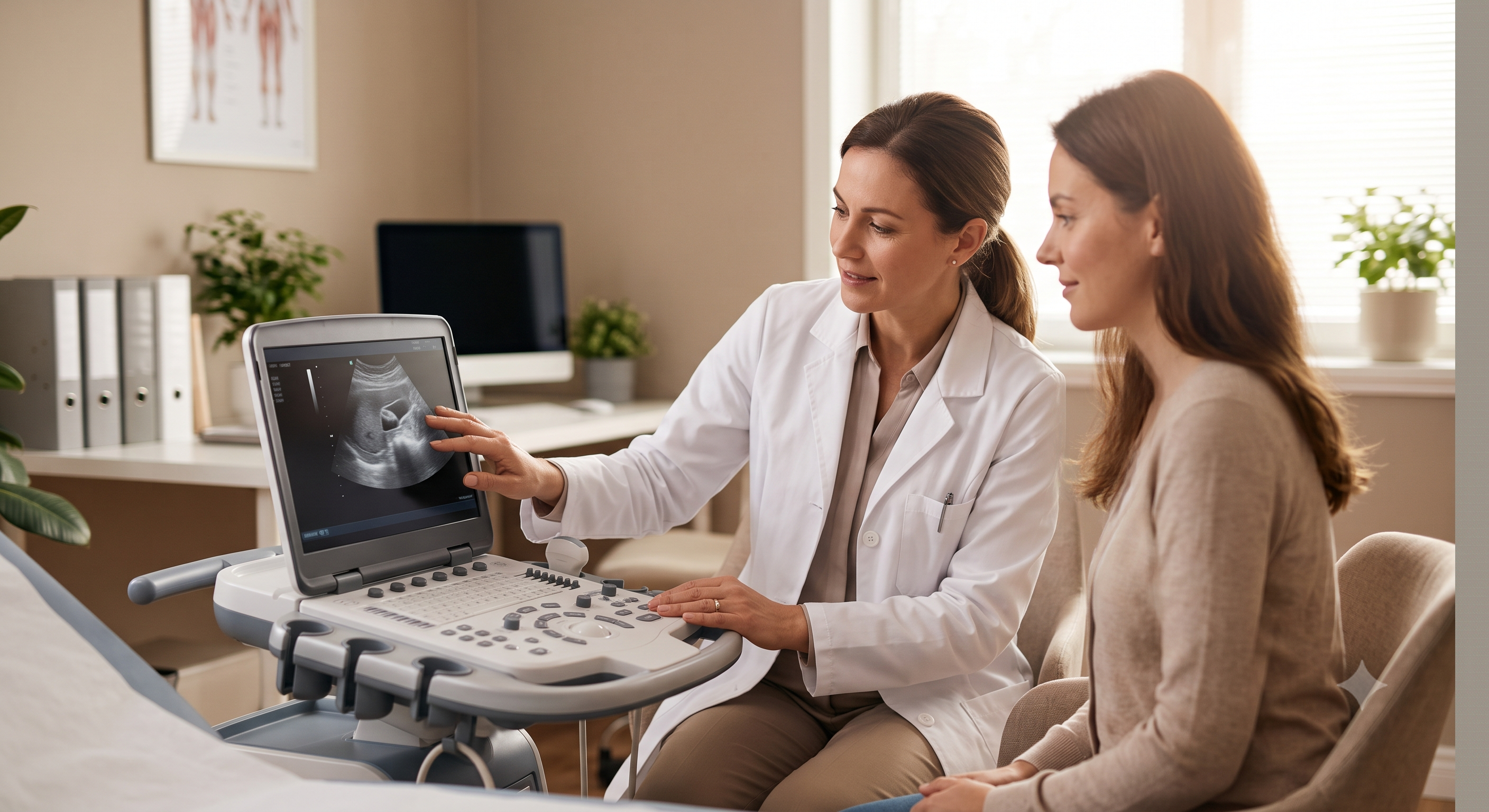
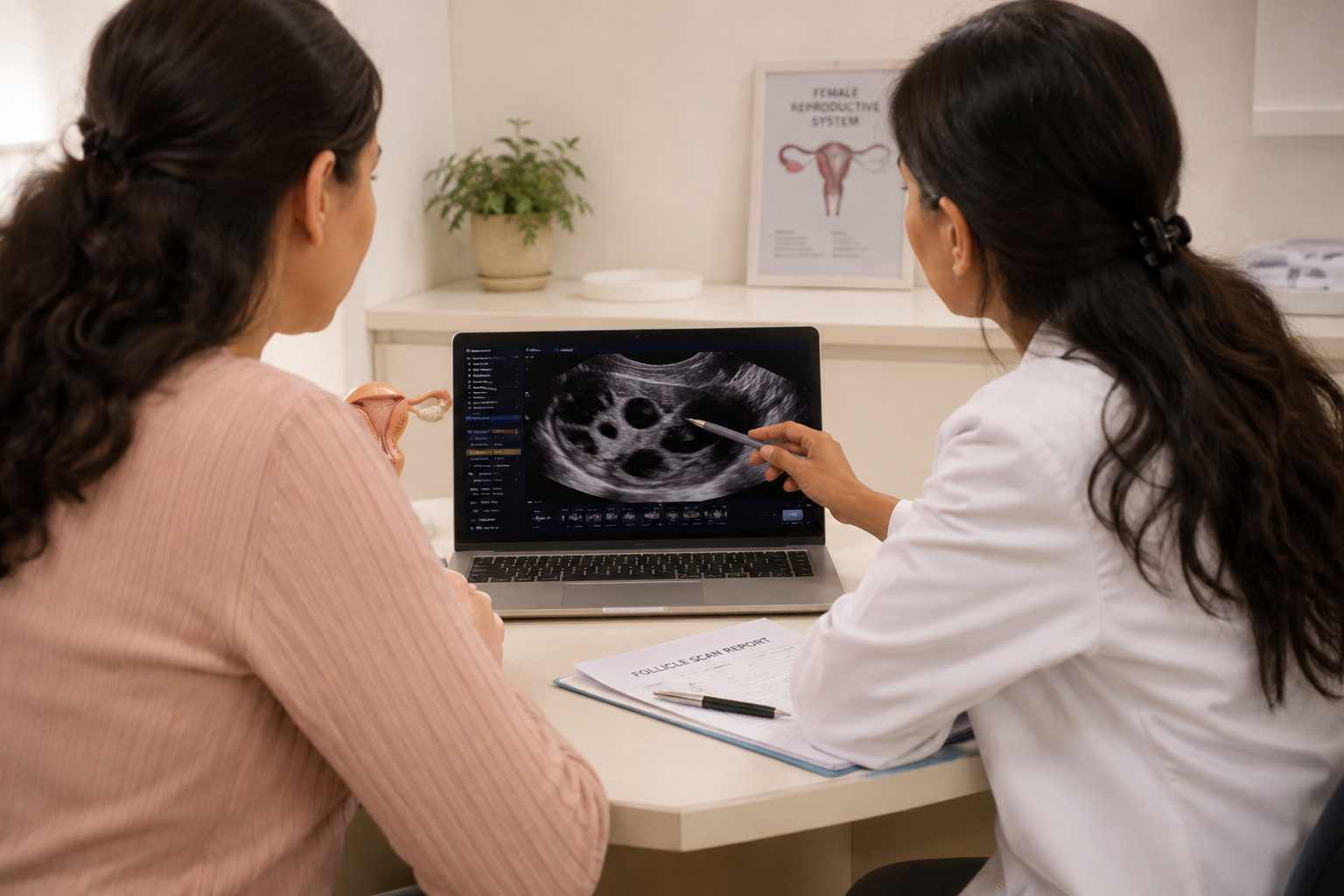
Pelvic ultrasound is commonly used to examine the uterus. Depending on the findings, additional evaluation may be recommended to get a clearer view of the uterine cavity.
- Pelvic ultrasound
- Transvaginal ultrasound when appropriate
- Saline infusion sonography in selected cases
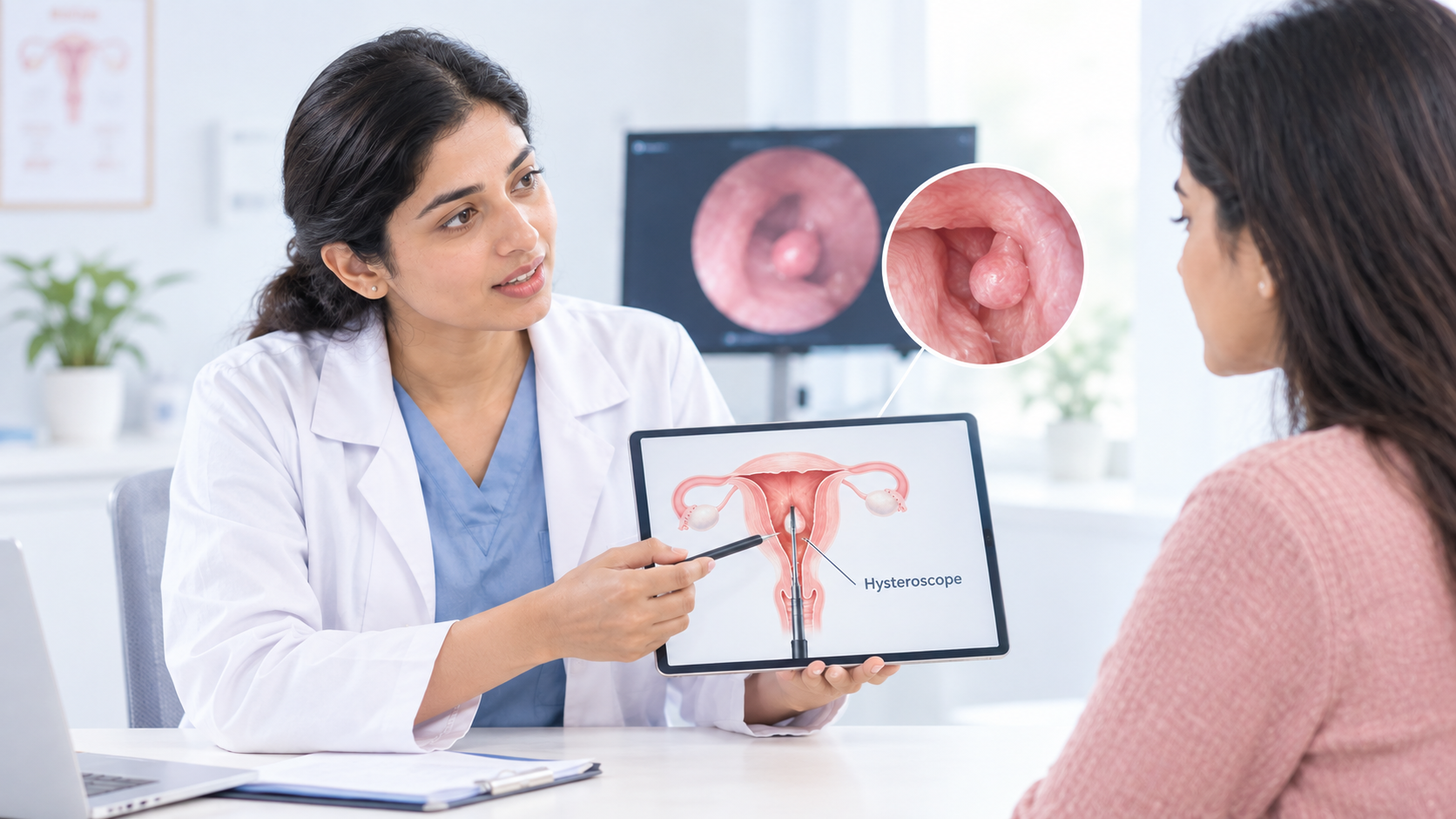
- Hysteroscopy when direct assessment of the uterine cavity is needed
- Endometrial tissue assessment when clinically indicated
When might an endometrial polyp need treatment?
Not every polyp requires immediate treatment. Observation may be reasonable in selected women, particularly when a small polyp is found incidentally and there are no concerning symptoms.
Treatment may be considered when a polyp causes persistent abnormal bleeding, is associated with fertility concerns, appears larger or has features that require further assessment.
Age, menopausal status, symptoms and other risk factors are also important when deciding whether removal is appropriate.
What is hysteroscopic polyp removal?
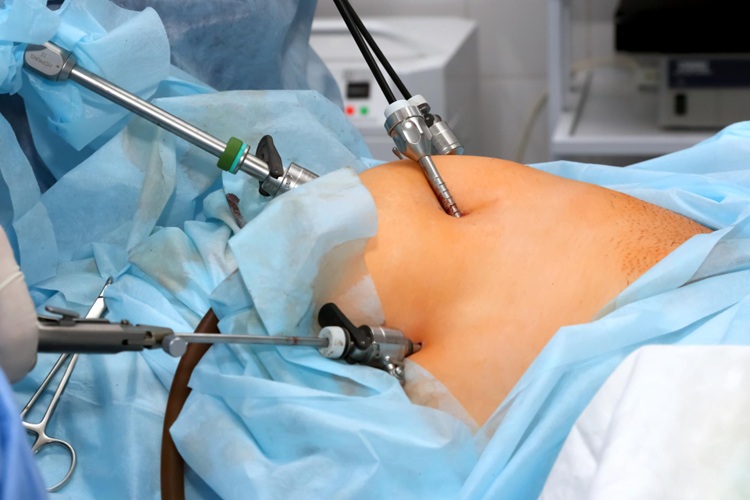
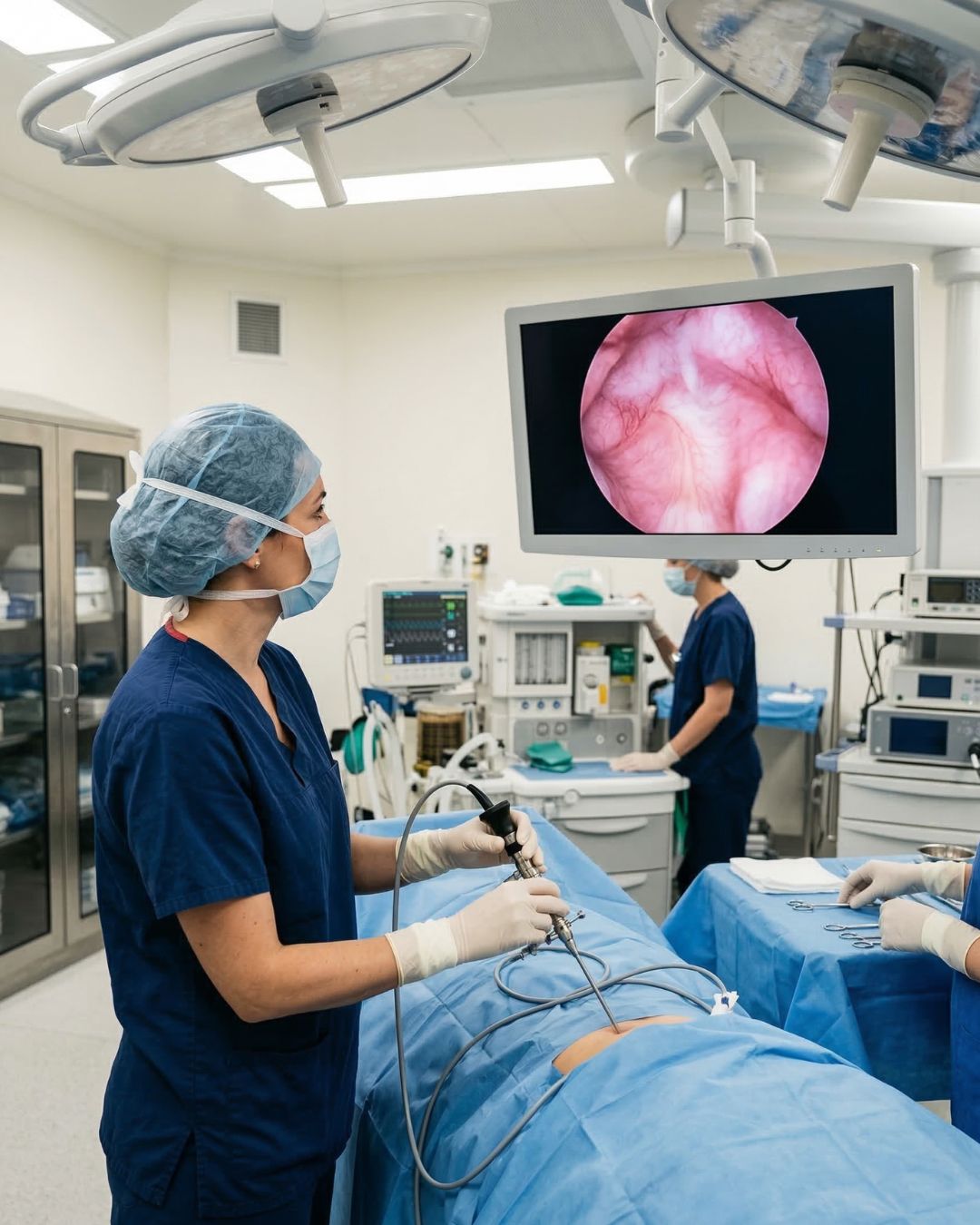
Hysteroscopy allows a gynecologist to look directly inside the uterine cavity using a thin camera passed through the vagina and cervix. If an endometrial polyp is identified and removal is appropriate, it can often be removed during a hysteroscopic procedure.
Because the procedure approaches the uterine cavity through the natural vaginal and cervical passage, it does not require a large abdominal incision.
Does removing a polyp improve fertility?
Removing an endometrial polyp may be considered when the polyp could be contributing to difficulty conceiving or affecting the uterine cavity.
However, removal does not guarantee pregnancy. Fertility depends on multiple factors, and a complete assessment may still be necessary after treatment.
The potential benefit of removing a polyp should therefore be discussed in the context of your age, fertility history, ovarian function, fallopian tubes and partner-related factors when relevant.
Can endometrial polyps come back?
Polyps can recur after removal, although recurrence is not inevitable. The likelihood can depend on individual factors and the underlying reason for developing polyps.
If abnormal bleeding returns after treatment, your gynecologist may recommend another evaluation rather than assuming that the symptoms have the same cause.
Are endometrial polyps the same as fibroids?
No. Endometrial polyps and uterine fibroids are different types of growths.
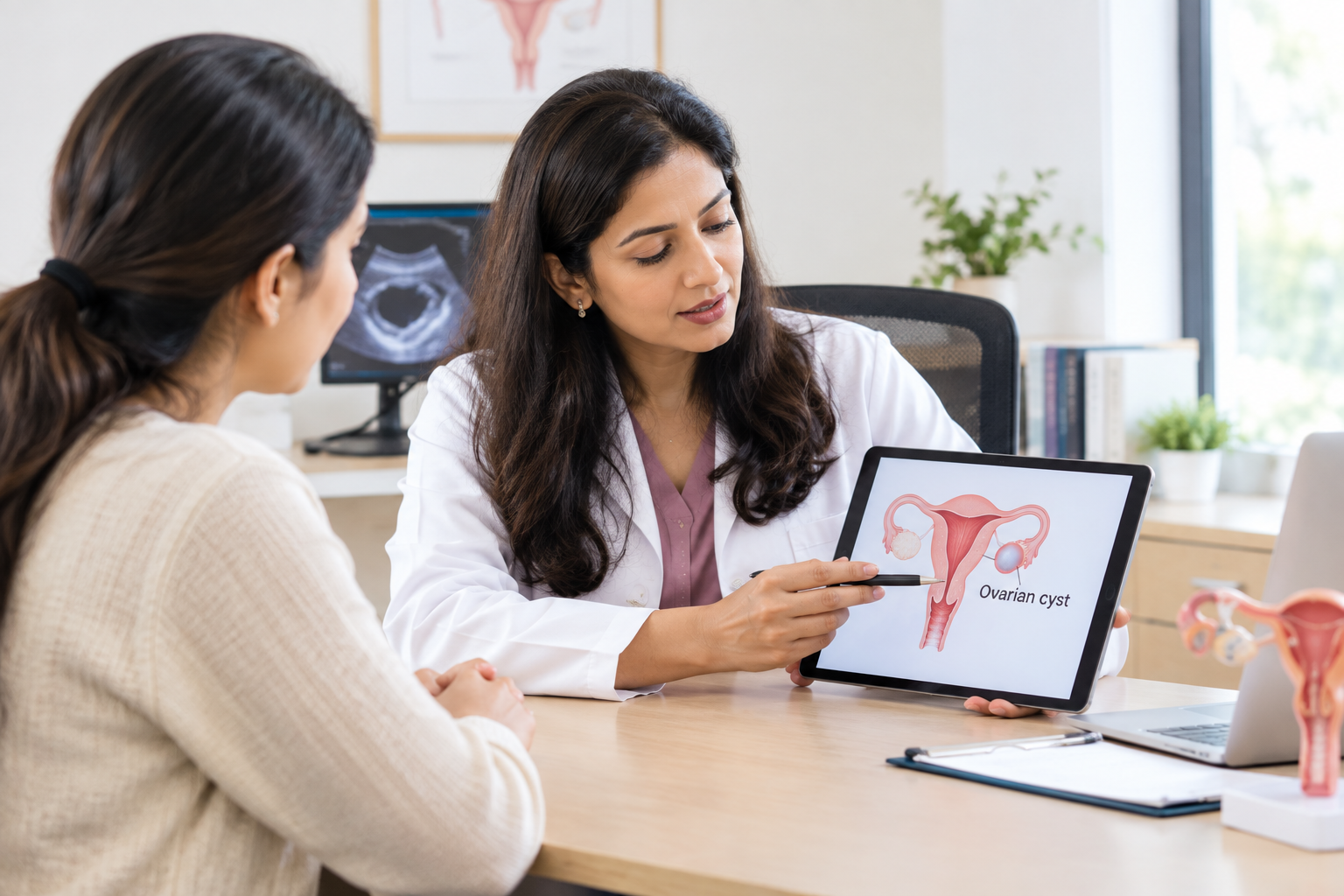
Endometrial polyps arise from the lining of the uterus, while fibroids develop from the muscular tissue of the uterine wall. Both can cause abnormal bleeding, but their location, appearance and treatment options can differ.
An ultrasound or other uterine evaluation can help distinguish between these conditions.
When should you see a gynecologist?
Persistent or unexplained abnormal bleeding should not simply be assumed to be normal, especially when your usual menstrual pattern has changed.
- You regularly bleed between periods.
- Your periods have become unusually heavy or irregular.
- You experience repeated spotting after sexual intercourse.
- You have been diagnosed with a uterine polyp and are planning pregnancy.
- You are having difficulty conceiving and an abnormality has been seen inside the uterus.
- You have bleeding after menopause.
- An ultrasound has identified a uterine growth and you have been advised to have further evaluation.
The takeaway
Endometrial polyps are commonly benign growths of the uterine lining and may cause abnormal bleeding or no symptoms at all. They do not automatically cause infertility, but their size, number and location may be relevant when pregnancy is difficult to achieve.
If a polyp is causing symptoms or may be affecting fertility, hysteroscopic evaluation and removal may be considered in appropriate patients. The right decision depends on the individual's symptoms, reproductive goals and overall clinical picture.
Resources
Common questions
What is an endometrial polyp?
An endometrial polyp is a growth that develops from the lining of the uterus. Most are benign, although evaluation may be recommended depending on symptoms, age and individual risk factors.
Can endometrial polyps cause infertility?
Some endometrial polyps may be associated with reduced fertility, particularly when they affect the uterine cavity. However, having a polyp does not automatically mean that it is the cause of difficulty conceiving.
Can I get pregnant with an endometrial polyp?
Yes. Some women with endometrial polyps become pregnant naturally. Whether a polyp should be treated before pregnancy depends on its size, location, symptoms and the individual's fertility history.
How are uterine polyps diagnosed?
Pelvic or transvaginal ultrasound may identify a suspected polyp. In selected cases, saline sonography or hysteroscopy may be used to assess the inside of the uterus more clearly.
Does every endometrial polyp need to be removed?
No. Some small polyps without concerning symptoms may be monitored. Removal may be considered when a polyp causes abnormal bleeding, is associated with fertility concerns or has features that require further assessment.
Is hysteroscopy used to remove uterine polyps?
Yes. Hysteroscopy allows the gynecologist to see the uterine cavity directly and, when appropriate, remove a polyp during the procedure.