
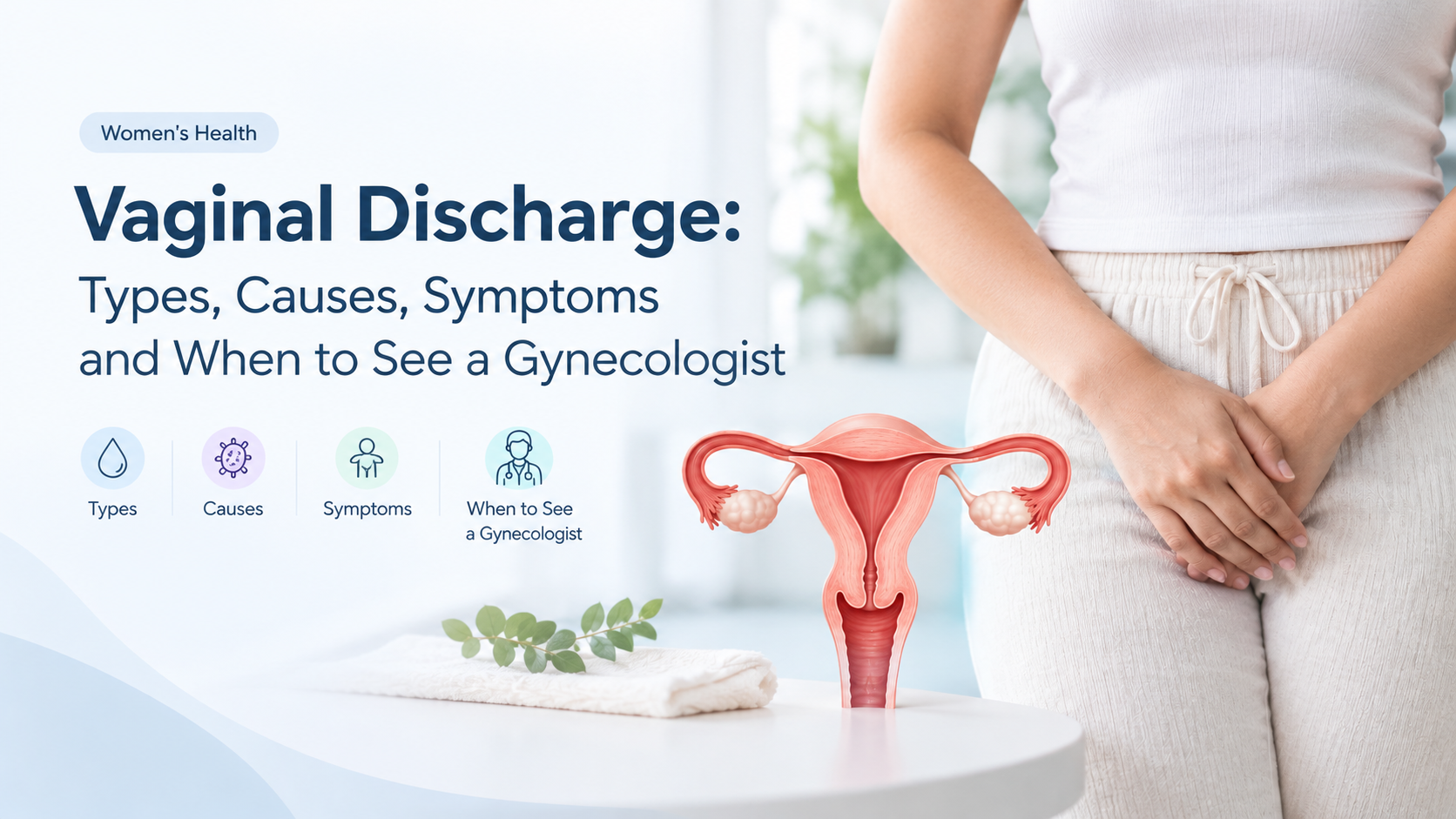
Vaginal discharge is a normal part of the body's process of keeping the vagina clean and moist. Its amount, colour and consistency can change throughout the menstrual cycle, during pregnancy and at different stages of life. Clear or white discharge without an unpleasant smell, irritation or pain is often normal. However, a noticeable change in discharge, particularly when accompanied by itching, burning, pelvic pain or a strong odour, may indicate an infection or another condition that needs medical attention. Understanding these changes can help you decide when self-care is appropriate and when to consult a gynecologist.
What Is Vaginal Discharge?
Vaginal discharge is fluid and mucus produced by the cervix and vaginal tissues. It helps maintain moisture and supports the vagina's natural protective environment. Normal discharge can contain mucus, fluid and cells shed from the vaginal lining.
The amount and texture vary between individuals. Some people notice very little discharge, while others experience more noticeable changes during particular parts of the menstrual cycle. Neither pattern necessarily indicates a health problem.
Discharge should be assessed in context. Colour alone cannot reliably diagnose an infection, and changes that occur alongside itching, pain, bleeding or an unusual smell are often more informative.
What Does Normal Vaginal Discharge Look Like?
Normal vaginal discharge is commonly clear, milky white or off-white. It may be thin and watery at some times and thicker or more slippery at others. Normal discharge usually does not cause persistent itching, burning, pain or a strong unpleasant odour.
Common changes during the menstrual cycle include:
- Before ovulation: Discharge may become clearer, wetter and more slippery.
- Around ovulation: Cervical mucus may become stretchy, similar to raw egg white, which is a normal hormonal change.
- After ovulation: Discharge may become thicker, creamier or less noticeable.
- Before a period: Some people notice thicker or white discharge.
- During pregnancy: Discharge may increase and appear thin or milky white. A new unpleasant odour, itching, pain or bleeding should be assessed.
Types of Vaginal Discharge and What They May Mean
Changes in discharge can sometimes offer clues about vaginal health, but no colour or texture confirms a diagnosis on its own. A clinician may need to review symptoms and perform tests.
- Clear or white discharge: Often normal when there is no unpleasant smell, irritation or pain.
- Thick, white discharge with itching: Can occur with a vaginal yeast infection, especially when the discharge resembles cottage cheese. Other conditions can cause similar symptoms.
- Thin greyish-white discharge with a fishy smell: May be associated with bacterial vaginosis, a change in the balance of vaginal bacteria.
- Yellow or green discharge: Can occur with certain infections, including some sexually transmitted infections, particularly when accompanied by pain, irritation or an unusual smell.
- Brown or blood-stained discharge: May reflect menstrual blood or spotting, but persistent or unexplained bleeding, bleeding after sex or bleeding during pregnancy needs medical assessment.
- Watery discharge: Can be normal at certain times. A persistent new change, particularly with odour, pain or other symptoms, should be checked.
Common Causes of Abnormal Vaginal Discharge
A change in discharge may occur because of infection, irritation, hormonal changes or other gynecological conditions. Common causes include:
- Bacterial vaginosis: An imbalance in the vaginal bacterial environment that may cause thin discharge and a fishy odour.
- Vaginal yeast infection: An overgrowth of Candida yeast that may cause itching, redness, soreness and thick white discharge.
- Sexually transmitted infections: Infections such as trichomoniasis, chlamydia or gonorrhea may cause abnormal discharge. Some infections cause few or no symptoms.
- Irritation or sensitivity: Scented soaps, vaginal washes, deodorants and other products can irritate sensitive tissues.
- Cervical inflammation: Inflammation of the cervix can cause unusual discharge, bleeding after sex or spotting.
- Hormonal changes: Pregnancy, breastfeeding, menopause and changes in hormonal medication may affect vaginal moisture and discharge.
Symptoms That Should Not Be Ignored
A change in discharge deserves medical attention when it is persistent, unusual for you or accompanied by other symptoms. Contact a gynecologist if you notice:
- A strong or unpleasant smell that is new or persistent.
- Ongoing itching, burning, redness or swelling.
- Pain or burning during urination.
- Pain during sexual intercourse.
- Pelvic or lower abdominal pain.
- Unexpected bleeding between periods or after sex.
- Discharge that is new, persistent or recurring despite previous treatment.
How Is Abnormal Vaginal Discharge Diagnosed?
A gynecologist may ask when the symptoms started, whether the discharge has changed, and whether there is itching, odour, pain, bleeding or a possibility of pregnancy. Menstrual history, recent medicines and relevant sexual health history can also help guide the assessment.
Depending on the symptoms, the examination may include an assessment of the external genital area and, with appropriate consent, a vaginal or cervical examination. A sample of discharge may be tested to check for causes such as bacterial vaginosis, yeast infection or trichomoniasis. Tests for sexually transmitted infections may be recommended when indicated.
Not every person needs every test. The choice depends on symptoms, examination findings, pregnancy status and clinical risk factors. An accurate diagnosis matters because different causes require different treatments.
Treatment Options for Abnormal Vaginal Discharge
Treatment depends on the underlying cause. There is no single medicine that is appropriate for every type of abnormal discharge.
- Bacterial vaginosis: A clinician may prescribe an appropriate antibiotic when treatment is indicated.
- Yeast infection: Antifungal treatment may be recommended after considering the symptoms, diagnosis and pregnancy status.
- Sexually transmitted infections: Treatment depends on the specific infection. Sexual partners may also need testing or treatment, and sexual activity may need to be avoided until treatment guidance has been followed.
- Irritation: Stopping the product causing irritation and using gentle external hygiene may help, once other causes have been considered.
- Hormonal or menopausal changes: A clinician can assess whether hormonal changes are contributing and discuss suitable treatment options.
Home Care and Hygiene: What Helps?
Gentle hygiene can help reduce irritation, but the vagina does not need internal cleansing. Avoid douching, scented vaginal washes, deodorants and inserting home remedies, as these can irritate tissues or disturb the natural vaginal environment.
Wash the external genital area gently with water or a mild, unscented cleanser if tolerated. Change out of damp clothing when practical, and choose breathable underwear if it feels more comfortable.
Avoid taking leftover antibiotics or using antifungal medicines repeatedly without confirming the cause. Symptoms of yeast infection, bacterial vaginosis and sexually transmitted infections can overlap, so incorrect treatment may delay the right care.
These steps can support comfort but do not replace medical assessment when symptoms are persistent, unusual or accompanied by pain or bleeding.
When Should You See a Gynecologist?
Book an appointment if discharge has a persistent unusual smell, changes significantly in colour or consistency, or is accompanied by itching, burning, urinary discomfort or pain during sex. Recurrent symptoms also deserve assessment rather than repeated self-treatment.
Seek urgent medical care for severe or worsening pelvic pain, particularly with fever, vomiting, faintness or heavy bleeding. If you are pregnant or could be pregnant and experience pain or bleeding, seek prompt medical advice. A gush or ongoing trickle of fluid during pregnancy also requires urgent assessment.
A gynecologist can help identify the cause, recommend appropriate treatment and explain how to reduce the chance of recurrence.
Resources
Common questions
Is white vaginal discharge normal?
Yes. Clear, white or milky discharge is often normal when it does not have a strong unpleasant smell and is not accompanied by itching, burning or pain. A new or persistent change should be assessed in context.
What does yellow or green vaginal discharge mean?
Yellow or green discharge can sometimes be associated with an infection, including certain sexually transmitted infections. Colour alone cannot establish the cause. Consult a gynecologist, especially if there is an unusual smell, pelvic pain, burning or irritation.
Can vaginal discharge change during the menstrual cycle?
Yes. Hormonal changes can make discharge clearer and stretchier around ovulation and thicker or creamier at other times. These changes are usually normal when there are no other concerning symptoms.
Does foul-smelling vaginal discharge always mean an infection?
Not always, but a new or persistent unpleasant smell can be associated with bacterial vaginosis or another condition. A medical assessment can help identify the cause and determine whether treatment is needed.
Can I treat abnormal vaginal discharge at home?
Gentle external hygiene and avoiding irritating products may help with comfort, but they do not treat every cause. Avoid douching and using leftover medicines. Seek medical advice for persistent or unusual discharge, especially when accompanied by pain, odour, itching or bleeding.
When is vaginal discharge during pregnancy concerning?
An increase in thin, clear or milky discharge can occur during pregnancy. However, discharge with a strong unpleasant smell, itching, pain or bleeding should be assessed. A gush or ongoing trickle of fluid needs urgent maternity assessment.
Can a sexually transmitted infection cause discharge without other symptoms?
Yes. Some sexually transmitted infections can cause discharge while producing few or no other symptoms. Testing may be recommended based on exposure and clinical history, even when symptoms are mild.