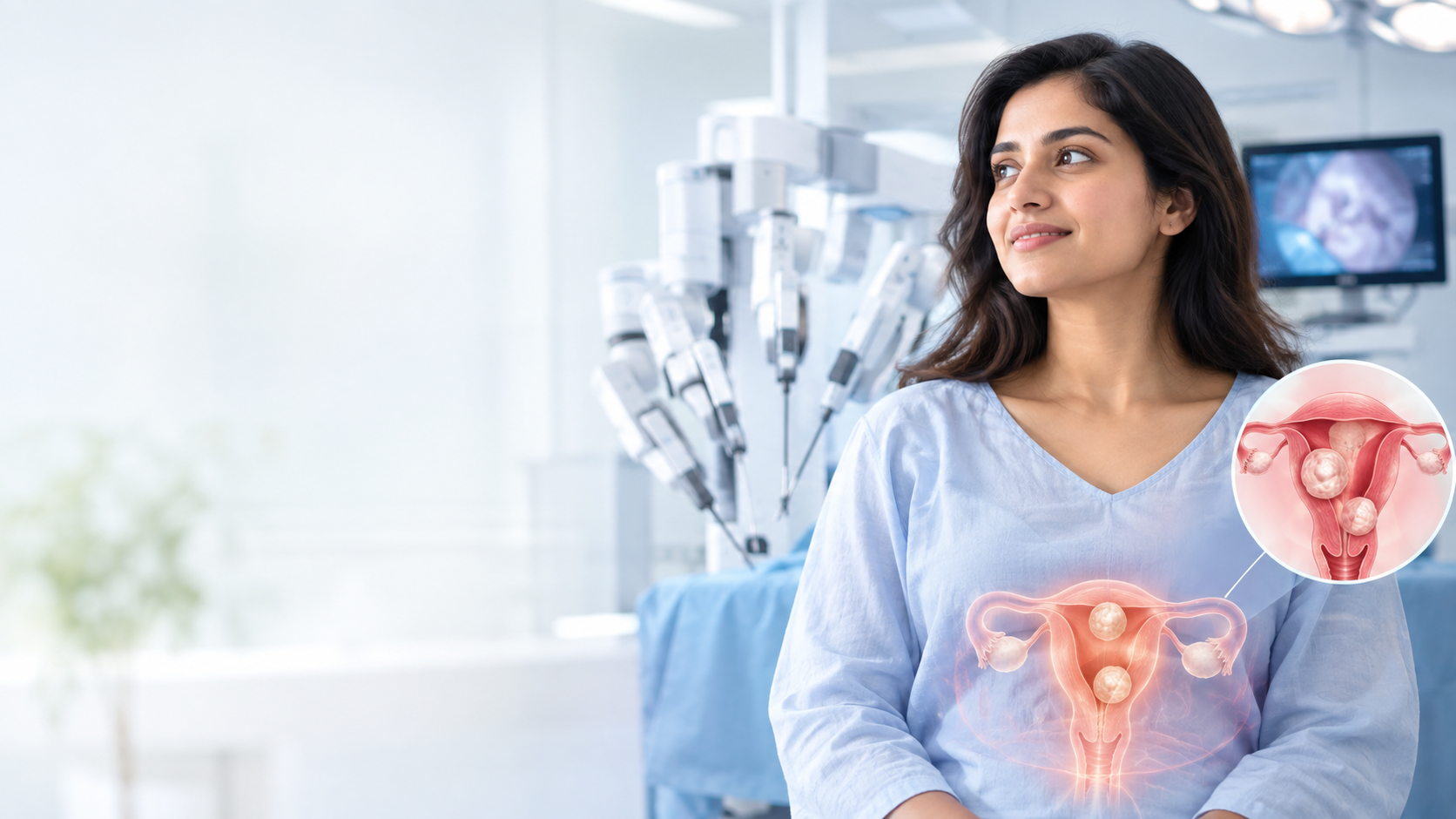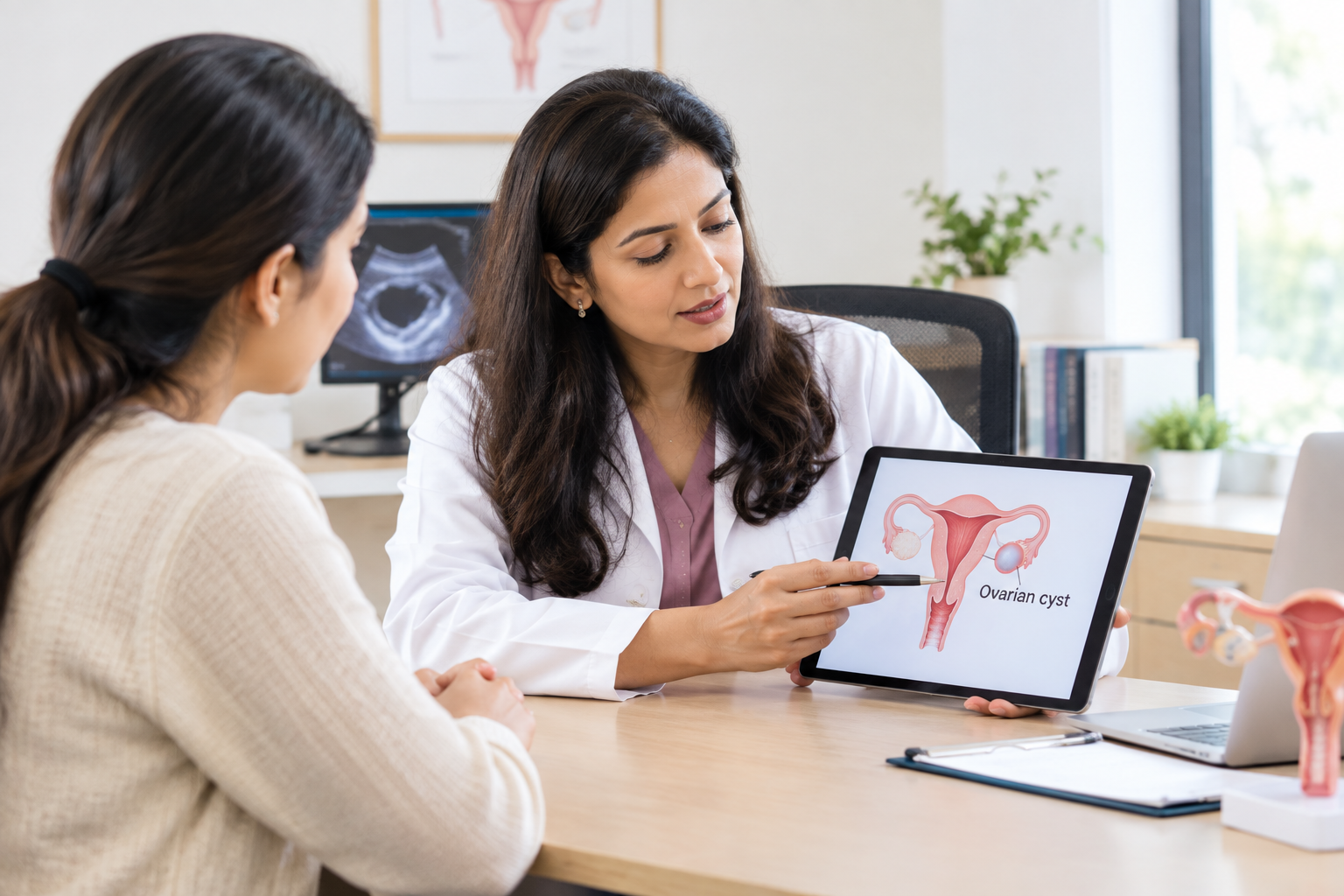
If an ultrasound shows a possible abnormality inside the uterus, or if you have unexplained abnormal bleeding or certain fertility concerns, your gynecologist may recommend a hysteroscopy. The name can sound intimidating, but hysteroscopy is a minimally invasive procedure that allows the doctor to look directly inside the uterine cavity. Hysteroscopy can be used for diagnosis, treatment or both. Depending on the reason for the procedure, it may help identify or treat conditions such as endometrial polyps, selected fibroids, adhesions or other abnormalities of the uterine cavity. Whether you need hysteroscopy depends on your symptoms, examination, imaging findings and reproductive goals.
The bottom line
Hysteroscopy is a procedure that allows a gynecologist to examine the inside of the uterus using a thin camera passed through the vagina and cervix.
It can be diagnostic, meaning it is used to understand what is happening inside the uterine cavity, or operative, meaning treatment can be performed during the same procedure when appropriate.
It is not required for every woman with abnormal bleeding or fertility problems. The decision depends on the clinical situation and what previous tests have shown.
What exactly is hysteroscopy?
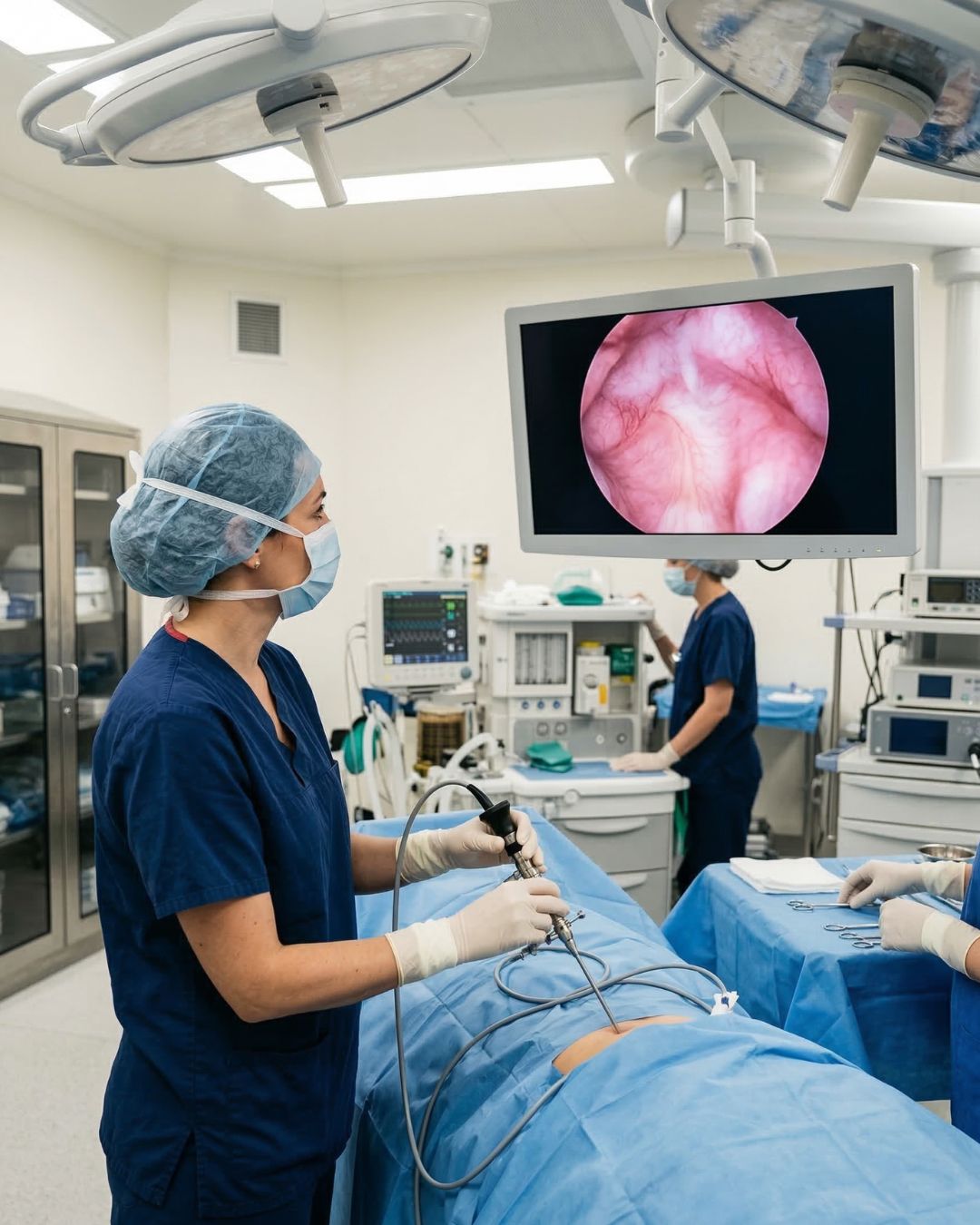
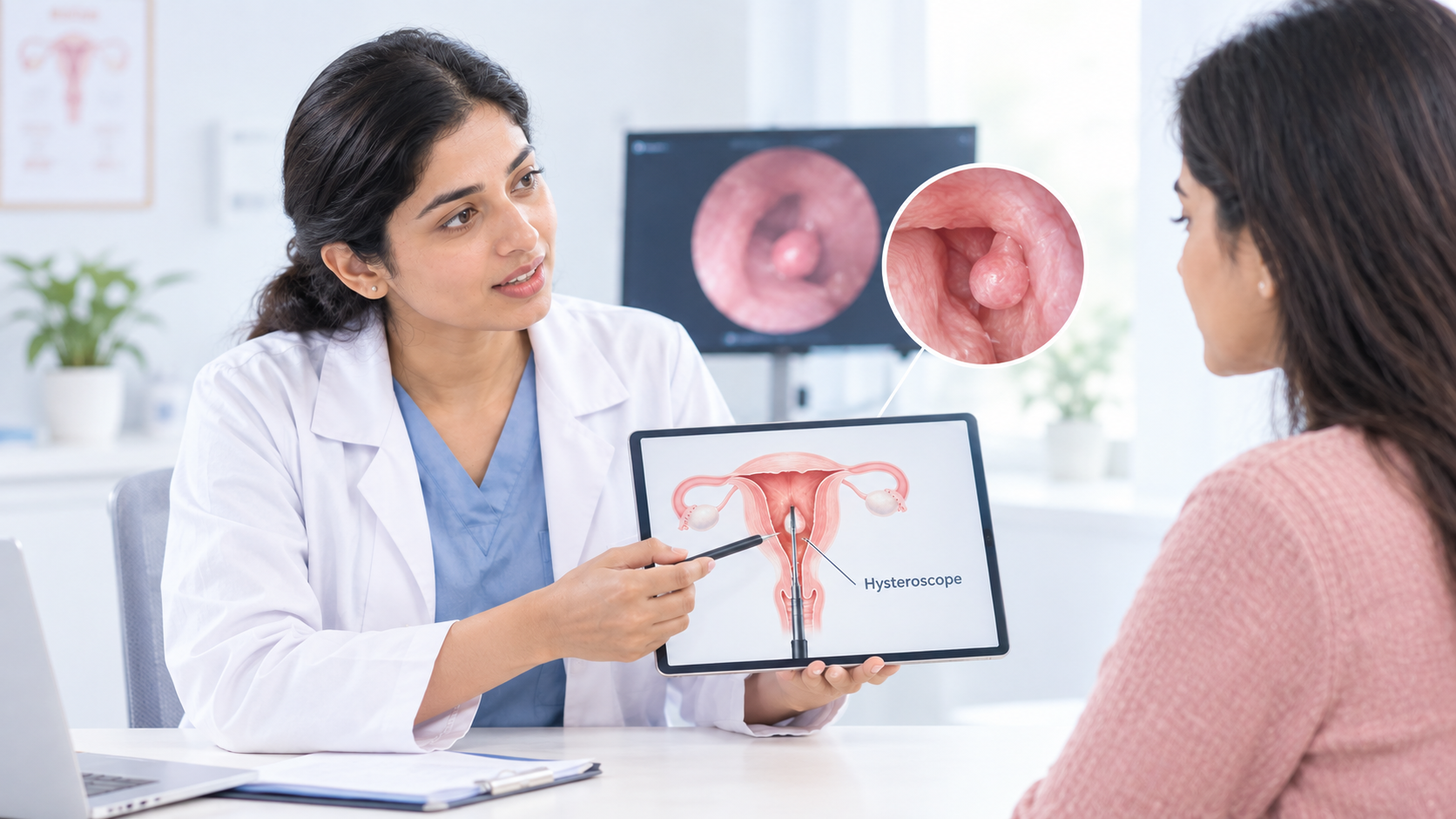
During hysteroscopy, a thin instrument with a camera is introduced through the vagina and cervix to allow direct visualisation of the uterine cavity.
The uterus is gently expanded with a suitable fluid or gas so that the doctor can see the walls of the cavity more clearly.
Because the procedure reaches the uterus through the natural vaginal and cervical passage, there is no abdominal incision required for a standard hysteroscopy.
Why might a doctor recommend hysteroscopy?
Hysteroscopy may be recommended when a doctor needs a clearer assessment of the inside of the uterus or when a condition identified on imaging may require treatment.
- Abnormal or unexplained uterine bleeding
- Suspected endometrial polyps
- Selected fibroids that project into the uterine cavity
- Scar tissue or adhesions inside the uterus
- Abnormal findings seen on ultrasound
- Evaluation of selected fertility concerns
- Assessment of certain problems following pregnancy or uterine procedures
What is the difference between diagnostic and operative hysteroscopy?
Diagnostic hysteroscopy is primarily used to look inside the uterus and identify abnormalities.
Operative hysteroscopy allows the doctor to treat certain abnormalities during the procedure. For example, a polyp may be removed or selected tissue may be treated when clinically appropriate.
The exact procedure depends on what needs to be evaluated or treated and the findings during the assessment.
Can hysteroscopy help diagnose infertility?
Hysteroscopy can provide useful information about the uterine cavity in selected women undergoing fertility evaluation. It may identify abnormalities that are difficult to fully assess with routine imaging alone.
However, infertility has many possible causes. Hysteroscopy does not evaluate every fertility factor and should not be considered a complete fertility test by itself.
Your doctor may consider other factors such as ovulation, ovarian reserve, fallopian tube function, age and sperm factors when appropriate.
Can hysteroscopy improve fertility?
If a uterine abnormality that may interfere with fertility is identified and treated, addressing that problem may be part of improving the conditions for pregnancy.
For example, removal of a uterine polyp or treatment of certain adhesions may be recommended when these findings are clinically relevant.
However, hysteroscopy does not guarantee pregnancy. Fertility depends on multiple factors, and treatment decisions should be based on the individual's complete reproductive history.
What happens before a hysteroscopy?
Before hysteroscopy, your gynecologist will discuss why the procedure is being recommended and review your symptoms, medical history, previous investigations and pregnancy plans.
The timing of the procedure may depend on your menstrual cycle and the reason for the hysteroscopy. Your doctor will also explain whether any preparation, medication or anaesthesia is required.
What happens during hysteroscopy?
The procedure begins with positioning and preparation similar to a gynecological examination. A thin hysteroscope is then passed through the vagina and cervix into the uterus.
The uterine cavity is gently expanded so the doctor can see the lining and identify any abnormalities.
If the procedure is being performed to treat a problem, suitable instruments may be passed through the hysteroscope to remove or treat the abnormal tissue.
The type of anaesthesia or sedation depends on the procedure, the expected treatment and the individual patient.
Is hysteroscopy painful?
The experience varies between women and depends on whether the procedure is diagnostic or operative, the type of anaesthesia or sedation used and individual sensitivity.
Some women experience cramping similar to period pain during or after hysteroscopy. Your doctor will discuss pain control and anaesthesia options appropriate for your procedure.
What is recovery like after hysteroscopy?
Recovery is generally relatively quick for many hysteroscopy procedures, although the exact recovery depends on what was done and whether additional treatment was performed.
- Mild cramping may occur after the procedure.
- Light vaginal bleeding or spotting can occur for a short period.
- Fatigue may occur, particularly when sedation or anaesthesia has been used.
- You may be advised to avoid certain activities temporarily depending on the procedure.
- Your doctor will tell you when it is appropriate to return to exercise, sexual activity and normal work.
When should you seek medical attention after hysteroscopy?
Some mild cramping and light bleeding can be expected after hysteroscopy, but certain symptoms should be assessed by your medical team.
- Heavy or persistent vaginal bleeding
- Severe or worsening abdominal or pelvic pain
- Fever or chills
- Foul-smelling vaginal discharge
- Feeling significantly unwell after the procedure
- Symptoms that are worsening rather than gradually improving
Is hysteroscopy the same as laparoscopy?
No. Hysteroscopy and laparoscopy are different procedures used to examine different areas.
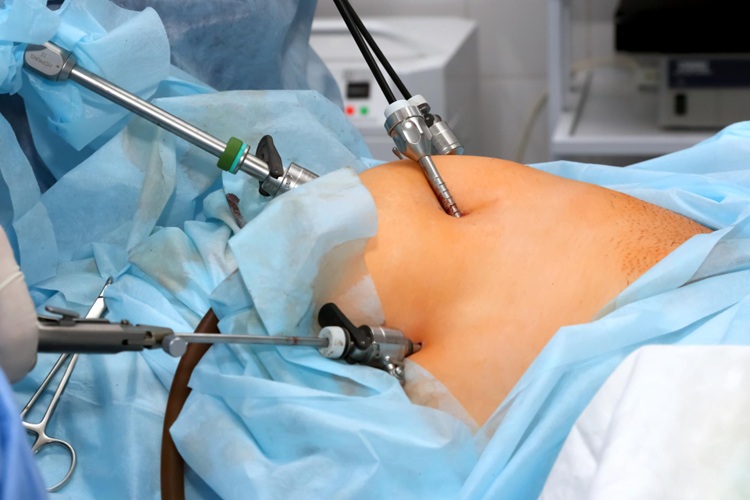
Hysteroscopy looks inside the uterine cavity through the vagina and cervix. Laparoscopy uses small abdominal incisions to examine structures within the pelvis and abdomen, such as the ovaries, fallopian tubes and outer surface of the uterus.
In some fertility or gynecological conditions, one procedure may be more appropriate than the other depending on the suspected problem.
Does everyone with abnormal bleeding need hysteroscopy?
No. Abnormal bleeding can have many causes, and hysteroscopy is only one possible investigation.
Your doctor may first consider your age, bleeding pattern, examination findings and ultrasound results. Hysteroscopy may then be recommended when direct assessment of the uterine cavity would provide useful information or when treatment may be required.
When should you discuss hysteroscopy with a gynecologist?
A discussion may be useful if you have persistent abnormal bleeding, an ultrasound showing a possible uterine cavity abnormality or a fertility concern where an intrauterine problem is suspected.
- You have unexplained bleeding between periods.
- Your periods have become unusually heavy or irregular.
- An ultrasound suggests an endometrial polyp or another cavity abnormality.
- You have been diagnosed with intrauterine adhesions.
- You are undergoing fertility evaluation and a uterine cavity problem is suspected.
- You have been advised to undergo hysteroscopy and want to understand why it is being recommended.
The takeaway
Hysteroscopy is a minimally invasive way to directly examine the inside of the uterus and, when appropriate, treat selected abnormalities during the same procedure.
It may be useful for conditions such as endometrial polyps, selected fibroids and intrauterine adhesions, as well as for evaluating certain fertility or abnormal bleeding concerns.
Hysteroscopy is not necessary for everyone. Your gynecologist can determine whether it is appropriate based on your symptoms, imaging, medical history and reproductive goals.
Resources
Common questions
What is hysteroscopy?
Hysteroscopy is a minimally invasive procedure that allows a gynecologist to look directly inside the uterine cavity using a thin camera passed through the vagina and cervix.
Why is hysteroscopy recommended?
Hysteroscopy may be recommended to investigate abnormal uterine bleeding, suspected polyps, selected fibroids, intrauterine adhesions or certain fertility-related uterine problems. The reason depends on your symptoms and previous test results.
Can hysteroscopy be used to remove polyps?
Yes. When a uterine polyp is identified and removal is appropriate, it can often be removed during an operative hysteroscopy.
Is hysteroscopy painful?
The experience varies. Some women experience cramping, while the amount of discomfort depends on the procedure and the anaesthesia or sedation used. Your gynecologist can discuss the appropriate pain-control approach before the procedure.
How long does it take to recover after hysteroscopy?
Recovery depends on whether the hysteroscopy was diagnostic or involved treatment. Many women recover relatively quickly, although mild cramping or spotting can occur afterward. Your doctor will provide specific instructions based on the procedure performed.
Can hysteroscopy improve fertility?
If a uterine abnormality that may interfere with fertility is identified and treated, addressing that problem may be helpful. However, hysteroscopy does not guarantee pregnancy because fertility depends on many factors.
What is the difference between hysteroscopy and laparoscopy?
Hysteroscopy examines the inside of the uterus through the vagina and cervix. Laparoscopy uses small abdominal incisions to examine structures such as the ovaries, fallopian tubes and outside of the uterus.