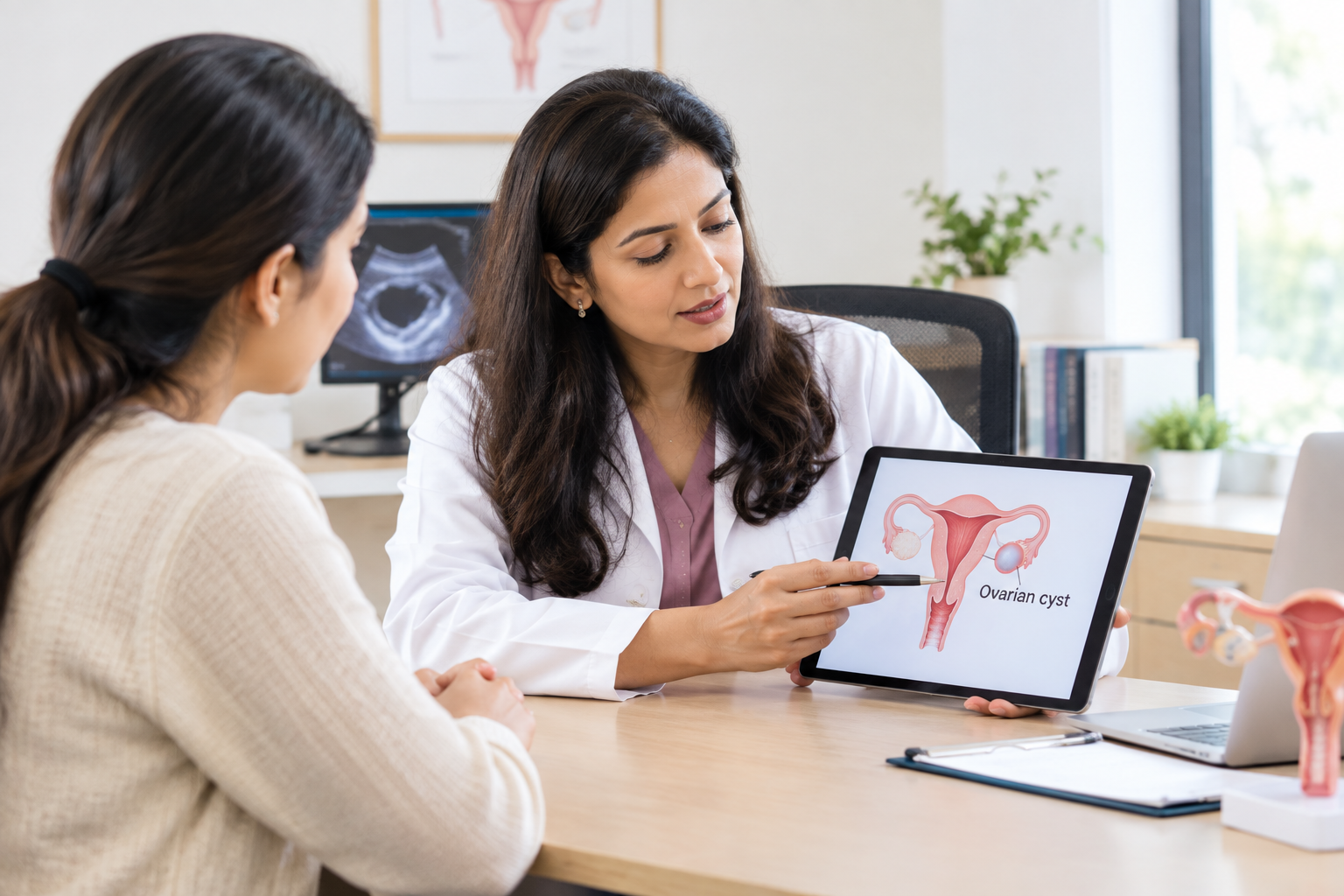
Finding an ovarian cyst when you are trying to conceive can naturally raise questions about fertility. Does the cyst make it harder to get pregnant? Will it affect ovulation? Do you need treatment before trying for a baby? The reassuring news is that many ovarian cysts do not affect fertility. Functional cysts are common during the menstrual cycle and usually disappear on their own. Other types of cysts, particularly endometriomas associated with endometriosis, can have a different effect on fertility. Understanding what type of cyst you have is therefore more important than simply knowing that a cyst is present. Your age, symptoms, ovarian reserve, menstrual cycles, fertility history and the appearance of the cyst all help determine whether any treatment or further evaluation is needed.
Can ovarian cysts affect fertility?
Most ovarian cysts do not prevent pregnancy. Whether a cyst affects fertility depends largely on its type, the underlying condition causing it and whether it interferes with normal ovarian function.
Functional ovarian cysts, which develop as part of the normal menstrual cycle, generally do not cause infertility. In fact, the development of follicles is part of the normal process of ovulation.
Some conditions associated with ovarian cysts can affect fertility. Endometriomas, for example, are associated with endometriosis, a condition that can affect the ovaries, pelvic tissues and reproductive function.
Which ovarian cysts can affect fertility?
The type of ovarian cyst matters when discussing fertility. Not every cyst has the same effect on the ovary or on the ability to conceive.
Functional cysts are usually temporary and do not generally interfere with fertility. Other benign cysts, such as dermoid cysts and cystadenomas, are also not usually associated with infertility, although they may sometimes become large enough to require treatment.
Endometriomas are different because they are caused by endometriosis. The underlying endometriosis may affect fertility, and treatment decisions need to consider both symptom control and reproductive goals.
- Functional cysts: usually do not affect fertility
- Endometriomas: associated with endometriosis and may affect fertility
- Dermoid cysts: generally not linked with infertility
- Cystadenomas: generally do not cause infertility but may require treatment if they become large
- Other ovarian masses: require assessment based on their appearance and clinical features
What is the difference between an ovarian cyst and PCOS?
Ovarian cysts and polycystic ovary syndrome are not the same condition, even though both involve the ovaries.
A typical ovarian cyst is a fluid-filled or partly solid sac that develops in or on an ovary. PCOS is a hormonal and metabolic condition that can affect ovulation and menstrual cycles. The ovaries in PCOS may contain many small follicles, but these are not the same as the individual ovarian cysts discussed in routine ultrasound reports.
This distinction is important when evaluating fertility. In PCOS, irregular or absent ovulation may be the main reason conception is difficult, rather than the presence of a single ovarian cyst.
Can you get pregnant with an ovarian cyst?
Yes. Many women with ovarian cysts become pregnant without needing treatment for the cyst.
Functional cysts usually do not interfere with ovulation or conception. If an ultrasound identifies a simple cyst in a woman who is otherwise ovulating normally, the cyst may simply be monitored rather than treated.
The situation can be different when a cyst is associated with endometriosis, is very large, causes significant symptoms or is affecting normal ovarian function. In these situations, an individual assessment is more useful than assuming that the cyst itself is preventing pregnancy.
What are endometriomas and why do they matter for fertility?
An endometrioma is an ovarian cyst caused by endometriosis. It can develop when endometriosis affects the ovary and may be associated with pelvic pain, painful periods and difficulty becoming pregnant.
The effect on fertility is not simply because there is a cyst. Endometriosis itself can affect the pelvic environment and ovarian function, and the severity of the condition varies between women.
If you have an endometrioma and are planning pregnancy, the treatment decision should consider your symptoms, age, ovarian reserve, previous treatment and fertility goals.
Does an ovarian cyst affect ovulation?
Most ovarian cysts do not permanently stop ovulation. Functional cysts develop around the normal ovulatory process and commonly resolve on their own.
A larger or persistent cyst can sometimes interfere with normal ovarian function, but the effect depends on the type and location of the cyst.
If your periods are irregular or you are not ovulating regularly, your doctor will also look for other causes such as PCOS, thyroid disorders, hormonal problems or other fertility-related conditions.
Can ovarian cyst removal affect fertility?
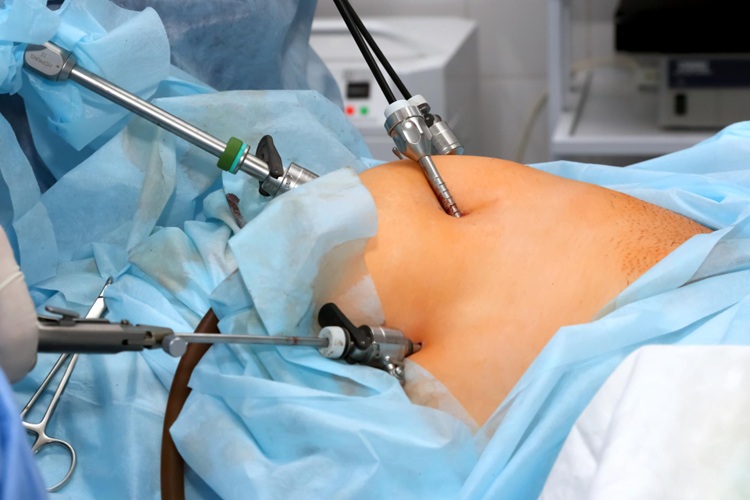
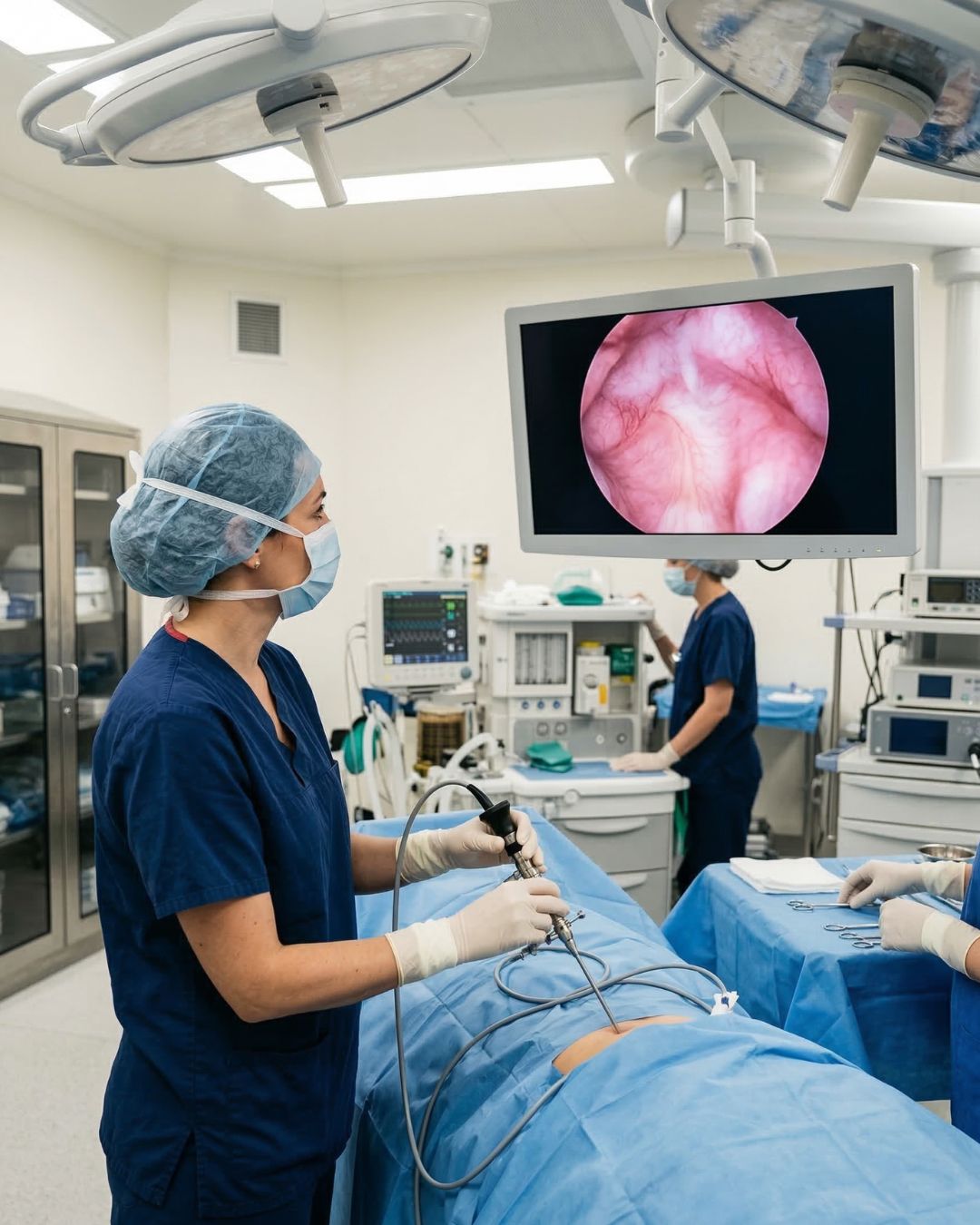
Ovarian cyst surgery can sometimes affect ovarian tissue, so fertility preservation is an important consideration when surgery is being planned in women who want future pregnancy.
When appropriate, the surgeon may remove the cyst while preserving healthy ovarian tissue. However, the amount of ovarian tissue that can be safely preserved depends on the type of cyst, its size, its location and the condition of the ovary.
This is particularly important with endometriomas because both endometriosis and surgery on an endometrioma can affect ovarian reserve. The decision to operate should therefore consider fertility goals rather than focusing only on removing the cyst.
What is ovarian reserve and why is it important?
Ovarian reserve refers to the remaining supply of eggs in the ovaries. It is one of several factors considered when assessing fertility.
A doctor may consider ovarian reserve when a woman has an ovarian condition, previous ovarian surgery, endometriosis or concerns about future fertility.
Tests such as AMH and antral follicle count can provide information about ovarian reserve, but they do not by themselves determine whether a woman can become pregnant naturally. Fertility needs to be assessed as a whole.
Should an ovarian cyst be treated before trying to conceive?
Not necessarily. Treatment is not automatically required simply because an ovarian cyst is present.
A doctor may recommend observation when the cyst has a reassuring appearance, causes few or no symptoms and is likely to resolve naturally. A follow-up ultrasound may be used to see whether it changes over time.
Treatment may be considered when the cyst is persistent, large, painful, has concerning features or is associated with a condition that affects fertility. The decision should take into account the potential benefits of treatment as well as its possible effect on ovarian tissue.
What tests are used to evaluate an ovarian cyst and fertility?
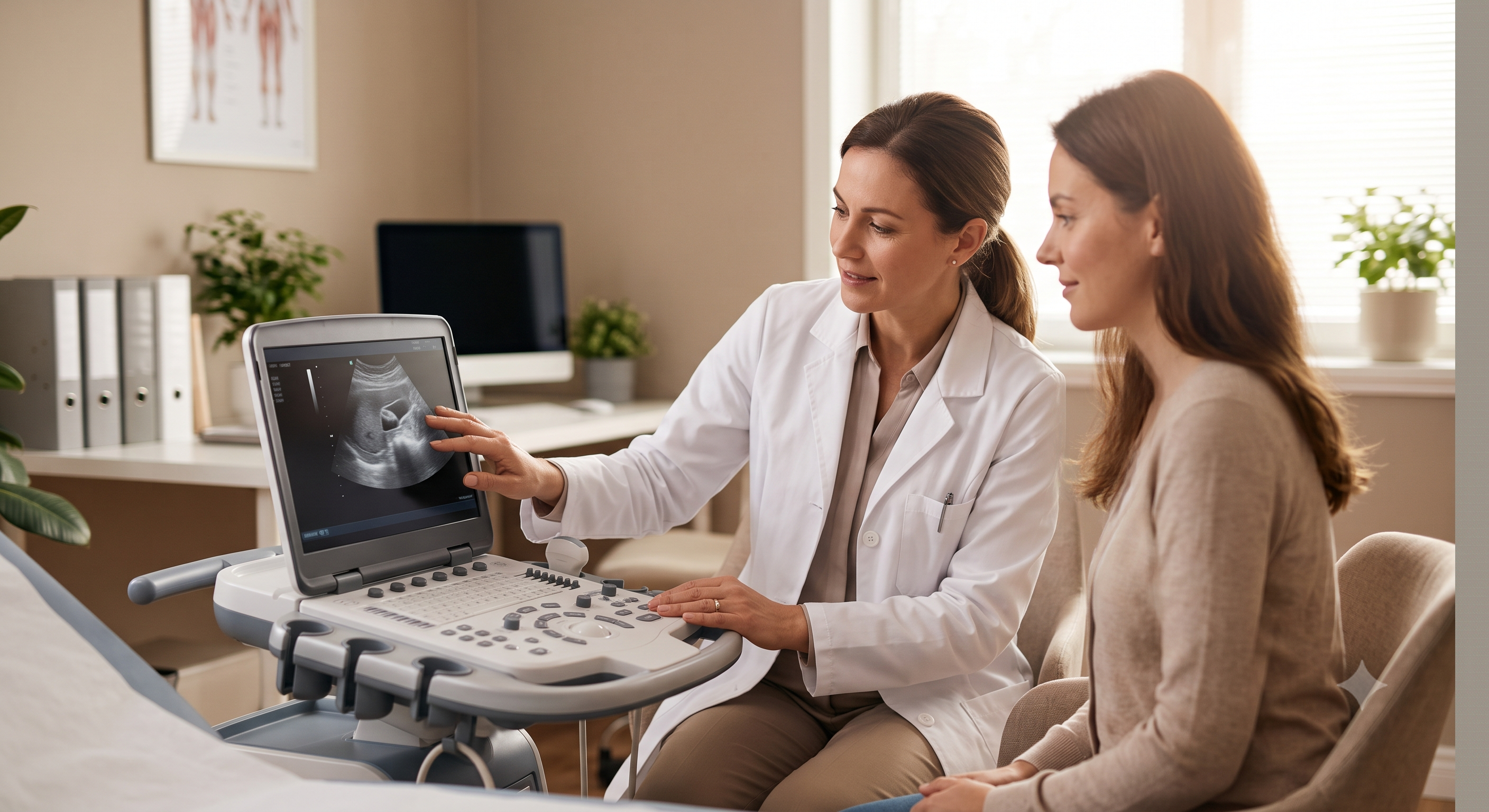
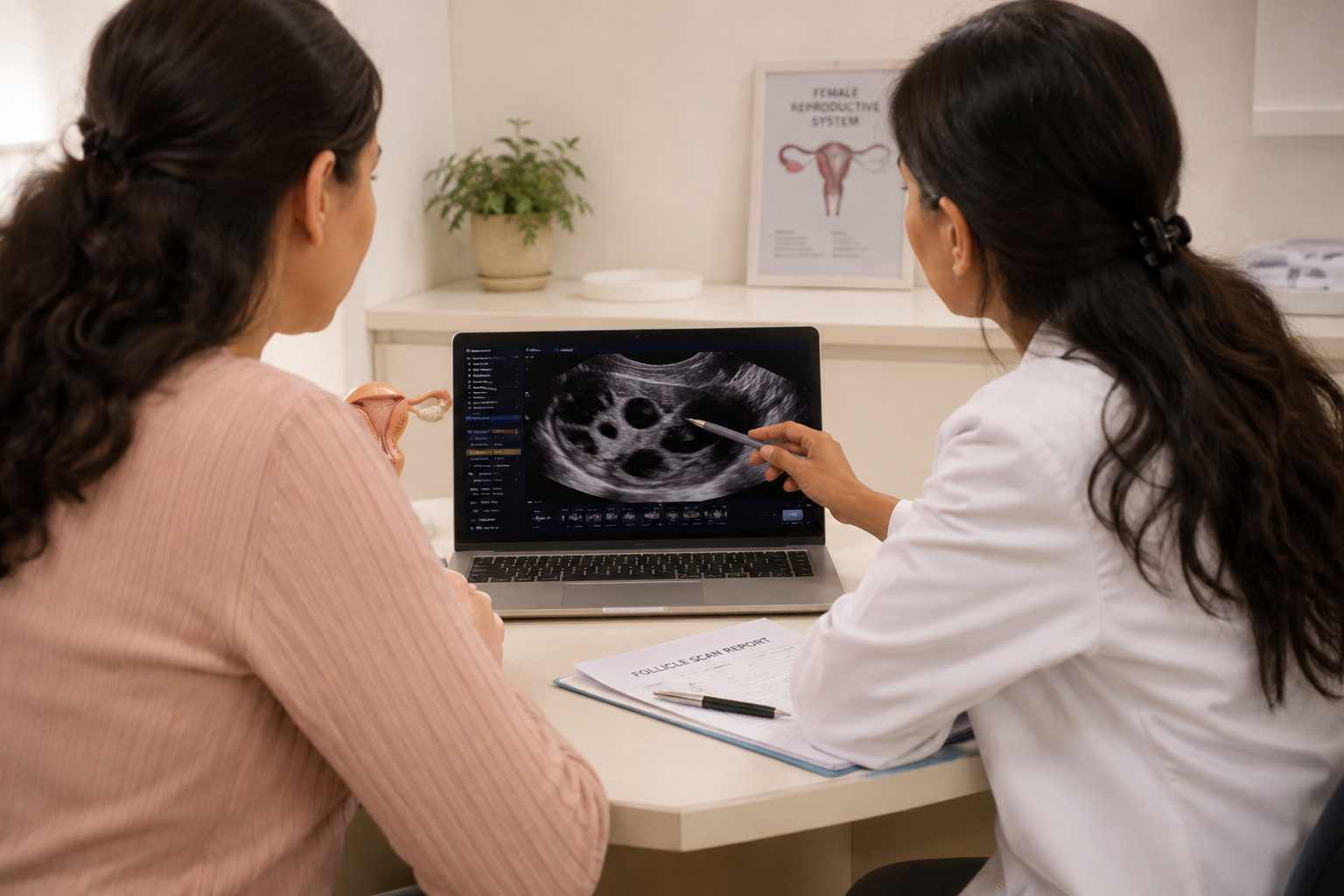
A pelvic ultrasound is usually one of the most useful tests for understanding an ovarian cyst. It can help assess the cyst's size, location and appearance.
When fertility is a concern, the evaluation may also include a review of menstrual cycles, ovulation, previous pregnancies, fertility history and other reproductive factors.
Depending on the individual situation, a doctor may also consider ovarian reserve testing or additional investigations. The appropriate tests depend on age, symptoms, cyst type and how long you have been trying to conceive.
- Pelvic ultrasound
- Review of menstrual cycles and ovulation
- Assessment of fertility history
- Ovarian reserve assessment when appropriate
- Evaluation for endometriosis or PCOS when clinically indicated
- Additional tests based on age, symptoms and individual fertility history
When should you see a gynecologist about an ovarian cyst and fertility?
Consider a gynecological consultation if you have an ovarian cyst and are planning pregnancy, particularly if the cyst is persistent, painful, large or associated with endometriosis.
You should also seek fertility evaluation if you have been trying to conceive without success, have irregular or absent periods, or have other symptoms suggesting an underlying reproductive condition.
A consultation can help determine whether the cyst needs monitoring, treatment or no specific intervention and whether any additional fertility evaluation would be useful.
The bottom line
An ovarian cyst does not automatically mean that you will have difficulty getting pregnant. Many common functional cysts are temporary and do not affect fertility.
The situation deserves closer attention when the cyst is associated with endometriosis, is persistent or large, causes significant symptoms or requires surgery. In these cases, fertility goals should be part of the treatment discussion from the beginning.
If you have been diagnosed with an ovarian cyst and are planning pregnancy, a personalised assessment can help determine whether the cyst needs monitoring, treatment or simply reassurance.
Resources
Common questions
Can ovarian cysts cause infertility?
Most ovarian cysts do not cause infertility. Functional cysts are common and generally do not interfere with fertility. Some conditions associated with ovarian cysts, particularly endometriosis and endometriomas, can be associated with difficulty becoming pregnant.
Can I get pregnant if I have an ovarian cyst?
Yes. Many women with ovarian cysts become pregnant naturally, especially when the cyst is a common functional cyst and ovulation is otherwise normal. Whether treatment or further evaluation is needed depends on the type of cyst, symptoms and individual fertility factors.
Which ovarian cysts can affect fertility?
Endometriomas associated with endometriosis are the main type of ovarian cyst commonly discussed in relation to fertility. Functional cysts, dermoid cysts and cystadenomas generally do not cause infertility, although some may require treatment for other reasons.
Does an ovarian cyst affect ovulation?
Most ovarian cysts do not permanently affect ovulation. Functional cysts are actually related to the normal ovulatory process. Large, persistent or complex cysts may require further assessment to understand whether they are affecting ovarian function.
Should an ovarian cyst be removed before trying to conceive?
Not always. Many ovarian cysts can simply be monitored and do not require treatment. Removal may be considered when a cyst is persistent, large, painful, has concerning features or is associated with a condition affecting fertility. The potential effect of surgery on ovarian tissue should also be considered.
Can ovarian cyst surgery reduce fertility?
Ovarian surgery can sometimes affect healthy ovarian tissue, so fertility preservation is an important consideration before surgery. The potential effect depends on the type of cyst, the surgical procedure and the amount of ovarian tissue affected.
Do endometriomas affect fertility?
Endometriomas are associated with endometriosis, and endometriosis can be associated with difficulty becoming pregnant. Treatment decisions should consider pain, age, ovarian reserve, cyst characteristics and fertility plans rather than focusing only on the cyst itself.
Are ovarian cysts the same as PCOS?
No. An ovarian cyst is usually an individual fluid-filled or partly solid structure, while PCOS is a hormonal and metabolic condition that can affect ovulation and menstrual cycles. The small follicles seen in polycystic ovaries are not the same as typical ovarian cysts.